
Watching Eye films on a big screen
You want to watch silent films from Eye Film Player on your TV via a browser. In that case, the viewing method and connection to your screen matter more than a long list of apps.


For Eye Film Player, you can follow the viewing options described by Eye itself: use a browser, connect a computer via HDMI or cast using Chromecast. Then choose a stick or box to suit your screen and network. A device supporting 4K doesn’t mean the film you choose will also be available in 4K.
You want to watch silent films from Eye Film Player on your TV via a browser. In that case, the viewing method and connection to your screen matter more than a long list of apps.
You want to check whether the player and screen can display the frame rate and dynamic range appropriately. Apple Support explains how to adjust these settings on Apple TV, depending on the source and screen.
You’re comparing a wireless stick with a box that has ethernet, or you want to use your own video files as well as streams. The connections and available network options will determine which setup is right for you.
| What to consider | What to look for | Who is this important to? |
|---|---|---|
| Access to the film you want | Eye Film Player describes watching via a browser, connecting a computer via HDMI and casting with Chromecast. Check which option works with your devices. | If I want to watch a particular silent film, I want to know in advance how it will appear on my screen. Around 36% of consumers put access to the film they want at the top of their list. |
| Picture quality in a dark room | Check which version of the film is available and the settings on your player and screen. Adjusting the frame rate only helps with supported source video and a compatible screen; Apple Support refers to content encoded at 24, 25, 30, 50 and 60 fps. | When I’m watching in a dark room, I want the picture to suit the content and my screen. Around 29% of consumers make suitable picture quality their top priority. |
| Connection and placement | Check that you have spare HDMI and power connections, Wi-Fi where you’ll be watching, and whether ethernet is available. Xiaomi states that the TV Stick 4K (2nd Gen) requires a wireless connection. | If my TV or projector is somewhere with limited Wi-Fi, I want to know whether I can connect a network cable or have to rely on Wi-Fi. Around 21% of consumers prioritise connection and placement. |
| What you need and ease of use | Check which cables you already have and how many connections are free. Google Store Netherlands states that a certified HDMI 2.1 cable is required separately for the Google TV Streamer (4K). | If I want to start watching straight away without extra setup, I want to know what I’ll need for my chosen setup. Around 14% of consumers put requirements and ease of use first. |
The device’s resolution doesn’t automatically determine which version a film service offers. Eye Film Player lists an HD version of a 4K restoration for one film.
Check which versions are available for the titles you want to watch before weighing up picture specifications.
Eye Film Player describes specific browser, HDMI and Chromecast options. That doesn’t automatically mean every player supports the same options.
Check the Eye viewing method for your computer or phone and the device you plan to cast to.
Your chosen viewing method may require a computer, a spare HDMI port or a separate cable. Google says a certified HDMI 2.1 cable is required separately for the Google TV Streamer (4K).
Before buying, check which cables you have and which ports are free on your TV or projector.
The Google TV Streamer (4K) is a box for anyone looking to combine Cast with a built-in ethernet port.
The Xiaomi TV Stick 4K (2nd Gen) is designed to fit neatly behind a screen with an HDMI port.
The SHIELD TV Pro may be worth considering if you want to use your own video files, USB connections or ethernet as well as streams.
The Apple TV 4K (4th generation) may suit an Apple-focused viewing setup where you want to adjust the video output.
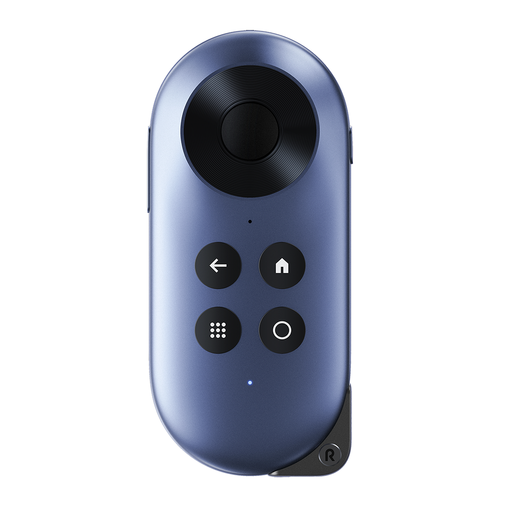
This selection features a portable Android TV streaming box. Before buying, check that your chosen Eye Film Player viewing method is compatible with your devices.
 No image available
A portable streaming device to consider if you’re looking for an Android TV interface. Check that it works with your preferred viewing method for Eye Film Player.
The product name mentions a remote control for the Rokid Station.
Not according to the viewing options described by Eye Film Player: you can watch via a browser, connect a computer via HDMI or cast using Chromecast. Eye says casting via Chrome is available on desktop computers and Android devices, but not via Chrome on iOS.
Apple Support explains how to do this via Settings, Video and Audio, and Match Content. This works with source content encoded at 24, 25, 30, 50 or 60 fps; the result also depends on the screen and playback method.
Check whether your screen has a spare HDMI port and whether the required connection is available where you’ll be watching. Xiaomi says the Xiaomi TV Stick 4K (2nd Gen) needs a wireless connection; according to Google, the Google TV Streamer (4K) has built-in gigabit ethernet.
The Dutch government says you should contact the seller if a product is faulty. For online purchases from a business, you generally have a 14-day cooling-off period, with some exceptions. This is separate from your rights if a product is faulty.