
Vandaag of morgen in huis

Kwaliteit gegarandeerd

Welkomstaanbiedingen ontgrendelen: GRATIS bezorging | Tot 80% korting | Gratis 30 dagen JoyPlus-proefperiode
Download de app
Choosing a new extractor hood may seem straightforward: pick a colour, check the number of settings and order a 60 or 90 cm model. In practice, the key differences often come down to installation, noise levels and filter maintenance. An extractor hood that looks powerful on paper will not necessarily suit a flat, open-plan kitchen or small hob.
Pay particular attention to these three common pitfalls:
The design determines how much space the extractor hood takes up and how straightforward installation will be.
A portable extractor unit for the worktop can be an alternative if drilling or a fixed connection is not possible. Its capacity is usually lower than that of a wall-mounted model. Think of it as a solution for light cooking, rather than a like-for-like replacement for a powerful extractor hood.
Compare the airflow rate in m³/h, but also check the setting at which it is measured. A model with a booster can move extra air temporarily, while you may use a lower setting during normal cooking.
With external extraction, cooking air is channelled outside. Check the diameter and routing of the extraction duct. Products in this selection, for example, use connections measuring 120 or 150 mm. An unsuitable or excessively long duct can affect performance and noise levels.
With a recirculating extractor hood, suitable carbon filters are required. Check whether they are included, which model number you will need later and how often replacement is recommended. A metal grease filter is generally washable, while a carbon filter is usually a consumable item.
A 60 cm extractor hood fits many standard hobs. A 90 cm model can cover more of the cooking surface and is worth considering for a wide hob or intensive cooking. Do not just measure the width; also check:
Have the electrical connection and installation carried out in accordance with local regulations. Do not use an extractor hood without a correctly fitted filter, and do not block the air outlet.
Noise levels are shown in dB(A). Compare both the maximum and minimum values. A model rated at 58 dB(A) on its highest setting cannot be directly compared with a model where only a different measurement condition is stated.
You can identify an energy-efficient extractor hood by its stated energy class and annual consumption in kWh. Actual costs depend on how long you use it, the selected setting and the lighting. LED lighting generally requires little power and helps illuminate the cooking area more effectively, but brightness and colour temperature vary from model to model.
Touch controls, an extractor hood with touchscreen, Wi-Fi and an app are additional features. They are particularly useful if you want to change settings remotely or prefer a modern control panel. Mechanical buttons, on the other hand, are straightforward and easy to use.
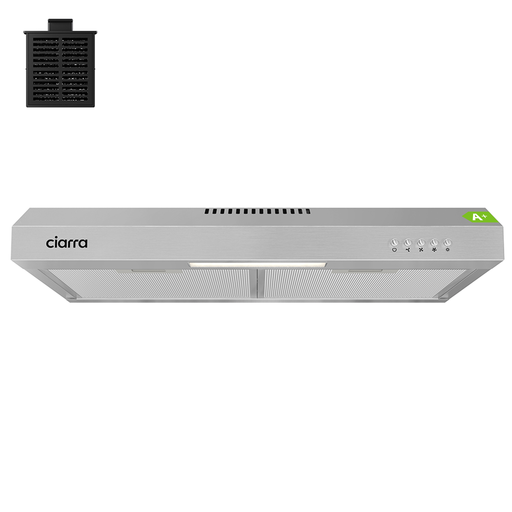
Why it suits this profile: This compact model is designed for cabinet or wall mounting and offers both external extraction and recirculation. The push-button controls are clear and easy to use.
The specifications list separate airflow rates for each setting: 138, 160 and 184 m³/h. This gives you a clearer idea of what to expect in everyday use at each level.
60 cm wide, A+ energy class, washable aluminium filters and a stated maximum noise level of 61 dB.
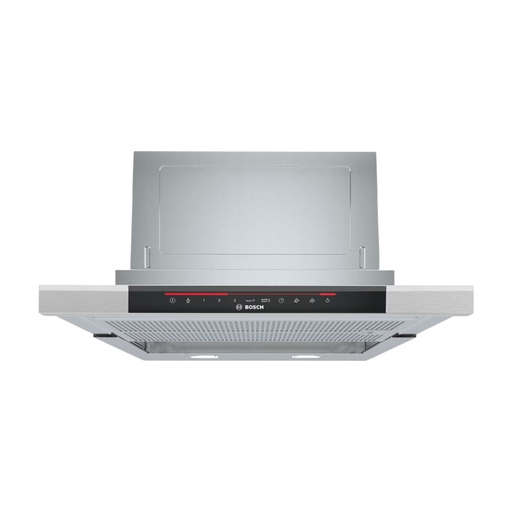
Why it suits this profile: This semi-integrated model is ideal for anyone who values a sleek kitchen finish, touchscreen controls and a choice of settings.
Alongside a stated turbo extraction rate of 717 m³/h, the product information also lists 5 settings, a noise level of 53 dB and energy class A.
Touch controls, turbo function, dishwasher-safe filter and LED light according to the product specifications.
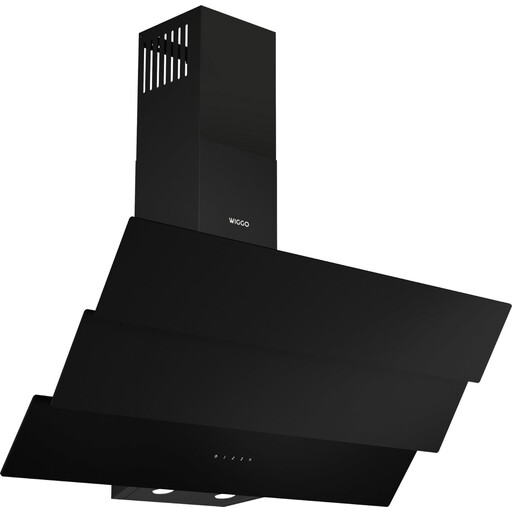
Why it suits this profile: This wide black angled extractor hood is designed for larger cooking areas and users looking for a higher stated extraction capacity.
The product information specifies both external extraction and recirculation, along with a stated capacity of 615 m³/h and noise levels ranging from 47 to 66 dB.
90 cm wide, 4 settings, touchscreen, two LED lights and dishwasher-safe aluminium filters.

Why it suits this profile: This black wall-mounted model is ideal for users who want to combine app control, recirculation and low stated annual energy consumption.
The filters and ventilation modes are clearly specified: two washable aluminium grease filters, two CBCF003 carbon filters and a choice between recirculation and external extraction.
A+++ according to the stated product specification, up to 650 m³/h, touchscreen with Wi-Fi and a maximum noise level of 59 dB.
We have put together a complete, up-to-date list of products that fully meet these strict selection criteria and the applicable European safety regulations.
Clean the metal grease filter regularly. The product information for several models recommends an interval of around 2 to 4 weeks, depending on how often you cook and how much fat you use. Always check the manual for your model. A filter clogged with grease can restrict airflow and poses a fire risk.
When using recirculation, fit the correct carbon filter and replace it according to the manufacturer’s instructions. Switch the extractor hood on in good time while cooking and leave it running for a few minutes afterwards if the manual recommends this. Switch off the power before removing or cleaning the filters. Do not use an open flame directly beneath the extractor hood.
Yes, when external extraction is unavailable or not permitted. The air is then passed through grease and carbon filters. Check the filter costs, replacement interval and required ventilation clearance in advance. Recirculation works differently from external extraction and does not remove moisture from the room in the same way.
That depends on the measurement setting and installation. Compare the values in dB(A) at the lowest and highest settings. A stated value of around 58 to 60 dB(A) at maximum power may be workable for many kitchens, but the extraction duct, non-return valve and installation can affect the perceived noise level.
Check the stated annual energy consumption in kWh and multiply it by your current electricity tariff. The final cost depends on how long you use it, the selected speed and whether you use the LED lighting. With recirculation, you will also need to factor in the cost of replacement carbon filters.
