
Vandaag of morgen in huis

Kwaliteit gegarandeerd

Welkomstaanbiedingen ontgrendelen: GRATIS bezorging | Tot 80% korting | Gratis 30 dagen JoyPlus-proefperiode
Download de app
An extractor hood should remove steam, grease and cooking smells without taking up unnecessary space or creating excessive noise or maintenance. Yet many buyers focus mainly on appearance or a high m³/h figure. That can lead to disappointment. For example, a model with powerful extraction may work less effectively if the ducting is connected incorrectly. And an attractive glass hood can be impractical if fingerprints and grease quickly become visible.
With this buying guide, you can compare the most important features of a kitchen extractor hood. You will also find practical recommendations for small kitchens, rented homes, open-plan kitchens and intensive use.
A high m³/h figure sounds appealing, but actual performance also depends on the length and diameter of the duct, bends and the selected installation mode. With external extraction, the air outlet must be properly connected and should run as straight as possible. With recirculation, the air remains in the kitchen, so suitable charcoal filters are required.
So do not just check the maximum capacity. Also look at:
A quiet extractor hood is particularly important in an open-plan kitchen or apartment. Check the stated maximum noise level in dB. A difference of a few decibels can be noticeable, but only compare measurements taken under similar conditions.
A hood with several settings offers greater flexibility: use a lower setting for simmering and a higher setting for frying or wok cooking. A boost function is useful, but do not automatically use it as the standard setting. This helps to limit noise and energy consumption.
A metal grease filter needs to be cleaned regularly. Some aluminium filters can be removed and are dishwasher-safe; check the product specifications. With an extractor hood with charcoal filter, recirculation also requires replacement filters, unless the manufacturer describes a specific reusable filter system.
Also pay attention to installation. A wall-mounted extractor hood requires a sturdy wall and sufficient space above the hob. A built-in extractor hood or telescopic extractor hood must fit precisely inside the kitchen cabinet. Measure the width, depth, height and position of the socket before ordering.
A 60 cm extractor hood often fits above a standard hob and is suitable for smaller or medium-sized kitchens. A 90 cm extractor hood provides a larger capture area and may be a better fit for a wide hob or open-plan kitchen. Ideally, the hood should be at least as wide as the cooking zone.
Many models have an adjustable chimney section. Check the minimum and maximum height, especially with high ceilings or a low wall cabinet.
The stated capacity is usually given in m³/h. Manufacturers may use different measurement methods in their product information, so figures are not always directly comparable. Treat capacity as one factor alongside noise level, duct size and installation type.
A recirculating extractor hood is useful in an apartment or rented home without an existing extraction duct. The grease filter traps grease particles, while the charcoal filter is designed to remove smells from the recirculated air. With external extraction, steam and cooking air are channelled outside. If in doubt, ask your landlord for permission or check the property rules.
An extractor hood with push buttons is simple and straightforward. Touch controls provide a flat surface that is easy to wipe clean, while mechanical controls can be preferable for anyone who likes tactile buttons. An extractor hood with LED lighting provides targeted illumination over the cooking zone; check the number of lamps and the colour temperature if this is important to you.
Also look at:
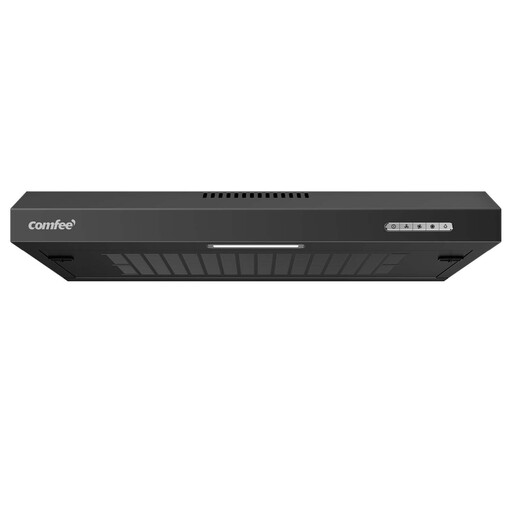
Why it suits this profile: This 60 cm-wide kitchen extractor hood is designed for compact kitchens and has three speeds, LED lighting and two ventilation modes.
The product information states that it supports both external extraction and internal recirculation. A separate cotton filter must be purchased for recirculation.
200 m³/h according to the product information, a removable aluminium filter and energy class B.

Why it suits this profile: This model combines a slanted design with touch controls, app control and flexible installation for a modern kitchen.
The specifications state a maximum airflow of 650 m³/h and a maximum noise level of 59 dB. However, check that the installation and filters are suitable for your kitchen.
Energy class A+++, two washable aluminium filters, boost function and included CBCF003 charcoal filters according to the product details.
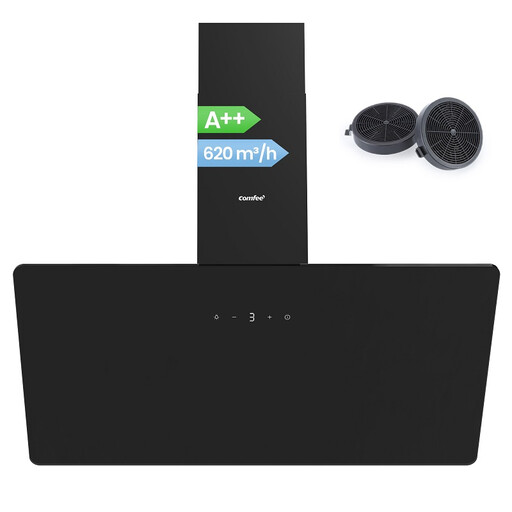
Why it suits this profile: This 90 cm slanted extractor hood is designed for wide cooking zones and households that cook intensively on a regular basis.
Four speeds allow you to adjust the hood to different cooking tasks. It supports both external extraction and recirculation, but check which installation components are required.
620 m³/h, a stated noise level of 59 dB, touch controls and energy class A++ according to the product description.
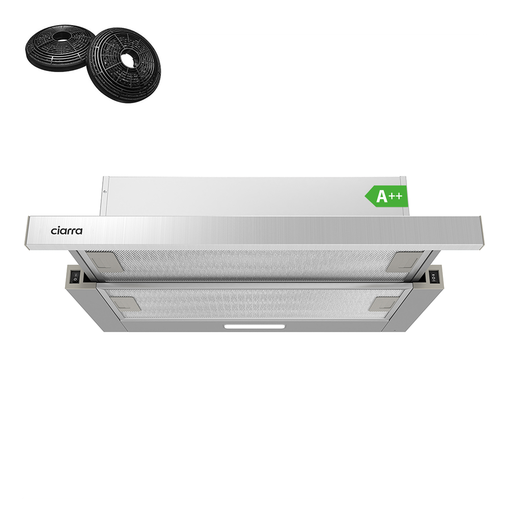
Why it suits this profile: This telescopic extractor hood can be installed beneath a kitchen cabinet and takes up very little visible space.
The product details mention both recirculation and external extraction, and charcoal filters are included. Measure the cabinet opening and check the required installation height in advance.
370 m³/h, energy class A++, two washable aluminium filters and integrated LED lighting according to the specifications.
We have put together a complete, up-to-date list of products that fully meet these strict selection criteria and the applicable European safety regulations.
It depends on your property and installation. External extraction removes air and moisture directly, but requires a suitable duct. Recirculation is more practical in apartments and rented homes without external ventilation. In this case, proper maintenance and timely replacement of the charcoal filter are important.
Ideally, choose an extractor hood that is at least as wide as the hob. A 60 cm extractor hood suits many standard hobs. For a wide cooking zone or kitchen island, a 90 cm extractor hood can provide a larger capture area. Also check that the depth and installation height are suitable for your kitchen.
The cost depends on the power, energy class, selected setting and number of hours of use. An energy-efficient extractor hood can help reduce electricity consumption, but filters and any installation costs also form part of the total running costs. So, alongside the purchase price, compare the stated annual energy consumption and the price of replacement filters.
