
Vandaag of morgen in huis

Kwaliteit gegarandeerd

Welkomstaanbiedingen ontgrendelen: GRATIS bezorging | Tot 80% korting | Gratis 30 dagen JoyPlus-proefperiode
Download de app
A new extractor hood may seem easy to choose at first glance. Yet many people end up buying a model that does not fit their kitchen properly, is too noisy or is difficult to maintain. Installation and noise levels are particularly important in Dutch flats, rented homes and open-plan kitchens.
As a Joybuy Product Recommendation Officer, I therefore focus on verifiable details: dimensions, airflow, noise level, filter type, energy class and how the kitchen extractor hood is connected.
A high figure in m³/h sounds appealing, but it does not tell you everything. Actual performance also depends on the selected ventilation setting, the length of the extraction duct, bends in the duct and the type of filter. An extractor hood with external extraction can expel cooking fumes outside, while a recirculating extractor hood circulates the air through grease and carbon filters.
Always check whether the stated airflow applies to the highest setting and whether the figure relates to extraction or recirculation.
A 60 cm wall-mounted extractor hood will not automatically fit every hob. Measure the available width, depth and height. Also check whether an external extraction outlet is available and which duct diameter is required. In a rented home or studio flat, a recirculating model is often more practical because you do not need to modify a wall or façade.
With an under-cabinet extractor hood, also check the space beneath the kitchen cupboard. A model measuring 8.5 cm high may fit differently from a deeper cooker hood with a chimney.
Grease filters need to be cleaned regularly. When grease builds up, airflow can decrease and an additional safety risk may arise. An extractor hood with a grease filter is therefore only practical if the filter can be removed easily.
Washable aluminium filters are convenient for periodic maintenance. With recirculation, you should also check whether a carbon filter is required and whether it is included or needs to be purchased separately.
A 60 cm extractor hood usually matches a standard hob and is suitable for compact kitchens. With a wider hob or an open-plan kitchen, a 90 cm extractor hood can cover more of the cooking area. Do not measure the hood alone: also check the available wall space and the distance to wall units.
A 90 cm model needs more space, but that does not automatically mean it will be quieter or more powerful. Always compare the product specifications.
Airflow is measured in m³/h. The models in the range, for example, vary from approximately 184 m³/h for a compact Ciarra Slimline to 650 m³/h for a Ciarra angled wall hood. A 90 cm Comfee model states 620 m³/h.
Use these figures as a point of comparison, not as a guarantee of a particular level of odour or vapour removal. According to the brands’ product descriptions, the models are designed to extract or filter cooking fumes, grease particles and odours. Actual performance depends on the installation and maintenance.
A quiet extractor hood is especially useful in an open-plan kitchen. Check the number of dB and confirm whether it refers to the minimum or maximum level. The Ciarra 60 cm wall-mounted hood, for example, states a maximum of 64 dB, while the Ciarra angled hood with Wi-Fi controls states a maximum of 58 dB.
A higher energy class can help reduce consumption, but you should also compare annual energy use in kWh. The Ciarra angled hood states energy class A+++ and 10 kWh per year; the Comfee 90 cm angled hood states A++.
An extractor hood with LED lighting makes the cooking area easier to see. Mechanical push buttons are simple and clear, while touch controls or app control can offer extra convenience. Choose features based on how you will use the hood, not just on the number of options.
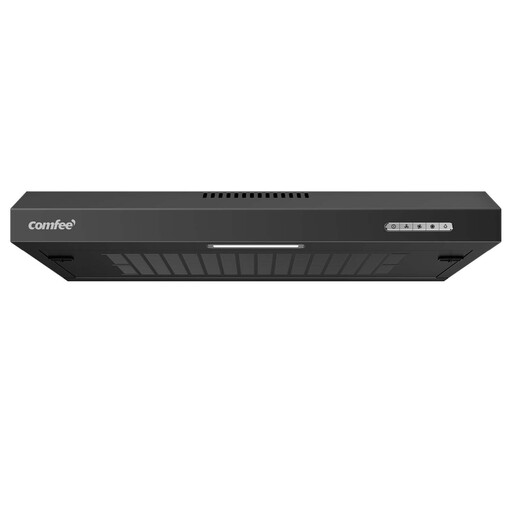
Why it suits this profile: This 60 cm kitchen extractor hood has three speeds, LED lighting and dimensions of 600 × 80 × 440 mm. That makes it an interesting option for a small kitchen or rented home.
The product description states that it supports both external extraction and recirculation. Do check whether the required carbon filter is included with your version.
Stated airflow of 200 m³/h, three settings, LED lamp and removable aluminium filter.
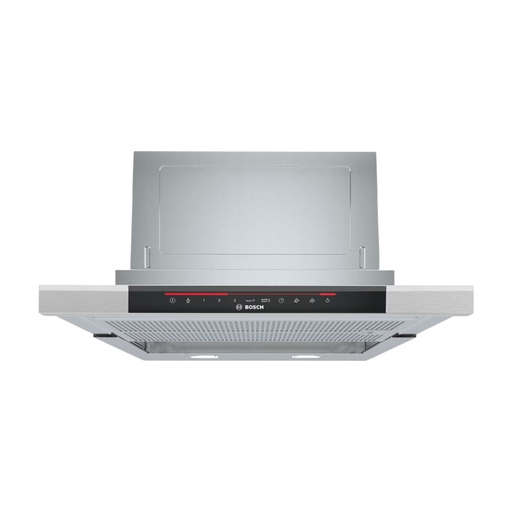
Why it suits this profile: This 59.8 cm semi-integrated model is designed for anyone looking for a built-in appearance, multiple settings and higher stated airflow.
The specifications state five speeds, a turbo setting and a dishwasher-safe filter. Check the required installation space in advance.
Stated output of 717 m³/h, maximum 53 dB according to the product data and LED lighting.
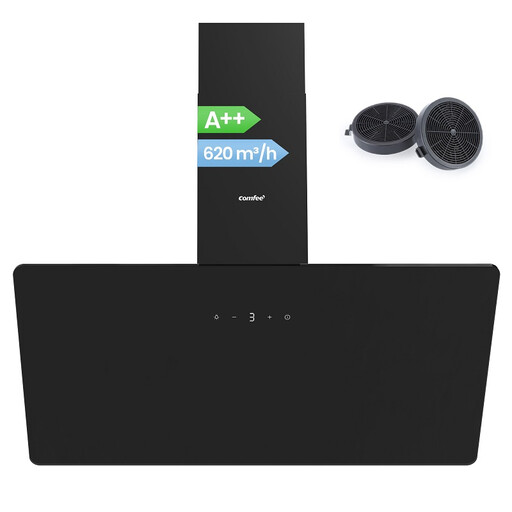
Why it suits this profile: The 90 cm-wide angled cooker hood is designed for larger cooking areas and households that want to adjust between multiple settings when cooking every day or intensively.
The product specifications list four speeds and two ventilation modes. Before buying, check that the dimensions and extraction route are suitable for your kitchen.
Stated airflow of 620 m³/h, energy class A++, 59 dB and a choice between external extraction and recirculation.
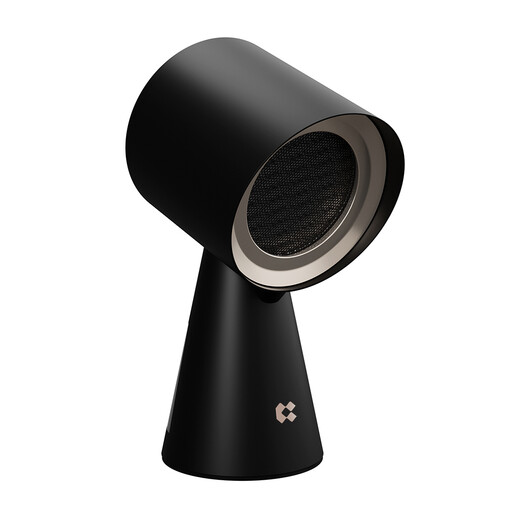
Why it suits this profile: This compact model works as a recirculating unit without wall mounting or an extraction duct. That makes it suitable for temporary cooking areas and homes where modifications are not permitted.
There is no need to install an extraction duct. However, bear in mind the limited maximum airflow and clean the filters regularly.
Two speeds, compact size, reusable filter module and no permanent installation required.
We have put together a complete, up-to-date list of products that fully meet these strict selection criteria and the applicable European safety regulations.
That depends on your home. External extraction carries cooking air outside through a duct, but requires a suitable connection. Recirculation is easier in a flat or rented home, but requires proper filter maintenance and usually a carbon filter.
That depends on how often you cook and how much you fry or bake. Check the filter regularly and follow the manual. Some models have dishwasher-safe aluminium filters; check this for each product.
Consumption varies by motor, setting and energy class. You should therefore compare annual consumption in kWh on the energy label or in the product specifications. LED lighting generally uses little power, but total consumption is mainly determined by the ventilation motor.
