
Vandaag of morgen in huis

Kwaliteit gegarandeerd

Welkomstaanbiedingen ontgrendelen: GRATIS bezorging | Tot 80% korting | Gratis 30 dagen JoyPlus-proefperiode
Download de app
An extractor hood should suit your hob, kitchen layout and cooking style. Yet many buyers focus mainly on appearance or a high extraction rate. This can leave you with an appliance that’s too noisy, doesn’t fit properly or ends up costing more because filters and installation parts aren’t included.
This buying guide will help you choose the right cooker hood for an apartment, rented home, open-plan kitchen or renovation.
A high maximum airflow sounds appealing, but actual performance also depends on the duct, bends, diameter and installation. With recirculation, the air is also passed through charcoal filters. This is different from an extractor hood vented outside.
So don’t compare just the maximum figure. Also look at:
A recirculating extractor hood needs charcoal filters to reduce cooking smells. These may be sold separately or need replacing over time. A washable metal grease filter is more practical for regular maintenance, but it doesn’t replace a charcoal filter when using recirculation.
Before buying, check whether the filter set is included, which model number you need and how often the manual recommends maintenance.
A 60 cm-wide extractor hood won’t automatically fit every cabinet or sit above every hob. Measure the available width, depth and height. Also check the clearance above an electric or gas hob, following the manufacturer’s instructions.
A black extractor hood with a glass front can look modern, but fingerprints and grease splashes may show up more easily. A matt finish or stainless steel model may be more practical if you don’t have much time for cleaning.
A 60 cm extractor hood will usually suit a standard hob of roughly the same width. For a wider hob or frequent cooking with several pans, a 90 cm extractor hood can provide more coverage.
The main styles are:
Airflow is usually measured in m³/h. A higher capacity can be useful when stir-frying, deep-frying or cooking in an open-plan kitchen, but the fan setting also affects noise. A product rated at 650 m³/h on boost isn’t necessarily quieter or more effective on its standard setting than a model with a lower maximum rate.
So you can’t identify a quiet extractor hood by marketing claims alone. Check the decibel rating for each setting. For example, the Ciarra 60 cm wall-mounted extractor hood with a black glass panel lists a maximum noise level of 64 dB and an airflow of 580 m³/h. The manufacturer also specifies a washable aluminium filter, LED lighting and support for both ducted extraction and recirculation.
With ducted extraction, cooking vapours are carried outside through a duct. This can be a good option if your home is suitable for it. In an apartment or rented home, drilling or modifying the ventilation system may not be permitted. A recirculating extractor hood offers more flexibility, but it needs correctly fitted charcoal filters and regular maintenance.
Washable aluminium filters should be cleaned regularly, as set out in the product manual. If you cook often, checking them every two to four weeks may be practical. Switch off the appliance and disconnect it from the power supply before removing or cleaning the filters.
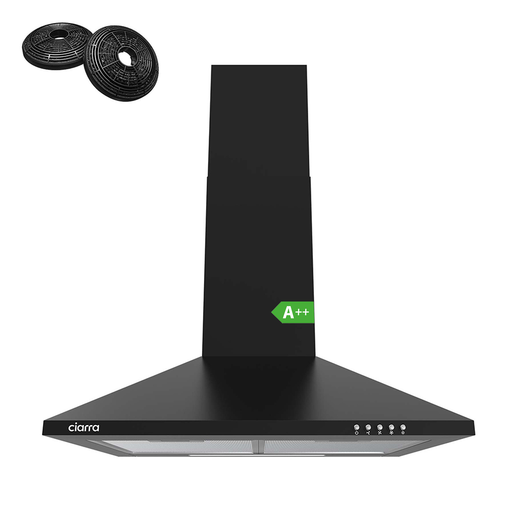
Why it suits this buyer: This 60 cm model has simple push-button controls and supports both ducted extraction and recirculation. That makes it a good choice for a first kitchen installation or a rented home.
The product listing specifies two ventilation methods and two washable aluminium filters. Check whether the charcoal filters needed for your chosen setup are included.
60 cm wide, push-button controls, integrated lighting, washable filters and a stated maximum airflow of 367 m³/h.
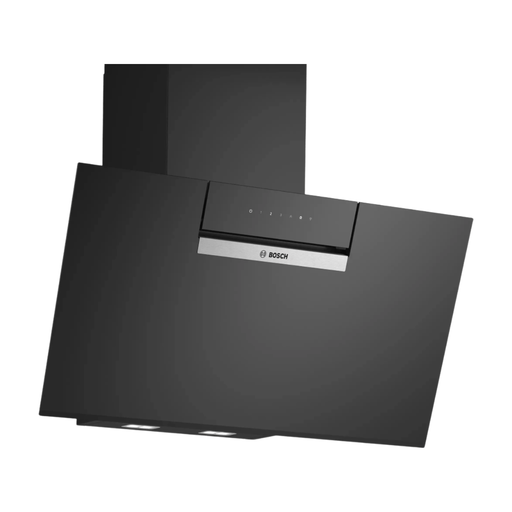
Why it suits this buyer: An open-plan kitchen often calls for careful consideration of noise, controls and connections. This wall-mounted model offers three settings plus an intensive setting, app control and support for both ducted extraction and recirculation.
The specifications list separate noise levels for normal and intensive operation, helping you make a more realistic comparison between performance and noise.
80 cm wide, dishwasher-safe aluminium filter, A+ according to the product listing, Home Connect and a stated intensive extraction rate of 768 m³/h.
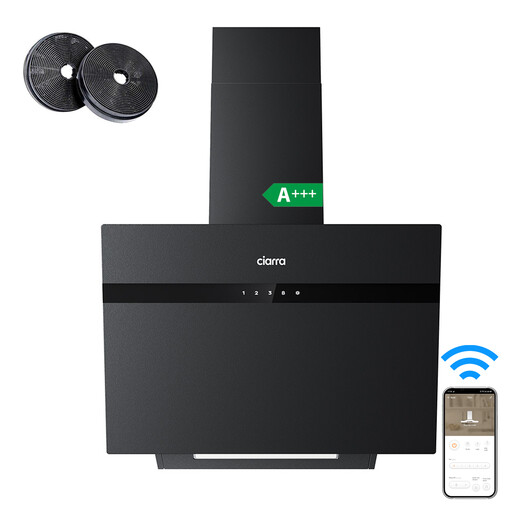
Why it suits this buyer: If you cook regularly and value remote control, this angled model combines app and Wi-Fi control with three settings and a boost function.
The product listing gives a maximum noise level of 58 dB and specifies a washable aluminium filter, plus support for ducted extraction and recirculation. Check Wi-Fi compatibility before installation.
60 cm wide, up to 650 m³/h according to the listing, dimmable LED lighting, Wi-Fi/app control and A+++ energy rating according to the product details.
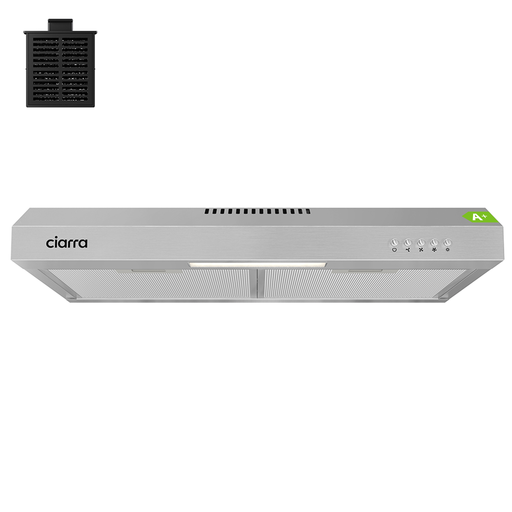
Why it suits this buyer: At 596 mm wide and 85 mm high, this compact design is made to fit beneath or inside a kitchen cabinet. It’s a practical option when space is limited.
The specifications list the airflow and noise level for each of the three settings. This makes it easier to choose a model suited to everyday cooking in a smaller space.
Suitable for built-in or wall mounting, two washable aluminium filters, LED lighting, A+ according to the listing and a maximum airflow of 184 m³/h.
We’ve put together a complete, up-to-date list of products that meet these strict selection criteria and the applicable European safety requirements.
It depends on your home. Ducting to the outside removes moisture and cooking vapours from the kitchen, but requires a suitable duct and permission for any alterations. Recirculation is more flexible for apartments and rented homes, but uses charcoal filters that need maintenance and may need replacing.
Check the noise level in decibels for each fan setting. A figure such as 58 or 60 dB often applies to a specific setting and not necessarily to boost. If in doubt, ask for the full product specifications and allow for extra noise from a long or winding duct.
Its lifespan depends on motor load, installation and maintenance. Clean the grease filters regularly, keep air vents clear and avoid abrasive cleaners on glass or metal. Check the filters as instructed in the manual and, ideally, have electrical connections fitted by a qualified installer.
