
Vandaag of morgen in huis

Kwaliteit gegarandeerd

Welkomstaanbiedingen ontgrendelen: GRATIS bezorging | Tot 80% korting | Gratis 30 dagen JoyPlus-proefperiode
Download de app
A new extractor hood may seem straightforward to choose, until you start comparing installation type, extraction, width, noise and filters. A model that looks great in the showroom will not automatically suit a rented property, open-plan kitchen or existing kitchen cabinet.
The most common poor purchases result from three pitfalls:
An under-cabinet extractor hood is fitted beneath a kitchen cabinet and is practical for smaller kitchens. A telescopic extractor hood has a pull-out front, so it remains mostly out of sight when not in use.
A wall-mounted extractor hood is fitted to the wall. Angled models often provide more headroom, while a classic chimney-style model forms a more prominent part of the kitchen design. A kitchen island requires a different type, so check that the model is specifically suitable for island installation.
If you have no existing outlet to the outside, choose a model with recirculation and check whether the correct charcoal filters are included or available separately. With an extractor hood with external venting, you need to consider the diameter, length and bends in the ducting. An installer can assess whether the existing connection is suitable.
Capacity is expressed in m³/h. A higher figure can be useful when cooking with a wok, frying or in an open-plan kitchen, but it does not by itself indicate how pleasant an extractor hood is to use every day. Also check the settings and noise level in dB.
As a practical comparison:
Bear in mind that manufacturers do not always present their measurements in the same way. Where possible, compare the lowest and highest settings rather than looking only at maximum capacity.
Energy ratings range from A+++ down to lower classes. An energy-efficient extractor hood with a favourable rating can help limit annual consumption, but also look at the stated annual energy consumption in kWh. This provides more context than the letter rating alone.
A washable aluminium grease filter reduces ongoing maintenance. Clean the filter according to the instructions; with regular cooking, this may be necessary every two to four weeks, for example. In recirculation mode, a charcoal filter is still required unless the manufacturer expressly specifies a different system.
Push buttons and rocker switches are practical and straightforward to use. An extractor hood with touch controls has a sleek appearance and is easy to wipe clean, but check that the controls are easy to reach. An extractor hood with Wi-Fi and app control is particularly useful if you want to manage settings remotely. Check app compatibility beforehand and confirm whether all functions can be used without an account.
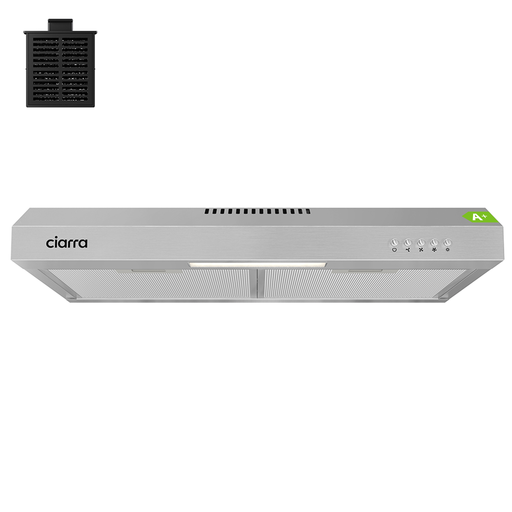
Why it suits this profile: This compact model is designed for installation beneath a cabinet and supports both recirculation and external venting. The push buttons are clearly laid out for everyday use.
The product information clearly states a width of 596 mm, a maximum noise level of 61 dB and two ventilation options. This means you can check the location and connection in advance.
A+ energy rating, two washable aluminium filters, LED lighting and a stated maximum capacity of 184 m³/h.
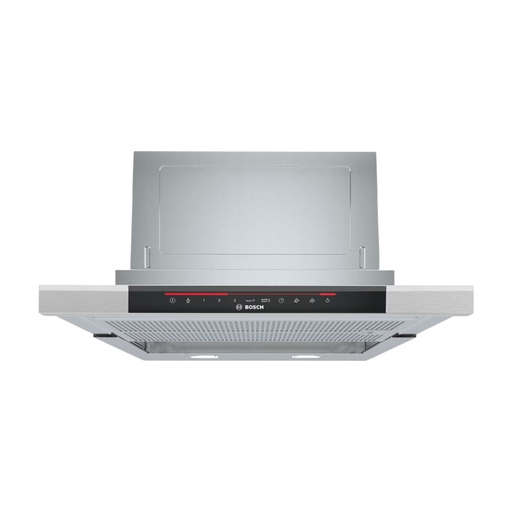
Why it suits this profile: This semi-integrated model is suitable for anyone who values an integrated look, electronic controls and multiple settings.
The specifications list separate figures for capacity, noise, settings, turbo mode and dishwasher-safe filter. However, check whether the extraction or recirculation kit is available for your installation.
Stated capacity of up to 717 m³/h, five speeds, LED lighting and a maximum noise level of 53 dB.
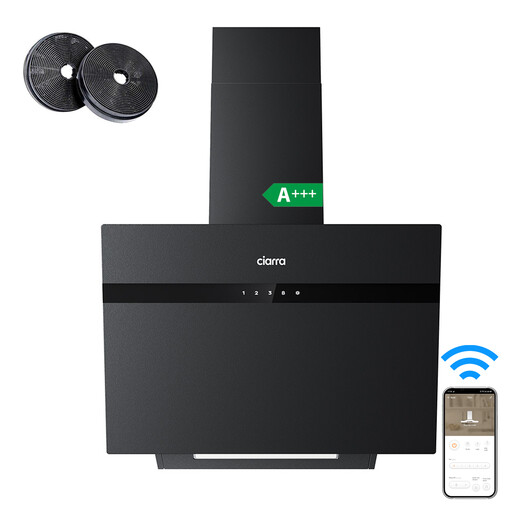
Why it suits this profile: This angled wall-mounted extractor hood is aimed at users who regularly cook intensively and also want touch controls, app functions and dimmable lighting.
The stated 650 m³/h is combined with three speeds and a boost function. According to the product specifications, the maximum noise level is 58 dB; check the figures for each setting before buying.
A+++ energy rating, Wi-Fi and app control, two lighting levels, extraction and recirculation modes and a washable aluminium grease filter.
We have put together a complete, up-to-date list of products that fully meet these strict selection criteria and the applicable European safety regulations.
Yes, when external venting is not possible. The air is passed through grease and charcoal filters before being returned to the room. Bear in mind that the filters require maintenance, and check whether the necessary charcoal filters are included. If you use gas or have limited ventilation, you will need to pay extra attention to the room’s general ventilation.
A 60 cm extractor hood will usually suit a hob of roughly the same width. For a wider hob, a 90 cm extractor hood can provide a larger capture area. Measure not only the hob, but also the cabinet, wall and available space above the cooking area.
This depends on the power, energy rating, annual kWh consumption and how often you use the highest setting. A model with a favourable energy rating is not automatically cheaper in every situation. Therefore, compare the stated annual consumption and also factor in the cost of charcoal filters when using recirculation.
