
Organiser with lots of salad
You need to chill several packs or bowls alongside your usual shopping and want to work out how much usable space you need first.


Work out how many salad packs and bowls need chilling alongside your usual shopping, and check that your fridge is at 4 °C. If everything won’t fit comfortably, extra fridge space could help. Compare the layout and annual energy consumption, and consider whether you’ll use the fridge after the neighbourhood meal, too.
You need to chill several packs or bowls alongside your usual shopping and want to work out how much usable space you need first.
You need extra fridge space for the gathering, but want the dimensions and energy use to suit your needs afterwards, too.
You want to keep the leaves properly chilled until serving, so you’re paying attention to the salad drawer, packaging and measured temperature.
When: If the salad and bowls fit, and you can check that the fridge is at 4 °C.
Trade-off: You won’t need another appliance, but you’ll need to consider the layout and leave room for your usual shopping.
When: If you need separate fridge space temporarily and a tabletop model with suitable internal dimensions will do.
Trade-off: Milieu Centraal advises switching on a second fridge for parties only if you don’t need it at other times.
When: If you’ll regularly need more fridge space after the neighbourhood meal, too, and the appliance will fit in your kitchen.
Trade-off: A larger model takes up more space. Check its external dimensions and the usable space inside for your bowls and drawers.
| Consideration | What to look for | Who it matters to |
|---|---|---|
| Measured storage temperature | The Netherlands Nutrition Centre (Voedingscentrum) recommends 4 °C. Check the temperature with a fridge thermometer once you’ve organised the fridge. | If I want to chill salad leaves in advance, I need to be able to check that the fridge is cold enough; around 36% of consumers prioritise a measured storage temperature. |
| Usable space | Look at both the capacity and the layout of the shelves and drawers. Measure your bowls and the space available in your kitchen, too. | When several bowls need chilling alongside my usual shopping, I want to know whether they’ll actually fit; around 29% of consumers prioritise extra usable fridge space. |
| Layout for leafy vegetables | Check the actual dimensions of the salad drawer and follow the storage advice for the produce you’re using. | If I want to store different salad leaves separately, I look for a drawer that suits my ingredients; around 21% of consumers prioritise the layout for leafy vegetables. |
| Use after the meal | Compare the energy information for suitable models and decide whether you’ll need the extra fridge space outside the gathering, too. | If you mainly want to avoid leaving an extra fridge running unnecessarily, consider how you’ll use it afterwards; around 14% of consumers say ongoing use and energy consumption are their main considerations. |
The capacity in litres doesn’t tell you whether a bowl will fit through the door or between the shelves.
Measure your bowls, the door opening, the gaps between shelves and the drawer before choosing a model. Use the litre capacity to narrow down your options, not as proof that everything will fit.
A drawer can help you organise your food, but it doesn’t tell you how long your salad will keep. The Netherlands Nutrition Centre gives different storage advice for opened mixed salad and whole lettuce.
Follow the advice for the product and packaging you’re actually using, and check the fridge temperature.
Salad could become unusable if you don’t take the storage advice or the actual temperature into account.
An extra fridge that stays on after the gathering will use electricity even when you don’t need the extra space.
Decide in advance whether you’ll use the fridge space later, and compare the energy consumption of models with a suitable capacity and layout.
The KK600 is an example of a compact, freestanding tabletop fridge for anyone looking for separate fridge space.
The KSV33VLEP is an example of a tall, freestanding fridge without a freezer compartment, with a drawer for fruit and vegetables.
The RDsfd 5220 Plus is an example of a larger, freestanding fridge for anyone who’ll need plenty of fridge space after dinner, too.
These models offer options for extra fridge space, from compact tabletop models to larger fridges, including built-in models and fridge-freezers. Choose based on the space available in your kitchen, the usable fridge layout and how you’ll use it after the neighbourhood meal.
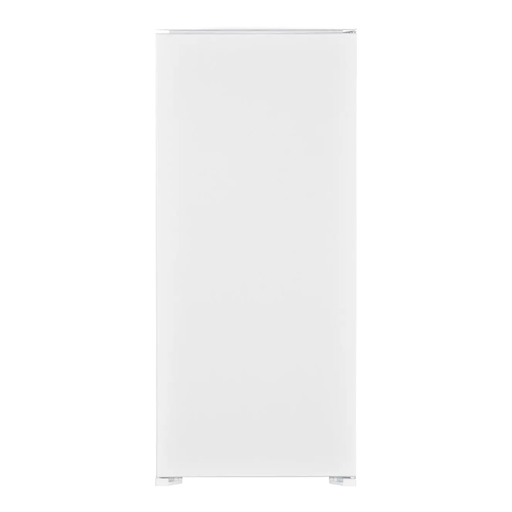 No image available
Could suit you if you want to keep a smaller amount of food chilled and your kitchen is suitable for a built-in model.
129-litre capacity; annual energy consumption of 92 kWh; dimensions of 54 × 54 × 88 cm; salad drawer, two glass shelves and temperature control. Check that the built-in configuration will suit your kitchen.
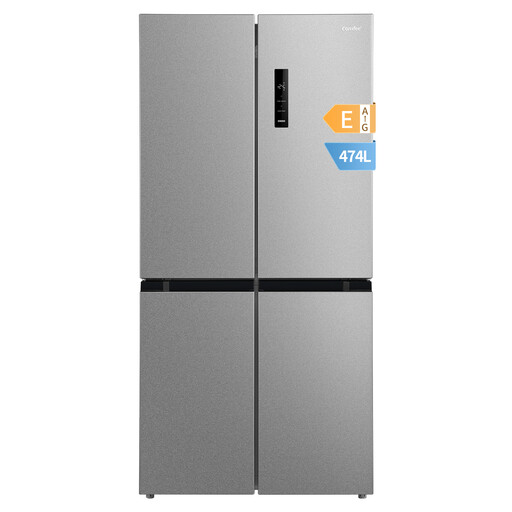 No image available
Could suit you if you want to chill several salad packs alongside other shopping and have room for a four-door model.
474-litre capacity; dimensions of 838 × 653 × 1775 mm; salad drawer with three temperature settings and external controls; energy rating E.
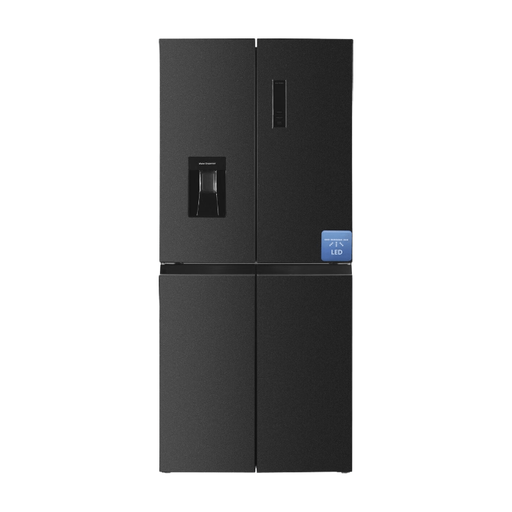 No image available
Could suit you if you want to store other chilled shopping as well as salad and have enough room for a fridge-freezer.
419-litre total capacity, including 269 litres of fridge space; two salad drawers; dimensions of 180 × 79 × 70 cm; annual energy consumption of 224 kWh. The user instructions recommend leaving 5–10 cm of clearance around the appliance for ventilation.
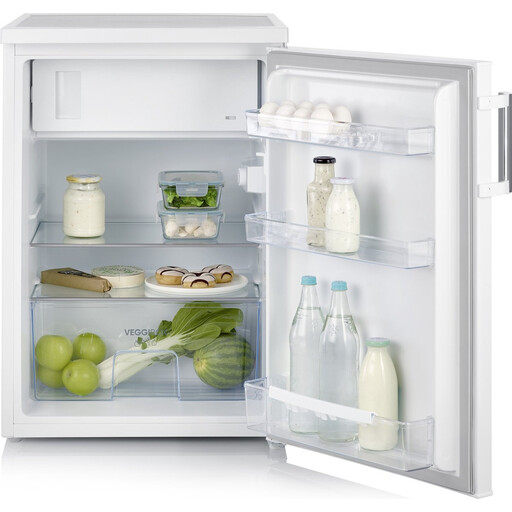 No image available
Could suit you if you’re looking for a compact, separate fridge and would also like a small freezer compartment.
120-litre total capacity, with 107 litres of fridge space and 13 litres of freezer space; salad drawer and temperature control; annual energy consumption of 87 kWh; energy rating C.
 No image available
Could suit you if you’re looking for compact fridge space for salad leaves and have limited room available.
92-litre capacity; 47 cm wide; salad drawer, adjustable glass shelves and seven temperature settings; energy rating E.
The Netherlands Nutrition Centre recommends setting your fridge to 4 °C. Place a fridge thermometer in the middle of the bottom shelf and leave it there for half a day or overnight. Adjust the fridge if the thermometer shows a higher temperature.
For opened mixed raw salad without dressing, the Netherlands Nutrition Centre recommends storing it in the fridge for 2 days. For an opened head of raw lettuce, it recommends 2–5 days. Follow the advice that applies to the product and packaging you’re using.
Not if you don’t need the extra fridge space afterwards. Milieu Centraal advises switching on a second fridge for parties only if you don’t need it at other times. So decide whether you’ll use the extra space on other occasions, and compare the energy consumption of models that will fit.
Take them out of the fridge as shortly as possible before use, and put them back quickly. The Netherlands Nutrition Centre advises not leaving highly perishable food out of the fridge for more than 2 hours, and says to throw it away afterwards.
It depends on whether you’re selling food and how often. The NVWA (Netherlands Food and Consumer Product Safety Authority) says registration isn’t required if you sell food once a year, but it is required if you do so several times a year. Food sold at events must also meet rules for safe, hygienic preparation, sale and storage. These rules don’t automatically apply to a meal shared privately.