
Host with a full fridge
You need to make room for the beetroot and other dishes for your guests. So don’t just look at the capacity in litres: check the layout too, and make sure you can monitor the temperature with a thermometer.


For a single family gathering, you don’t automatically need a second fridge: use the one you already have if your sealed containers fit and you can check the temperature is 4 °C. Only buy extra fridge space if it will be useful after the gathering too, or choose a compact appliance you can use temporarily if it will hold the dishes you’ve planned. The Voedingscentrum advises keeping opened or home-cooked beetroot in the fridge for no more than two days.
You need to make room for the beetroot and other dishes for your guests. So don’t just look at the capacity in litres: check the layout too, and make sure you can monitor the temperature with a thermometer.
Your existing fridge will usually be enough, but extra space can come in handy around the time of a gathering. Also consider whether you can switch the appliance off afterwards.
You’re looking for everyday fridge space as well as a freezer compartment for portions you won’t eat within the recommended fridge storage time.
An extra fridge is most useful when its layout suits the dishes you need to store on the day and how you’ll use it afterwards.
A good fit if: your sealed containers fit and you can set the temperature to 4 °C and check it.
Bear in mind: the stated capacity in litres doesn’t tell you exactly how many dishes will fit between the shelves, and extra space won’t extend the recommended storage time.
A good fit if: you store plenty of chilled groceries outside of gatherings too, and you have a separate freezer or don’t need one.
Bear in mind: you won’t be able to freeze portions in this appliance. Compare its external dimensions and annual energy consumption too.
A good fit if: you need everyday fridge space as well as a freezer compartment for food you want to keep for longer.
Bear in mind: the total capacity includes the freezer, so compare the fridge and freezer capacities separately.
A good fit if: you need extra space temporarily, have room for the appliance and can fit your containers inside its smaller compartment.
Bear in mind: a second appliance takes up space and uses electricity. Milieu Centraal recommends switching on a second fridge only for parties.
A good fit if: you want to use an existing cupboard space and the niche dimensions, ventilation and door fittings are compatible with the model.
Bear in mind: built-in requirements limit your choice. Check that the interior is big enough for your dishes too.
| What to consider | What to look for when buying | Who is this important for? |
|---|---|---|
| Usable fridge space | Measure your containers and compare shelf depth, clearance and fridge capacity. The stated capacity in litres doesn’t tell you how many dishes will fit. The Consumentenbond points out that the stated capacity is measured without drawers, shelves and racks. | I want enough fridge space for everyday use after the gathering too, so a layout that fits my dishes matters more than the stated capacity in litres alone. Around 31% of consumers prioritise fridge space that remains practical to use. |
| Chilling cooked beetroot | Check that you can set and measure the temperature, and allow for sealed containers and rapid cooling. The Voedingscentrum recommends a fridge temperature of 4 °C. | I want to store cooked beetroot in sealed containers at a temperature I can check, so I can make sure in advance that the fridge is cold enough. Around 31% of consumers prioritise safe storage at a measurable temperature. |
| Temporary extra space | Measure your dishes and the space available for the appliance, and decide whether you can switch it off after the gathering. | I mainly need extra space for the family gathering, so I don’t want a second appliance running unnecessarily all the time. Around 23% of consumers prioritise temporary extra fridge space. |
| Energy consumption | Compare the annual consumption in kWh on the energy label and check the fridge and freezer capacities separately. | I need a suitable size first, but after that I mainly want to consider the annual energy consumption. Around 15% of consumers cite energy use during everyday operation as their main reason for buying. |
Shelves and drawers reduce the practical space available. And with a fridge freezer, some of the total capacity is taken up by the freezer.
Measure your dishes and compare the layout and fridge capacity separately before choosing a model.
Extra fridge space doesn’t change the storage advice for opened or home-cooked beetroot.
Plan when you cook and serve it around the Voedingscentrum’s advice: keep it in the fridge for no more than two days. Freeze portions if you want to keep them for longer.
A second fridge uses energy even when you don’t need the extra space.
Decide before you buy whether temporary use will be enough. If you’ll leave it running, compare the annual consumption in kWh. Milieu Centraal recommends switching on a second fridge only for parties.
Bosch says that model KSV36VLEP is no longer available. A similar model code doesn’t prove that the version and specifications are the same.
Check the full model code, specifications and availability of the appliance you’re considering.
Fridge freezers for anyone looking for freezer space as well as fridge space; the RB38C7B6AB1/EF is an example of this type.
Freestanding fridges without a freezer compartment, such as the Rd 4200 Pure, are an option if you’re mainly looking for fridge space.
Compact freestanding table-top models, such as the TSE1285N, may suit a small space or provide temporary extra fridge capacity.
Built-in fridges are worth considering if you have a suitable niche and door fittings. The KKD7088T is a door-on-door model.
Freestanding fridges without a freezer compartment may suit households looking for fridge space only.
This selection includes freestanding fridge freezers and one built-in fridge for households looking for extra fridge space around a gathering. If you choose a built-in model, check that it fits the niche and door fittings.
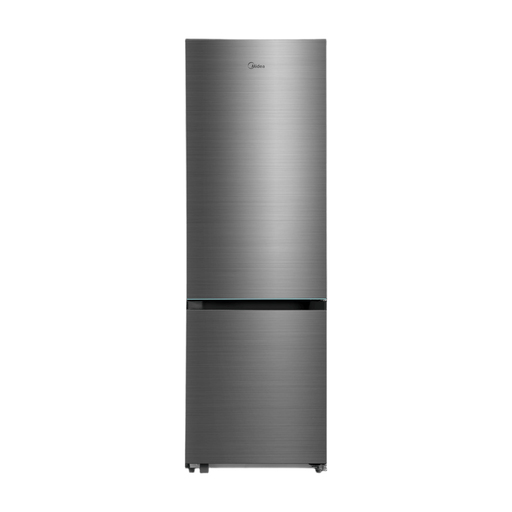 Image unavailable
A freestanding fridge freezer for anyone who wants a freezer compartment as well as extra fridge space.
Total capacity: 330 L; energy rating E; No Frost; 35 dB; Super Cooling.
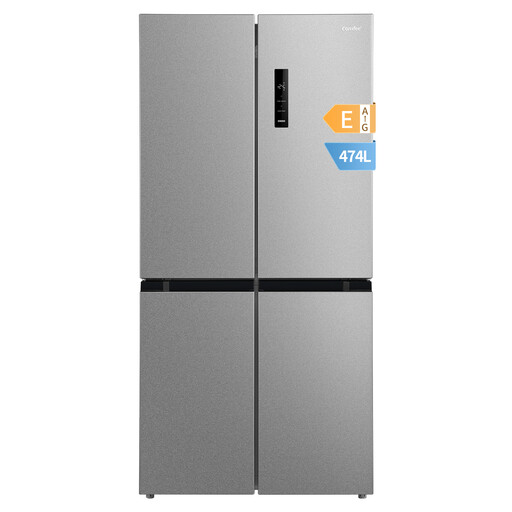 Image unavailable
The stated total capacity may be useful if you need to store several chilled dishes for a gathering. Check that the layout suits your dishes.
Total capacity: 474 L; energy rating E; Vario Box; crisper drawer with 3 temperature settings.
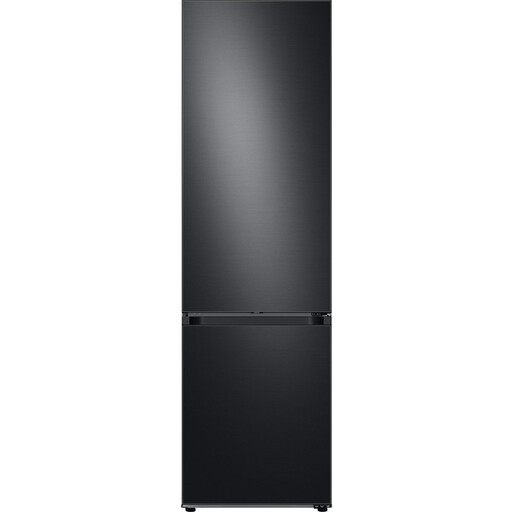 Image unavailable
A fridge freezer for anyone who wants to combine everyday fridge space with a separate freezer compartment.
Total capacity: 387 L; energy rating A; No Frost; Twin Cooling Plus.
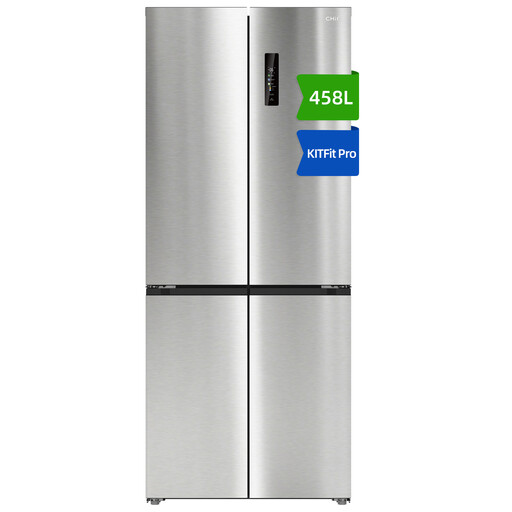 Image unavailable
The separately listed fridge and freezer capacities make this model worth considering if you want to store chilled dishes as well as portions for freezing.
Total capacity: 458 L; fridge capacity: 300 L; freezer capacity: 158 L; energy rating E; No Frost; Care+ zone with settings of 0, 4 and 7 °C.
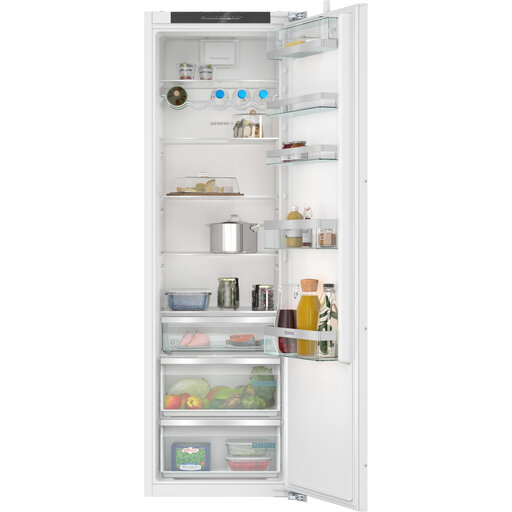 Image unavailable
A built-in model for anyone looking for extra fridge space who has a suitable niche and door fittings.
Before buying, check the niche dimensions, ventilation and door fittings for your planned installation.
The Voedingscentrum recommends keeping it for no more than two days in the fridge or three months in the freezer. Cool cooked leftovers quickly, seal them well and don’t leave them out of the fridge for more than two hours. For an unopened pack, follow the storage instructions and date on the packaging.
Set the fridge to 4 °C, as recommended by the Voedingscentrum, and check the temperature with a fridge thermometer. Place it in the middle of the bottom shelf and take a reading after half a day or overnight. Adjust the fridge if the temperature is higher.
No. Milieu Centraal recommends switching on a second fridge only for parties; choosing an appliance of a suitable size is another option. Only put cooked food in a fridge once it’s cold enough.
Yes. The Dutch government states that energy labels are mandatory for household appliances. When comparing fridges, also check the annual consumption in kWh and the separate fridge and freezer capacities on the label.