
Organisers with a full fridge
You want to fit the grapes and other food for the community meal in your fridge without overfilling it. The amount of usable fridge space is therefore an important factor when choosing.


Start with your existing fridge: if the grapes and other dishes fit and you can keep the temperature at 4 °C, you generally won’t need an extra appliance just for the community meal. If you regularly need more fridge space, compare the usable layout and dimensions. Choose a fridge-freezer only if you’ll also use the freezer compartment. The Voedingscentrum recommends keeping your fridge at 4 °C. If you plan to put it in an unheated space, check the climate class of the specific model too.
You want to fit the grapes and other food for the community meal in your fridge without overfilling it. The amount of usable fridge space is therefore an important factor when choosing.
You’re looking for temporary or compact extra fridge space and want to check in advance that the appliance, door and location will all fit.
You’ll continue using the appliance after the meal, so you’re weighing up its layout, energy consumption and whether you need a freezer compartment.
A good fit when: the bunches of grapes and other dishes fit, and you can check the temperature.
Consider: the stated capacity isn’t the same as the free space between drawers and shelves.
A good fit when: you regularly need extra fridge space even after the meal, but don’t need freezer space.
Consider: a second fridge that stays switched on will use electricity continuously. Compare the layout and annual energy consumption.
A good fit when: you mainly run short of space when hosting gatherings, or a larger freestanding fridge won’t fit.
Consider: a compact appliance offers less room for whole bunches and other dishes. Milieu Centraal recommends switching on a second fridge only for occasions such as parties.
A good fit when: you also need freezer space for everyday use.
Consider: the total capacity includes the freezer compartment, which can’t be used for fresh grapes.
First, work out how much space you need for the grapes and other dishes. Then compare the usable layout, where the appliance will go and how you’ll use it after the meal.
| What to consider | What to look for when buying | Which consumers does this matter most to? |
|---|---|---|
| Storage temperature | Check whether you can set the temperature, then measure it after installation with a fridge thermometer. The Voedingscentrum recommends 4 °C. | If I want to store grapes and other chilled food safely, temperature control comes first. Around 33% of consumers prioritise this. |
| Usable fridge space | Check whether whole bunches and serving dishes will fit. With a fridge-freezer, only count the fridge compartment. | If I need to store dishes for the meal as well as grapes, I want to know how much free space there really is. Around 27% of consumers prioritise usable fridge space. |
| Suitable location | Measure the appliance, the available space and the doorway. If it’s going in an unheated space, check the model’s climate class. | If I’m short on space or want to put the appliance in an unheated utility area, the location needs to be suitable. Around 20% of consumers prioritise finding a suitable location. |
| Use after the meal | Decide whether you’ll need the appliance permanently. For models that fit your space, compare the energy label and stated consumption in kWh per year. | I also consider how useful the appliance will be in everyday life after the community meal, and how much electricity it will use. Around 20% of consumers prioritise everyday use after the meal and energy consumption. |
With a fridge-freezer, some of the capacity is taken up by the freezer compartment. Drawers and shelves also reduce the space you can actually use for grapes and serving dishes.
Compare the stated fridge capacity and layout with the bunches and dishes you want to store.
A second fridge that stays on after the gathering becomes an everyday appliance too. Milieu Centraal recommends switching on a second fridge only for occasions such as parties.
First, see whether your existing fridge will do. If you’re buying one for the long term, compare the annual energy consumption in kWh.
A fridge works within the ambient temperatures specified by its climate class. An unheated shed or garage may therefore need a different check from a kitchen.
Check the climate class and the temperature at the intended location. Once the fridge is in use, check its internal temperature too.
The freestanding KSV33VLEP is a fridge without a freezer compartment, with a stated fridge capacity of 324 l.
The freestanding Rd 4200 Pure has a stated total capacity of 247 l and an EasyFresh drawer.
The RSSE265K40WN is a freestanding fridge with a stated capacity of 252 l.
The RB34C605CS9/EF is a fridge-freezer with a stated total capacity of 344 l.
These Joybuy products include fridge-freezers and a built-in fridge for anyone considering not just space for fresh food, but also layout, installation or freezer space. For each model, compare the stated fridge capacity with the space available.
 No image available
Could be a good fit if you need freezer space as well as fridge space, and want to be able to adjust the layout.
187 l fridge capacity and 73 l freezer capacity; 260 l in total. 55 cm wide, with a Fresh Zone, adjustable shelves and a reversible door. E energy label.
The 73 l freezer compartment can’t be used for fresh grapes.
 No image available
Could be a good fit if you want to store chilled groceries as well as grapes and are looking for a built-in model.
181 l fridge capacity, three glass shelves and a salad drawer. E energy label; stated niche dimensions 54 × 54 × 122 cm.
Before buying, check that the niche will fit these dimensions.
 No image available
Could be a good fit if you need a separate amount of fridge space and will also use the freezer compartment.
232 l fridge capacity and 98 l freezer capacity; 330 l in total. The description lists four fridge shelves and a salad drawer. The product model is stated to have a noise level of 35 dB and an E energy label.
The 98 l freezer compartment doesn’t count as space for grapes.
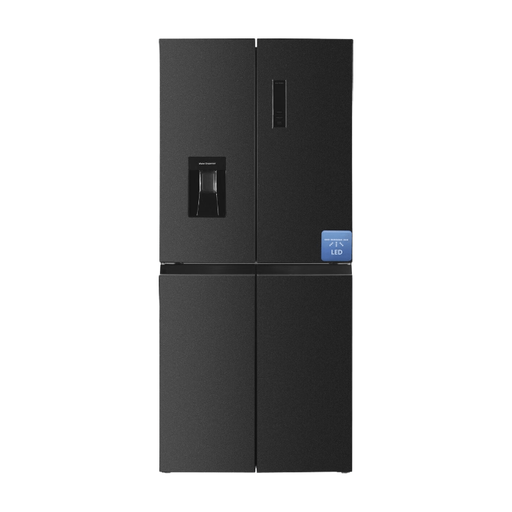 No image available
Could be a good fit if you’re looking for 269 l of fridge space and will also use the freezer compartment.
269 l fridge capacity and 150 l freezer capacity; 419 l in total. The description lists adjustable shelves and a reversible door.
The 150 l freezer compartment isn’t fridge space. Also check that the dimensions fit the available space.
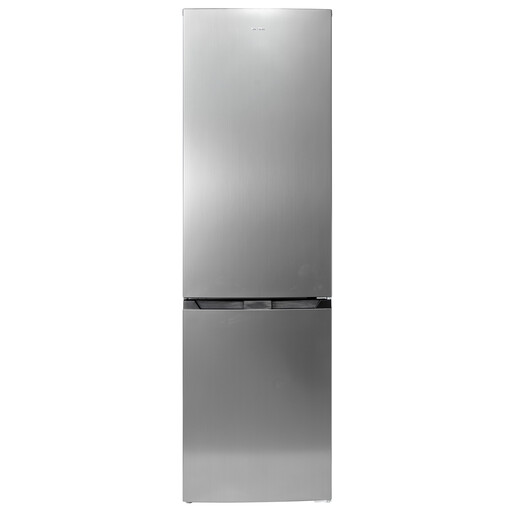 No image available
Could be a good fit if you’re looking for a freestanding model with separate stated capacities for the fridge and freezer.
182 l fridge capacity and 71 l freezer capacity; 253 l in total. The description lists adjustable shelves, a salad drawer and an adjustable thermostat.
The 71 l freezer compartment can’t be used for chilled grapes.
The Voedingscentrum recommends keeping grapes in the fridge for 1–2 weeks for the best quality. Keep them on the stem, in their packaging, in a paper bag or on a plate, and don’t let them get damp. Throw away any grapes that are clearly rotten or mouldy, and check any grapes that were touching them too.
Wash the grapes under running water before eating them. Until then, the Voedingscentrum recommends storing them without getting them damp. There’s no need to use soap, bleach or other cleaning products.
The Voedingscentrum recommends a fridge temperature of 4 °C. Place a fridge thermometer in the middle of the bottom shelf and leave it there for half a day or overnight. Adjust the fridge if the temperature reading is higher.
New fridges have an energy label with ratings from A to G, as explained by the European Union and the Dutch government. If a product is faulty, contact the seller. According to the Dutch government, there’s no fixed statutory warranty period of two years in the Netherlands; your statutory warranty depends on what you can reasonably expect from the product.
If you’re buying a new fridge as a private customer and handing in an old, similar appliance, the Dutch old-for-new scheme also applies to online purchases. The seller can’t charge you for taking it back. Ask in advance how you can hand over the old appliance or arrange for it to be collected.