
The festive baker who likes to plan ahead
Makes several batches of dough in advance and wants to check whether a baking tray will fit and how much dough can be frozen at once.


First, check whether you can use your existing freezer at −18 °C and whether it has enough room for your portions of dough or baking tray. You don’t automatically need an extra appliance for one festive meal. If there isn’t enough space, choose based on the internal dimensions, how much you want to freeze at once and where you’ll put it: an under-counter freezer takes up less floor space, an upright freezer offers drawers, and a chest freezer may suit larger or unusually shaped packages.
Makes several batches of dough in advance and wants to check whether a baking tray will fit and how much dough can be frozen at once.
Needs extra freezer space, but has to weigh up the external dimensions, ventilation space and practical layout against the space available.
Wants to put the freezer in a garage or shed and needs to check the permitted ambient temperature for the specific model.
First, check the temperature and space in your existing freezer. If you need an extra appliance, compare its shape and layout with your portions, the space available at home and how you’ll use it after the festive meal.
Choose this if: your freezer can be set to −18 °C and has room for the portions you need or a baking tray while you freeze them.
Bear in mind: the space available and how much you’re freezing at once; smaller portions can make planning easier.
Choose this if: you need extra freezer space but have limited floor space, and your portions will fit in the compartments or drawers.
Bear in mind: suitable external dimensions don’t guarantee that a baking tray will fit through the door and into a drawer.
Choose this if: you want to store larger quantities in separate compartments, even after the meal.
Bear in mind: the space it needs, the drawer layout, its freezing capacity and the ambient temperature permitted for the specific model.
Choose this if: you have room for a lid that opens upwards and want to store packages that won’t fit neatly in a drawer.
Bear in mind: portions may not be as easy to reach as they are in separate drawers. Also check the permitted temperature of the room where you’ll put it.
| What to consider | What to check before buying | Who is this important for? |
|---|---|---|
| Portions and baking tray | Measure the baking tray, packaged portions, door opening and usable compartments. Compare the stated freezing capacity in kg per 24 hours with the amount you want to freeze. | If I want to freeze dough on a baking tray first, both the tray and the portions need to fit in the appliance. Around 36% of consumers give suitable portions and space for a baking tray top priority. |
| Space at home | Measure the space where you’ll put the appliance and the route to it; compare both the external dimensions and the internal layout of the model. | With limited kitchen space, I want to know whether the appliance will fit where I intend to put it without making the storage layout impractical. Around 29% of consumers prioritise suitable external dimensions. |
| Annual energy use | Compare the current EU energy label and the annual consumption in kWh of models that are suitable in terms of size and freezing function. Consider whether the extra freezer will stay on after the festive period. | If the appliance will run all year afterwards, I want to take its stated energy use into account when choosing. Around 21% of consumers prioritise electricity consumption when an appliance is used over the long term. |
| Temperature where you’ll put it | Compare the permitted minimum and maximum ambient temperature for the specific model with the temperature in the room. Also check whether the door or lid can open properly there. | If I’m putting it in an unheated garage or shed, I want to know whether the manufacturer says the model can be kept at that temperature. Around 14% of consumers give suitability for a cold utility room top priority. |
A freezer may have enough capacity, but the baking tray might not fit through the door or inside the drawers.
Measure the baking tray and the usable internal dimensions of the specific model. If the tray won’t fit, plan to freeze smaller portions that you can package afterwards.
Low Frost doesn’t mean you won’t need to defrost the appliance. Inventum says the VK562W chest freezer needs to be defrosted periodically.
Check the defrosting system of the specific model and choose a layout that suits how you want to store portions of dough.
An extra freezer may stay switched on after the festive meal. Milieu Centraal recommends comparing a suitable size and the stated annual consumption in kWh.
First, check the space in your existing freezer. If you’re buying a new one, compare the energy label and annual consumption of models suited to your needs.
The permitted ambient temperature varies by model; having enough usable capacity doesn’t make an unsuitable location suitable.
Compare the temperature where you plan to put it with the limits given by the manufacturer for the specific model.
The GTV15NWEB gives you an idea of what to look for in a compact under-counter freezer.
The VK562W is an example of a compact chest freezer with a hanging basket.
The BREMEN132-040BW is an example of an under-counter freezer.
The FNe 4204 Pure NoFrost is an example of a freestanding upright freezer with drawers for separate storage.
The B5RFNE294W is an example of a larger freestanding upright freezer.
The Joybuy options below are freestanding freezers offering extra storage for portions of dough. For each model, check that the internal layout suits your baking tray and portions, and that its stated freezing capacity is right for the amount you want to freeze at once.
 No image available
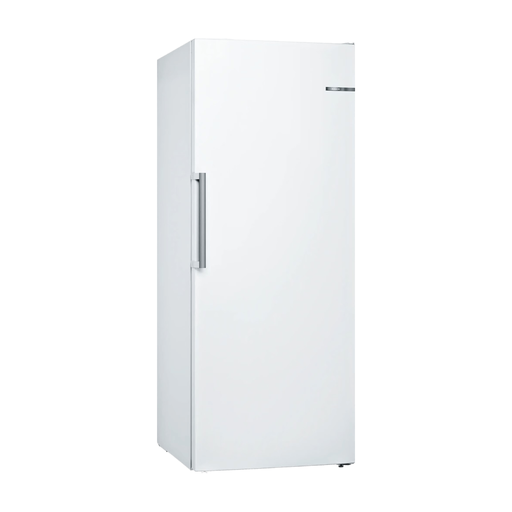
The Vario Zone layout and BigBox drawer offer different storage options for larger portions.
Stated capacity: 328 l. Freezing capacity: 23 kg per 24 hours. No Frost, Vario Zone and BigBox drawer. Energy class C; white. External dimensions: 1760 × 700 × 780 mm.
 No image available
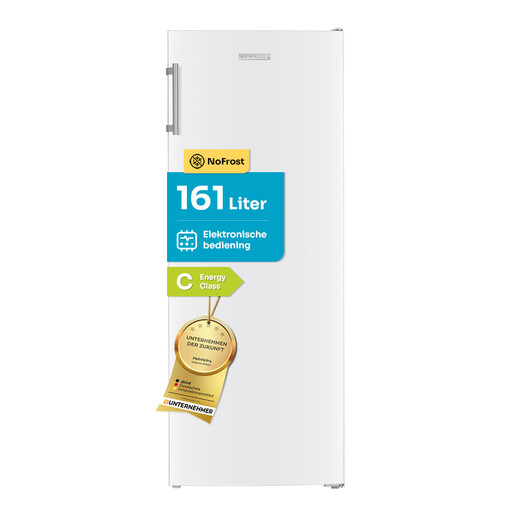
The drawers and trays provide separate spaces for storing packaged portions.
Stated capacity: 161 l. Freezing capacity: 4,5 kg per 24 hours. No Frost, Fast Freeze, two trays and three drawers. Stated temperature range: −14 °C to −22 °C; check that the settings suit how you plan to use it. White; energy class C.
 No image available
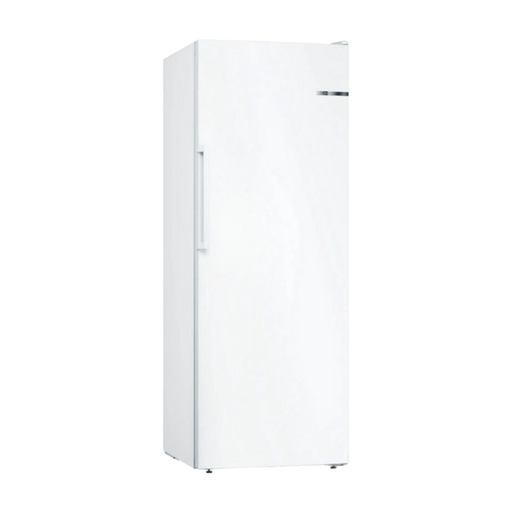
The flexible layout, with drawers and a BigBox, is designed for different types of frozen food and packaged portions.
Stated capacity: 200 l. Freezing capacity: 16 kg per 24 hours. VarioZone, BigBox, NoFrost and SuperFreeze. Freestanding; white.
 No image available
The three drawers provide separate compartments for packaged portions of dough.
Stated capacity: 87 l. Freezing capacity: 5 kg per 24 hours. No Frost and Fast Freeze. External dimensions: 84,5 × 55 × 59,5 cm. The stated ambient temperature range is 10–43 °C; according to this limit, the model isn’t intended for use in a room below 10 °C.
 No image available
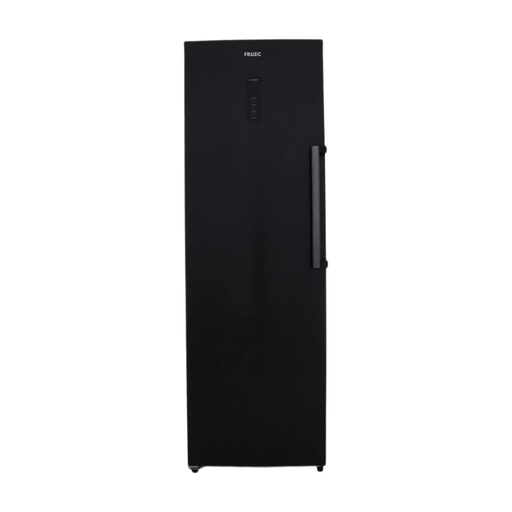
Its capacity may suit anyone who wants to store larger quantities of frozen food as well as portions of dough.
Stated capacity: 274 l. Freezing capacity: 17 kg per 24 hours. No Frost and digital temperature control. External dimensions: 185 × 60 cm. Dark inox; energy label C.
Voedingscentrum recommends setting your freezer to at least −18 °C. Don’t freeze too much at once, and divide the dough into small portions. For the specific dough, also follow the recipe and storage instructions.
For shaped cookie, scone or similar biscuit dough, King Arthur Baking describes freezing it on a tray first, then packaging, labelling and dating it. This advice applies to the types of dough mentioned and doesn’t specify a storage period or baking time for every recipe.
Don’t assume raw dough is safe to taste: Voedingscentrum warns that flour and raw egg may contain pathogens. Bake the dough according to the recipe rather than serving it raw. Young children, pregnant people, older people and anyone with a weakened immune system are particularly vulnerable.
No, it depends on the ambient temperature permitted for the model. Bosch specifies a minimum of +10 °C for the GTV15NWEB, while Inventum says the VK562W can be used in a room down to −15 °C. Compare that limit with the temperature where you plan to put it.
The EU energy label places the appliance in an energy class from A to G and provides information to help you compare suitable models. Your Europe says the label must also be clearly displayed online; compare the stated annual consumption in kWh as well.