
Family that batch cooks
If you regularly freeze several portions at once, you’ll need enough usable space and an layout that makes it easy to find your containers. The Netherlands Nutrition Centre recommends storing leftovers in sealed containers.


For the occasional portion of lentil stew, your existing freezer will do as long as the sealed containers fit without pushing out other food. If you regularly freeze several family meals, compare an under-counter freezer with an upright model for usable capacity, dimensions and annual energy consumption. If you plan to keep it in a shed or garage, also check whether the specific model is suitable. Let the stew cool, then put the sealed portions in the fridge or freezer within two hours, as advised by the Netherlands Nutrition Centre.
If you regularly freeze several portions at once, you’ll need enough usable space and an layout that makes it easy to find your containers. The Netherlands Nutrition Centre recommends storing leftovers in sealed containers.
If you mainly want to store a few extra portions now and then, the space you have available and the appliance’s dimensions may be decisive. Measure your containers and the spot where the freezer will go.
If you want to put a freezer somewhere other than a heated kitchen, check whether the specific model is suitable for the temperature there. The Consumers’ Association points out that you should check the climate class and the information for the exact model.
Choose this when: you occasionally have leftover portions of lentil stew and they fit in your current freezer.
Trade-off: you don’t need to make room for another appliance, but available space and layout may be limited.
Choose this when: you regularly need extra space for portions but have limited floor space or headroom.
Trade-off: an under-counter model usually offers less storage space than an upright freezer; check that your containers fit the layout.
Choose this when: you regularly freeze several family meals and want to keep them organised.
Trade-off: an upright model needs space, so compare specific models for dimensions and kWh per year.
Choose this when: you want to store large or unusually shaped items as well as portions, and can organise the contents from the top.
Trade-off: for small portions you reach for often, the drawers in an upright freezer may be more practical.
First, measure the space in your existing freezer and the spot for any additional appliance. Then compare the usable capacity, external dimensions and annual energy consumption of models suited to how you’ll use them.
| What to consider | What should you check? | Who should consider this? |
|---|---|---|
| Space and organisation | Measure your containers and check the usable freezer space and drawer layout. | If I regularly freeze several portions, I want enough space and to be able to find the containers easily. Around 36% of consumers prioritise space and organisation for family portions when choosing. |
| Energy consumption | For a suitable size, compare the annual consumption in kWh on the EU energy label. The European Commission explains what energy information the label displays for freezers. | If an extra freezer is running all the time, I want to factor in its energy consumption rather than looking only at capacity. Around 29% of consumers prioritise energy consumption. |
| Limited space | Measure the available space and compare it with the external dimensions of the specific model. | If I’m short on space, the appliance has to fit where I plan to put it, even if that means I can store less food. Around 21% of consumers choose primarily on the basis of suitable dimensions. |
| Unheated location | Check the temperature at the location and look at the climate class and any additional information for the specific model. | If my freezer is going in a garage or shed, I want to know whether it’s suitable for the temperature there. Around 14% of consumers prioritise suitability for an unheated location. |
Extra capacity is only useful if you need it, and another appliance also means ongoing energy consumption.
First, check how much free space your existing freezer has, then choose a suitable size if you need one.
An extra appliance will use electricity even when there’s very little in it.
The temperature in an unheated space may fall outside the range a model is designed for. The Consumers’ Association gives 10 °C as the lower limit for climate class SN; check the suitability of the specific model for temperatures below this.
Measure the temperature where you plan to put it and check the manual or model specifications. Any additional guidance from the manufacturer applies only to the model it refers to.
With an upright freezer, drawers make the contents easier to reach; with a chest freezer, you take items out from the top.
Choose a layout that suits what you freeze and how often you take out individual portions.
The VR1430W we looked at is a freestanding upright model with drawers, suited to anyone who wants to organise portions.
The FNe 1404 we looked at is a compact under-counter model with drawers.
The GSN54DWCV we looked at is a large freestanding upright freezer for households that store plenty of food.
These models offer extra freezer space for family portions, from compact appliances to freestanding upright freezers and a chest freezer.
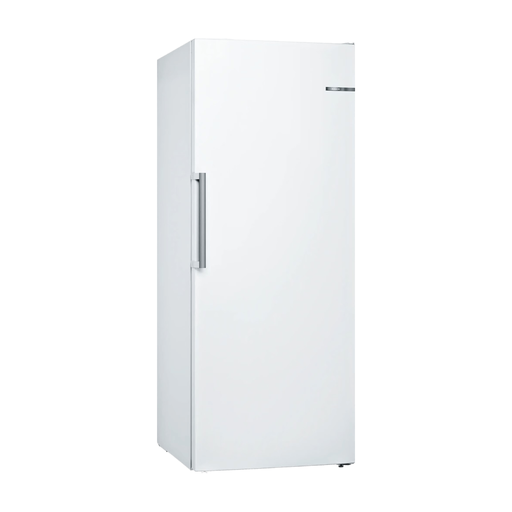 No image available
Suited to anyone who regularly wants to store several family portions along with other frozen food.
The product name lists a capacity of 328 L and energy class C.
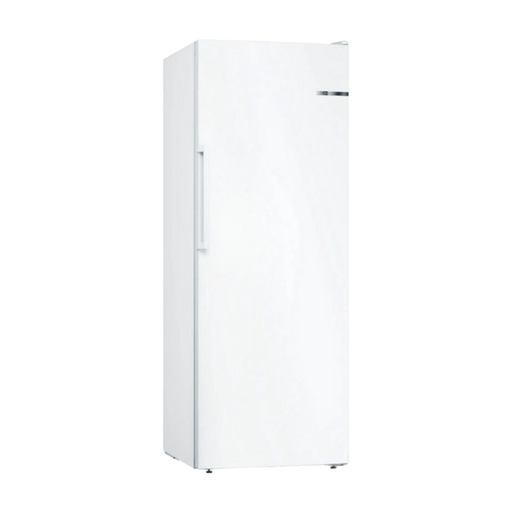 No image available
A freestanding upright freezer for anyone who wants to store portions alongside other frozen food.
 No image available
Suited to anyone short on space who’s looking for extra storage for portions.
The product name lists a capacity of 87 litres and energy class B. According to the product information, this model has no No Frost function and needs to be defrosted manually.
 No image available
A compact upright freezer for anyone who wants to store individual portions in a freestanding appliance.
The product name lists a capacity of 60 L.
 No image available
Suited to anyone who wants to store other food as well as portions, and can organise the contents from the top.
The product name lists a capacity of 99 L. For individual portions you reach for often, the drawers in an upright freezer may be more practical.
Cool the stew quickly, for example by putting the pan in cold water and stirring. Divide it into clean, sealable containers, label them with the date, then put them in the fridge or freezer within two hours of cooking. This advice comes from the Netherlands Nutrition Centre.
The Netherlands Nutrition Centre recommends keeping leftovers in the fridge for up to two days and in the freezer for up to three months. Defrost them in the fridge or using the defrost setting on your microwave, then heat them thoroughly until piping hot, stirring well. Don’t reheat leftovers for a third time.
Not if your existing freezer has enough spare space for the sealed containers. Only consider an extra appliance if you regularly want to store more family portions and its capacity and energy consumption suit your needs.
For models that are the right size, compare annual energy consumption in kWh and the energy class on the EU energy label. The European Commission says the label for freezers includes information such as energy consumption, volume and noise.
That depends on the temperature there and the specifications of the specific model. The Consumers’ Association gives 10 °C as the lower limit for climate class SN; at lower temperatures, check the manual and any additional guidance from the manufacturer for that model.