
Producer working on active sessions
Regularly uses projects and samples from external storage. Access speed and a suitable computer port are important; Ableton lists external drives as storage for samples and other files in active use.


If you regularly work directly from the drive with projects or samples, a compact SSD is a sensible choice. A portable HDD may be sufficient for projects you mainly want to store or keep as an extra copy. Ableton describes using external storage for active projects and samples, and notes that SSDs can help reduce disk overload. Also check the connection and file format, and keep a separate backup: your working drive is not automatically a backup.
Regularly uses projects and samples from external storage. Access speed and a suitable computer port are important; Ableton lists external drives as storage for samples and other files in active use.
Wants to keep completed projects and maintain a separate copy. Choosing a suitable capacity and a separate backup location helps keep your working drive and archive distinct.
Takes projects along and considers the size, connection and whether all the audio files used have been transferred. Ableton explains that audio in use can be collected in the project folder using Collect All and Save; plug-ins need to be available separately.
| What to consider | What should you look for? | Who is this important for? |
|---|---|---|
| Working smoothly from the drive | Check whether you work directly from the drive, and whether your computer port and cable are compatible with its interface. | I use projects or samples from the drive during sessions and want the transfer speed to suit my needs. Around 31% of consumers prioritise smooth working from the drive. |
| Space and portability | Compare the dimensions of the model you’re considering and decide whether you need extra protection for transport. | I have limited space at my workstation or take my projects with me, so I need a drive that fits my setup. Around 25% of consumers prioritise a compact option they can take with them. |
| Archiving and backups | Add up your project and sample folders, allow for future growth and decide where to keep your separate copy. | I want to keep older projects and have a separate copy as a backup. Around 25% of consumers prioritise archive space and keeping their projects safe. |
| Connection and transferring projects | Check the port, cable and file format; collect the audio files in use before moving a project. | I switch between computers and want to be able to open my project files without missing any audio in use. Around 19% of consumers prioritise the connection and transferring all project files. |
A working drive and a backup serve different purposes. If you only have one copy, there’s no separate backup available.
Keeping a separate backup requires extra storage space or a second storage device.
Keep projects and recordings in a separate backup location too.
The host port and cable can limit the transfer speed you achieve; a manufacturer’s maximum doesn’t automatically indicate the speed you’ll get during a session.
First compare your computer’s port and cable with the drive interface, then decide whether extra speed matters for your needs.
According to Seagate, Seagate Basic models up to and including 2 TB are 14.8 mm deep, while models from 4 TB upwards are 20 mm deep.
Check the dimensions of the exact capacity before choosing based on size.
Audio in use isn’t always automatically saved in the project folder, and plug-ins aren’t included with the project file. Having to collect or find files again takes time.
Use Collect All and Save in Ableton to collect the audio in use, and check separately which plug-ins you’ll need on the other computer.
The T7 Shield range is worth considering if you regularly want to take a compact SSD with you.
The XS1000 is a compact external SSD range worth comparing if size and connection are important to you.
The Basic Portable HDD range offers an HDD option for a project archive or separate backup.
The X9 is a compact SSD option to compare with models offering a different connection or protection rating.
The Rugged SSD4 is a robust USB4 option to compare if your computer has a compatible host connection.
These portable SSDs are designed for storing and actively using music projects, with connections, capacity and portability in mind.
 No image available
A 1 TB portable SSD for projects and large files you use from external storage.
USB 3.2 Gen 2x2; quoted read speed of up to 2.000 MB/s. This speed requires a compatible USB 3.2 Gen 2x2 host; write speed is lower.
The product information lists IP65, drop protection up to 3 m, a weight of 46,9 g, and a USB-C cable with a USB-A adapter.
 No image available
A 1 TB portable SSD for creative files and projects you want to take between devices.
The product information lists read speeds of up to 1.000 MB/s, drop protection up to 2 m and an integrated USB-C cable.
The quoted read speed is a maximum; actual performance depends on the connected device and interface.
 No image available
An external SSD with 2 TB of storage for keeping and transferring project files.
USB 3.2 Gen 2; quoted read and write speeds of up to 1.050 and 1.000 MB/s. The product information lists AES 256-bit hardware encryption.
These speeds are maximums; the host connection may limit the throughput you achieve. The description lists USB-C-to-C and USB-C-to-A cables.
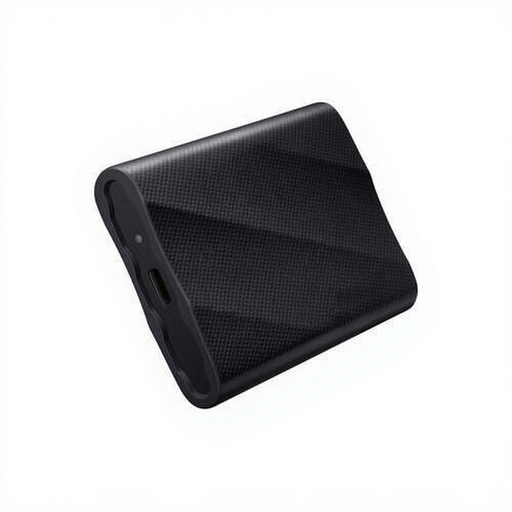 No image available
A 1 TB portable SSD for project files you want to use between workspaces.
USB 3.2 Gen 2x2; quoted read speed of up to 2.000 MB/s. The product information lists drop resistance up to 3 m and cables for USB-C and USB-A.
The host connection may limit the transfer speed you achieve. The description lists compatibility with Windows, macOS and Android.
 No image available
A 2 TB external SSD for project files you want to keep and take with you.
USB 3.2 Gen 2; quoted read and write speeds of up to 1.050 and 1.000 MB/s. The product information lists IP65 and drop resistance up to 3 m.
According to the product information, IP65 does not mean protection against immersion. These speeds are maximums, and the host connection may limit the throughput you achieve.
Yes. Ableton describes using external storage for projects, samples and Packs, but recommends installing the Live application and plug-ins on the system drive. Make sure the connection is suitable and, where possible, avoid sharing a USB hub.
First, collect the project files in use. In Ableton, Collect All and Save can copy audio in use into the project folder, but plug-ins aren’t included; check that they’re available on the other computer.
It depends on the application and software version. Ableton recommends APFS for recent versions of macOS. For moving a Logic Pro sound library, Apple specifies APFS or Mac OS Extended (Journaled) for the older versions described. Check the instructions for your software before formatting.
No. Ableton recommends keeping a separate backup drive for projects and recordings alongside your working setup. Make sure you also decide where to keep your second copy.
For qualifying distance sales to consumers, the Dutch government says you generally have a 14-day cooling-off period in many cases. You’re also entitled to a product that meets the legal guarantee of satisfactory quality; the Netherlands has no fixed statutory guarantee period, and the seller is your point of contact if a product is faulty.