Who is this storage for?

Designers with a growing project archive

If you keep lots of project folders in one fixed place, choose a capacity that suits both your current files and expected growth. The Digital Trust Center recommends keeping backups in different locations and carrying out regular restore tests.

Designers working with large active files

If you regularly open or move files, make sure the drive’s connection matches your computer. Manufacturers’ speed claims apply under specific interface and test conditions.

Designers who move between workstations

If you take projects with you or work across both Mac and Windows computers, consider portability, available ports, cables and file systems.

What should you look for when choosing?

Portable external SSD

Best for: taking active projects with you regularly or transferring large files often.

Consider: the stated speed depends on the connection and computer; also check that the capacity you choose is large enough.

External desktop HDD

Best for: keeping lots of project folders in one fixed workspace.

Consider: the Seagate Expansion Desktop we reviewed uses a power adapter, so you’ll need a suitable place for it and a power socket.

Thunderbolt 3 SSD

Best for: when your computer supports Thunderbolt 3 and the connection suits the way you work.

Consider: the SanDisk Professional PRO-G40 we reviewed is formatted as APFS; check that it supports the file sharing you need with Windows.

What to consider What should you check? Who is this important for?
Space for project folders Compare the size of your current folders and expected growth with the capacity of the model you’re considering. Consumers who mainly want enough room for growing project folders should focus on capacity; around 33% prioritise it.
Working speed Check the USB or Thunderbolt connection on both your computer and the drive, including the cable. Consumers who often open or transfer large active files should consider the connection; around 27% put working speed first.
Sharing files between computers Check the ports, cables required and file system before transferring files or formatting the drive. Consumers who want to share files between their computers should consider the connection and file system; around 20% make this their top priority.
Protection and recovery Keep a separate copy and regularly check that you can restore a project. Consumers who want a recoverable copy of their projects should focus on backups; around 20% prioritise recoverability.

Common pitfalls

  • Assuming a stated speed is the speed you’ll get for your projects

    The maximum speeds quoted for external SSDs apply to specific connections and conditions. Your computer and cable also make a difference.

    Check your computer port and cable specifications before relying on a speed claim to make your decision.

  • Confusing a larger drive with a backup plan

    If the external drive holds the only copy of a project, a problem with the drive could also make your files inaccessible. The Digital Trust Center recommends separate backup locations and restore tests.

    Keep a separate copy and regularly try restoring a project.

  • Formatting before securing your existing files

    Formatting erases the files on the selected volume. Apple explains this in its guidance on disk formats.

    Copy your existing files to another location first, then choose the format that works with your computers.

  • Choosing a desktop HDD as if it were portable without an extra connection

    The Seagate Expansion Desktop we reviewed connects using a power adapter.

    Choose this desktop option for a fixed workspace with access to power; compare portable drives if you often take your projects with you.

    Make room at your workstation for the drive and its mains connection.

Brands to compare

Samsung

The portable T9 is an SSD range to consider for large active files; the Dutch product page we reviewed is for the 4 TB MU-PG4T0B/EU model.

  • Samsung quotes speeds of up to 2.000 MB/s for this model via USB 3.2 Gen 2x2 and includes two types of USB cable.
  • The quoted maximum speed applies to the stated interface and is not a measured speed for every computer.

Crucial

The X9 Pro is a portable SSD option for files you take between systems; the 4 TB model we reviewed is CT4000X9PROSSD9.

  • Crucial states that it comes formatted as exFAT, has an IP55-rated enclosure and reaches up to 1.050 MB/s under its own test conditions.
  • Compatibility and speed can depend on formatting and your computer. A USB-A adapter is available separately.

Seagate

The Expansion Desktop is an HDD range for storage at a fixed workstation; Seagate’s data sheet lists the 8 TB EMEA model as STKP8000400.

  • The data sheet lists USB 3.0 and a power adapter for this desktop range.
  • Seagate states that Rescue Data Recovery Services is not available in every country; check the terms for the UK before relying on this service.

SanDisk Professional

The PRO-G40 is a specialist portable SSD option if Thunderbolt storage is part of your workflow; the model we reviewed has a capacity of 4 TB.

  • SanDisk states that it supports Thunderbolt 3 and USB 3.2 Gen 2.
  • The quoted maximum speeds apply via Thunderbolt 3. The model we reviewed is formatted as APFS; check that it supports the file sharing you need with Windows.

Joybuy products for project files

These Joybuy products are external SSDs and hard drives for taking large project files with you or storing them.

SanDisk Portable SSD 1TB

SanDisk Portable SSD 1TB

This portable SSD is an option if you want to take files between workstations.

The product description quotes read speeds of up to 800 MB/s and drop protection from heights of up to 2 metres.

View at Joybuy

WD Elements Desktop 6TB USB 3.0 hard drive

WD Elements Desktop 6TB

This desktop hard drive is suited to storing project folders at a fixed workstation.

The product description lists USB 3.0, NTFS for Windows and an included power adapter.

View at Joybuy

WD My Passport USB-C 5TB Black

WD My Passport USB-C 5TB Black

This portable drive is an option if you want to take files with you and use them across Windows and Mac.

The product description lists USB-C, exFAT and hardware encryption with password protection.

View at Joybuy
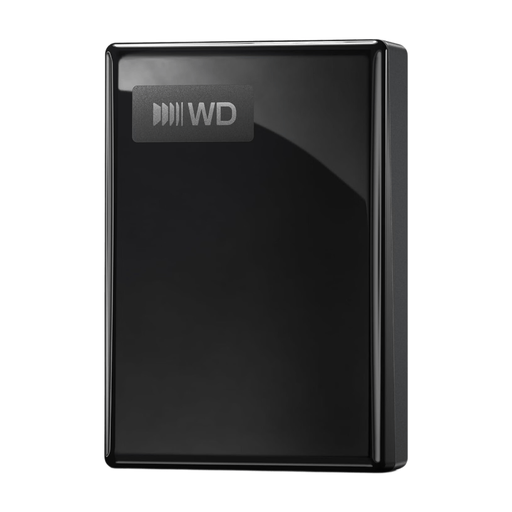
WD My Passport USB-C 1TB Black

WD My Passport USB-C 1TB Black

This portable drive is designed for external file storage across different devices.

The product description lists USB-C, exFAT, hardware encryption with password protection, and compatibility with Windows, Mac, Android and iOS.

View at Joybuy

Western Digital My Passport USB-C 4TB Black

Western Digital My Passport USB-C 4TB Black

This portable hard drive is an option if you need extra space for project files and backups.

The product description lists USB-C, USB 3.2 Gen 1, exFAT and compatibility with Windows and Mac.

View at Joybuy

Frequently asked questions

Which drive is a good fit if I mainly store project folders?

An external desktop HDD is a capacity option if you work in one fixed location and can connect a power adapter. Compare its capacity with your own folders and keep a separate backup as well.

Can I use one external drive with both a Mac and a Windows computer?

Check the drive’s connection and file system, as well as those of both computers. Apple recommends exFAT for a Windows-compatible volume larger than 32 GB. Formatting erases existing files, so copy them to another location first.

Is one external drive enough to back up a design project?

Not if it holds the only copy. The Digital Trust Center recommends keeping backups in different locations and regularly testing them by restoring files.

Does a higher MB/s rating mean my projects will open faster?

Not necessarily: the stated speed depends on factors including the connection and the computer. For example, Samsung’s maximum for the T9 is based on USB 3.2 Gen 2x2, while Crucial’s maximum speeds for the X9 Pro apply under its own test conditions. Check your computer’s port and cable.

Does a design studio need a particular SSD model for project folders containing personal data?

The Dutch Data Protection Authority does not specify a particular SSD model in the information cited. Organisations that process personal data must decide on appropriate security measures based on the risks; encryption is one example, not a universal product requirement.
