
Animator with limited desk space
You work with current project files or media and are looking for a small external drive with a suitable connection. Samsung, Kingston and Crucial describe compact SSD models with USB connections.


If you often work with active project media and have limited desk space, compare compact external SSDs by their dimensions, connection and capacity. You could also consider a portable HDD for completed projects and exports. Whichever drive you choose, keep important files somewhere else too, and test that you can restore them.
You work with current project files or media and are looking for a small external drive with a suitable connection. Samsung, Kingston and Crucial describe compact SSD models with USB connections.
You want to store completed projects and exports, and are weighing storage capacity against the drive’s size and how you’ll use it. Product information from Crucial, Western Digital and Seagate describes models with different capacities and connections.
You want to have a separate, working copy of your project files in case of an error or hardware failure. The Digital Trust Center advises testing backups regularly.
When is it a good fit? If you often open or copy active project media and keep the drive on or next to a small desk.
What to bear in mind: Stated maximum speeds aren’t guaranteed project speeds; your computer’s port and cable also play a part.
When is it a good fit? If you mainly want to store completed projects, exports or a separate copy of your files, and don’t work from the drive all the time.
What to bear in mind: A USB interface alone doesn’t tell you how quickly an animation project will open or copy.
| What to consider | What should you check? | Who is this important for? |
|---|---|---|
| Workspace and active files | Compare the drive’s dimensions, connection and included cable with the ports on your computer. | At a small desk, I want to open active project media without the drive or cables getting in the way. Around 33% of consumers prioritise compact access to active projects. |
| Space for projects and exports | Check the size of your current folders and decide which projects you want to keep before choosing a capacity. | As my project folders and exports grow, I want to estimate how much space I need before choosing a drive. Around 27% of consumers prioritise room for a growing project archive. |
| Separate recovery copy | Decide where you’ll keep the second copy, how often you’ll update it and whether you can restore it. | For irreplaceable work, I don’t want to rely on a single drive, and I want to be able to check that my copy works. Around 20% of consumers prioritise being able to recover their work. |
| Connection and transfer | Check your computer’s USB capabilities and the connector and cable supplied with the exact drive model. | I want my computer and drive to work well together, so the connection doesn’t get in the way of my workflow. Around 20% of consumers prioritise a suitable connection and transfer performance. |
Maximum figures apply under specific conditions. The interface, cable and computer port can also limit actual transfer speeds.
Check your computer’s USB connection and treat a speed claim as a maximum, not a promise about how your projects will perform.
If the drive holds the only copy, it won’t protect you if the drive is lost or something goes wrong with the files.
Keep a second copy somewhere separate and regularly test that you can restore important files. This follows the Digital Trust Center’s backup advice.
The connection, cable and power supply also affect how well the drive fits your desk and computer.
Compare the complete connection and any included accessories with your computer, and check that the capacity meets your needs.
The Portable SSD T7 is a compact SSD option for active files over USB 3.2 Gen 2.
The XS1000 range is worth considering if a small SSD enclosure and USB-A or USB-C connectivity are important to you.
The X9 is a compact USB-C SSD to compare if you want to open projects on multiple devices.
WD Elements Portable is a portable HDD range to compare for project archives and file copies.
Seagate Basic is a portable HDD range to compare if you want storage without a separate power adapter.
This selection includes portable external SSDs for active project files and portable My Passport HDDs for project archives. Compare the capacity of each model with your files and check that its connection is compatible with your computer.
 No image available
A portable external SSD for project files on a small desk.
Capacity: 1 TB.
 No image available
A portable SSD option for active project files.
The product name states read speeds of up to 2.000 MB/s. According to the product information, achieving this speed requires a suitable USB 3.2 Gen 2x2 host; write speeds are lower.
 No image available
A portable HDD option for a growing project archive.
Capacity: 2 TB.
 No image available
A portable HDD option for a large project archive.
Capacity: 5 TB.
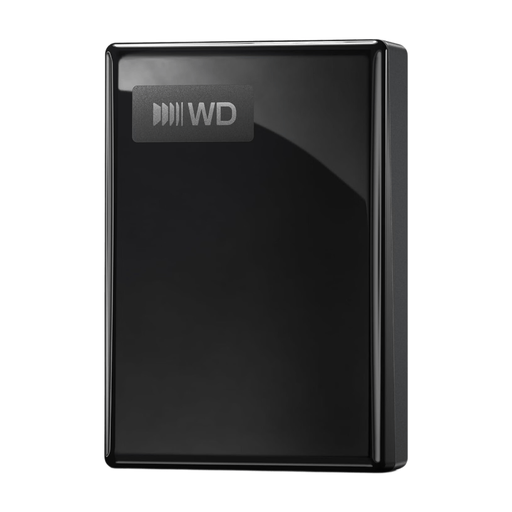 No image available
A portable HDD option for project files and exports.
Capacity: 1 TB.
No. If the external drive holds the only copy, it’s storage, not a separate copy. Keep important work somewhere else too and test that you can restore the files. This follows the Digital Trust Center’s backup advice.
Stated SSD speeds are maximums under specific conditions. Check your computer’s port and cable; StorageReview points out that the host port and interface, among other things, can limit actual throughput.
Check the connector, included cable or adapter, and whether the computers support the drive’s file system before moving files. Crucial says that reformatting erases data on the drive, so keep a separate copy first.
First, check how much space your current project folders take up and which completed projects and exports you want to keep. Compare this with the capacity of the exact drive model, and allow for space that isn’t available for files.
If you process personal data as an organisation, the Dutch Data Protection Authority says you must protect it appropriately based on the risks. This doesn’t mean that every animation drive requires one specific model or a particular encryption feature.