
Building an archive
You’re keeping more and more lecture recordings and want to plan for enough space while maintaining a separate backup. The National Cyber Security Centre and VeiligInternetten provide general advice on keeping backups.


Choose an external SSD with enough usable space for your existing and expected recordings, and check that its connection and file system work with the computers used by your project group. Keep important files in a separate backup too. Give extra consideration to protection during transport or access controls if they suit the way you’ll use the drive. Before storing or sharing recordings, check your educational institution’s rules.
You’re keeping more and more lecture recordings and want to plan for enough space while maintaining a separate backup. The National Cyber Security Centre and VeiligInternetten provide general advice on keeping backups.
You share recording files between devices and want to check in advance that the connections, cables and file system work with the computers. Kingston says the XS1000 can be used with USB-C and USB-A devices via the supplied cable and adapter.
You take the drive with you or manage recordings in which people may be identifiable. In that case, it’s important to agree how recordings will be stored and shared, restrict access and use appropriate security. The Dutch Data Protection Authority highlights the need for policies on recordings in education.
Start by working out how many files you want to keep and which computers you’ll need to use them on. Then decide where a separate backup can be stored, and whether protection during transport or access controls matter for your project.
| What to consider | What should you check? | Who is this important for? |
|---|---|---|
| Space for your archive | Add up your existing files and allow for expected growth. Compare the total with the usable capacity of the model you’re considering. | If you want to keep recordings for a long time, you’ll want to avoid filling up your project drive too quickly. Around 29% of consumers prioritise having enough archive space. |
| Separate backup | Check where a second copy can be stored under your institution’s rules and how you’ll keep it up to date. Make sure you can restore files from the backup. | If you don’t want to have to collect your project files again, being able to restore them matters more than simply having extra portable storage. Around 29% of consumers prioritise having a backup. |
| Sharing files between devices | Check the ports and supplied cables on all the computers you’ll need to use, and find out which file system works with them. | If several project members need the same recordings on different computers, you’ll want to open files without connection or file-system issues. Around 21% of consumers prioritise sharing files between devices. |
| Access to recordings | Ask which storage location, access rights and retention period are permitted for the project. Then check whether any security feature can be used on the devices you need. | If recordings include identifiable people, you’ll want to know who can access them and where they can be stored. Around 14% of consumers prioritise restricting access. |
| Protection during transport | Compare the protection claim for the exact model with the conditions in which you’ll carry the drive. | If you often carry your SSD in your bag, protection against dust, water or drops may affect your choice. Around 7% of consumers prioritise protection during transport. |
If the drive or the files on it are lost, that single storage location won’t give you a separate copy to fall back on. The National Cyber Security Centre and VeiligInternetten provide general advice on backups.
Before you buy, decide where a separate copy can be stored and how you’ll regularly check that you can restore your files.
A separate copy requires a permitted second storage location and time to keep the files up to date.
Manufacturers such as Kingston and Crucial quote maximum read speeds, but actual transfer speeds also depend on the computer and connection you use.
Check which USB port and cable you’re using before relying on a quoted speed.
Formatting can erase existing files. Apple warns about this when formatting a drive.
First check what’s already on the SSD and make a copy before changing its file system.
An SSD feature doesn’t determine whether you’re allowed to record a lecture or keep the recording on a personal drive. The Dutch Data Protection Authority highlights the need for policies on making and keeping recordings in education.
Check the rules for the relevant lecture and project before moving recordings to a personal drive or sharing them.
The XS1000 is a compact range for file transfers and backups, with 1 TB and 2 TB models.
The portable T7 and T7 Shield come in different models to compare if compact size, protection or access controls are important to you.
The X9 is a USB-C model for storing and sharing project files.
The Extreme Portable SSD is a portable option to compare when you know the exact model and version.
These portable SSDs are designed for storing project recordings; storage capacity and models vary.
 Image unavailable
A 1 TB external SSD for storing project recordings. Check that its connection and file system work with the computers you use.
Keep a separate backup too, and check your educational institution’s rules on storing or sharing recordings.
 Image unavailable
This model offers 1 TB of storage for keeping project files.
The product name states speeds of up to 1000 MB/s; actual transfer speeds may depend on the computer and connection you use. Check compatibility with your devices.
 Image unavailable
The 2TB model may suit an archive that needs more space. Compare its capacity with your existing and expected files.
The product name lists USB Type-C 3.2 Gen 2 (3.1 Gen 2). Check that the connection works with the computers used by your project group.
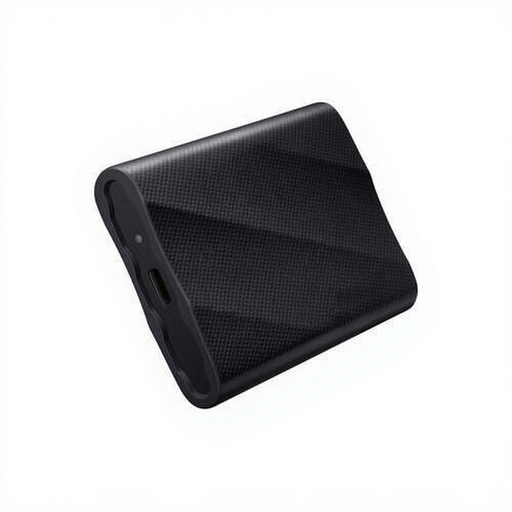 Image unavailable
A 1 TB external SSD for storing recording files. Check that its capacity suits the amount of data you want to archive.
Before use, check the connection and compatibility with the computers you want to open the files on.
 Image unavailable
The 2TB model may suit an archive for which you want to set aside more storage space.
The product name lists USB Type-C 3.2 Gen 2 (3.1 Gen 2). Check that the connection works with the computers you use for the project.
As well as your working files, keep a separate, up-to-date copy in an approved location and test whether you can restore a file from it. The National Cyber Security Centre’s 3-2-1 approach is general backup advice, not a legal requirement for this school project.
That depends on the connections and file system. Apple lists exFAT as an option for an external drive that needs to work with both Mac and Windows; formatting erases existing files.
When you buy as a consumer in the Netherlands, you’re entitled to a product that meets reasonable expectations; there’s no fixed statutory warranty period. According to the Dutch government, a manufacturer’s warranty is in addition to this, and the seller is your point of contact if there’s a problem. Check the terms for the exact model.