
Student with a growing archive of recordings
Wants to keep lecture recordings and portfolio files on one portable drive. Kingston and Crucial offer 1 TB models; work out the capacity you need based on your own files and what you expect to add.


Start by considering the space you need for your recordings and portfolio files, the ports on the devices you’ll use to access them, and a separate copy that you can test. A portable USB 3.2 Gen 2 SSD is a practical starting point for copying and carrying files. Extra protection or a faster interface is mainly relevant if your needs and computer support it. Before your review, open a few files from the copy: the National Cyber Security Centre advises testing backups in practice.
Wants to keep lecture recordings and portfolio files on one portable drive. Kingston and Crucial offer 1 TB models; work out the capacity you need based on your own files and what you expect to add.
Wants to access recordings on more than one computer, so checks the ports, included cables and file format. Crucial lists exFAT for the X9; check that it works with the devices and workflow you use.
Wants to check that a separate copy works before the review. If other people are identifiable in the recordings, you’ll also need to consider who is allowed to keep or view them; the Dutch Data Protection Authority outlines conditions for personal use and sharing.
First, add up the size of your files and make a separate copy that you can test. Then check the connections and file format. Only consider a faster interface if your computer supports it and you regularly move large files.
| What to consider | What should you check? | Who is this most relevant to? |
|---|---|---|
| Enough space | Add up your existing files and anything you expect to add, then compare the total with the capacity of the exact model. | If my recordings and portfolio files keep growing, I want to know whether everything will fit without buying more space than I need. Around 25% of consumers give having enough capacity their highest priority. |
| A recoverable copy | Keep a separate copy and open a few important files from it before your review. | If I need my recordings for a review, I want to check not only that they copied successfully, but also that I can open files from the copy. Around 25% of consumers prioritise having a copy they can verify. |
| Access across devices | Check the ports and included cables, as well as the file format of the SSD and the devices you’ll use to open your files. | If I want to use my recordings on different computers, I check that both the connection and the file format are compatible. Around 20% of consumers give access on the devices they need their highest priority. |
| Transfer speed | Check which USB standard your computer supports; stated maximum speeds are not guaranteed transfer speeds. | If I regularly move large sets of recordings, I want to know whether my computer can make use of the SSD interface. Around 15% of consumers prioritise transferring large files. |
| Identifiable people | Establish who should have access and what rules apply to keeping and sharing the recordings. | If other people are identifiable in my recordings, I want to check the rules for keeping and sharing them first. Around 15% of consumers give careful access management their highest priority in this situation. |
A portable SSD is just one place to store files. Having them on the drive doesn’t prove that you’ll be able to recover them later.
Keep another copy too, and open test files from it before deleting the originals.
The transfer speed you can achieve also depends on your computer’s connection. For the T9, Samsung states USB 3.2 Gen 2x2 for its maximum speed of 2.000 MB/s.
Check your computer’s USB specification before choosing a faster interface.
Crucial warns that reformatting erases data on the X9.
Check the file format and make a separate copy before formatting a drive.
The XS1000 range is a compact option for keeping a copy of study and media files. Kingston offers 1 TB and 2 TB models.
The T7 Shield and T9 meet different needs: portability and protection on the one hand, or faster transfer speeds with a compatible host on the other.
The X9 1 TB is a USB-C option for storing recordings. Crucial lists use with PCs and Macs, depending on the format and host.
The Extreme Portable SSD range includes a 1 TB model. When comparing options, check the exact model and version.
These portable SSDs are designed for storing and moving lecture recordings and portfolio files. The selection includes USB 3.2 Gen 2 options and models with USB 3.2 Gen 2x2, which require a compatible computer.
 No image available
An option for a 1 TB archive of recordings and large transfers with a compatible computer.
USB 3.2 Gen 2x2, AES 256-bit encryption and IP65 protection are listed.
The stated read speed of up to 2.000 MB/s requires a compatible USB 3.2 Gen 2x2 host; the write speed is lower.
 No image available
A 1 TB option for carrying recordings between supported Windows and macOS devices.
USB-C, USB 3.2 Gen 2, AES 256-bit hardware encryption and read speeds of up to 1.050 MB/s are listed. The description gives a weight of 46 grams and says a USB-C cable is included.
According to the product description, optimal performance requires a USB-C port with USB 3.2 Gen 2.
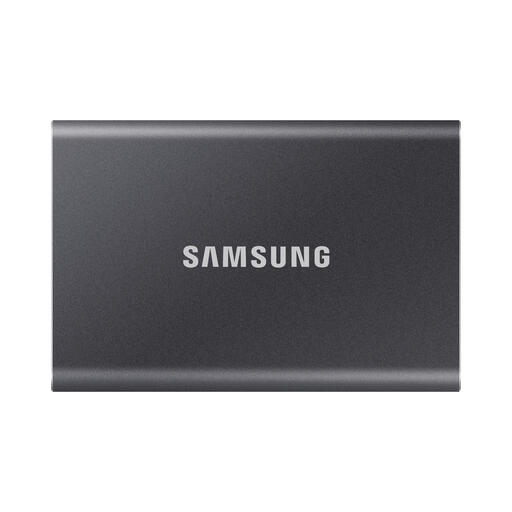 No image available
The 2 TB capacity is an option for an archive containing multiple recordings and portfolio files.
USB 3.2 Gen 2 and maximum read and write speeds of 1.050 MB/s and 1.000 MB/s respectively are listed. The description says it supports Windows, macOS and Android, and includes USB-C-to-USB-C and USB-C-to-USB-A cables.
 No image available
The 4 TB capacity is designed for a large archive of recordings and other sizeable files.
USB 3.2 Gen 2x2, AES 256-bit password protection and transfer speeds of up to 2.000 MB/s are listed. The description says it supports Windows, macOS and Android, and includes USB-C-to-USB-C and USB-C-to-USB-A cables.
The stated maximum speed depends on a compatible host connection.
 No image available
A 2 TB option for an archive of recordings that you also want to take with you.
USB 3.2 Gen 2, read speeds of up to 1.050 MB/s and write speeds of up to 1.000 MB/s, IP65 and drop resistance from up to 3 metres are listed. The description mentions Mac, PC, Android and games consoles.
The product description states that IP65 does not mean the drive can be submerged in water.
Open a few important recordings and portfolio files from the separate copy. The National Cyber Security Centre advises opening files from a backup to check that they work. Simply seeing that the copy has finished is not enough.
Yes. Microsoft Support describes an external drive as a possible destination. Check that the folders containing your recordings are included in the backup and that you can restore them. Folders outside the standard libraries may need extra settings.
For consumer purchases in the Netherlands, statutory rights apply alongside any manufacturer’s warranty. According to ACM ConsuWijzer, the seller is responsible for offering an appropriate solution if a product does not perform as you could reasonably expect under normal use. There is no fixed two-year period for statutory rights. You should also keep a separate copy of your files.
It depends on the circumstances and how you use and share the recordings. The Dutch Data Protection Authority distinguishes between strictly personal use and sharing with a wider group. For recordings made in an educational setting, rules about storage and access are also relevant. Check your institution’s rules before sharing the recordings.