For scans you open often and a small desk, a compact external SSD is generally a good fit. A portable HDD is an option if you mainly want to keep a larger archive and have more room to spare. Keep a separate backup of important scans too, so the external drive isn’t the only place your files are stored, as VeiligInternetten advises. For confidential documents, you should also consider who needs access and what protection is required.
Who is this choice for?
Scanner user with limited desk space
Wants to keep scans close at hand without a large drive or separate power supply taking up desk space, so focuses mainly on dimensions and cables. Crucial lists the X9 1TB as having a 65 × 50 mm casing; the Seagate Expansion Portable is powered via its USB cable.
Keeper of important scans
Wants to be able to retrieve documents if they are lost or a device fails, so first chooses a practical routine for keeping separate backups. VeiligInternetten describes a backup as a copy that lets you restore files.
Keeper of confidential documents
Wants to decide who can view sensitive scans and what protection is needed. According to the Dutch Data Protection Authority, an organisation that processes personal data must decide for itself which security measures are appropriate; workplace documents may also be covered by organisational policies.
What should you look for when buying?
Compact external SSD
A good fit for: scans you open or move often, and a desk with little room to spare. The X9 1TB listed by Crucial has a 65 × 50 mm casing.
Bear in mind: check that the cable works with your computer’s port. A quoted maximum speed won’t necessarily apply to your connection or usage.
Portable external HDD
A good fit for: a larger archive that you mainly store and access less often. The Seagate Expansion Portable is powered via its USB cable.
Bear in mind: the model reviewed takes up more desk space than the compact SSD mentioned above; the Consumers’ Association describes HDDs as more vulnerable to knocks than SSDs.
| What to consider |
What to look for |
Who is this important for? |
| Space and connection |
Compare the dimensions of the exact model and check that the supplied cable fits a USB port on your computer. |
If my desk is already full, I want to know whether the drive and cable will fit before choosing; around 31% of consumers prioritise space and connection. |
| Keeping and restoring files |
Decide whether the drive will hold a working copy or a backup, and how you’ll store and restore files separately. |
I want to be able to restore important scans if a device is lost or fails; keeping and restoring files is the main concern for around 31% of consumers. |
| Archive space |
Compare the size of your scan folder and its expected growth with the capacity of the exact model. |
If my scan archive grows, I want enough space without automatically choosing a larger drive; around 23% of consumers prioritise archive space. |
| Confidentiality |
Check which encryption and access settings apply to the exact model, and follow your organisation’s policy for work documents. |
For sensitive scans, I want to limit who can open the files and take any workplace policies into account; around 15% of consumers prioritise confidentiality. |
Common pitfalls
-
Moving files and calling it a backup
If the external drive is the only place where your scans are stored, it doesn’t give you a separate copy if the drive is lost or fails.
Keep important files in a separate location too, and test that you can restore a file from there. VeiligInternetten describes a backup as a copy of your files.
-
Making the quoted top speed the deciding factor
A maximum speed measured under test conditions doesn’t automatically tell you how quickly scans will open on your computer; the connection also matters.
First check your computer’s port and cable. If you mainly use the drive for scans, don’t give maximum speed more weight than size, capacity and your routine.
-
Formatting without securing the existing contents
Reformatting can delete existing files. Apple warns about this when setting up a drive for Time Machine.
Before formatting, check which file system you need and, if necessary, first copy your files to another location.
Brands to consider
Crucial
The X9 range may be worth considering if a small casing is important. The dimensions listed apply specifically to the X9 1TB, model CT1000X9SSD9.
- For this model, Crucial lists a maximum sequential read speed of 1.050 MB/s under its own test conditions.
- Actual speed also depends on the connection; the dimensions and performance of one model don’t necessarily apply to every X9.
Samsung
The Portable SSD T7 1TB, MU-PC1T0T/WW, may suit anyone who switches between computers with USB-C and USB-A ports.
- Samsung lists a USB-C-to-C cable and a USB-C-to-A cable with this model.
- The quoted maximum sequential read and write speeds of 1.050 and 1.000 MB/s respectively are manufacturer specifications, not guaranteed speeds when opening scans.
Kingston
Kingston lists the XS1000 in 1TB and 2TB capacities as a compact external SSD for backups. The IronKey Vault Privacy 80 is a separate product range for anyone researching hardware encryption.
- Kingston lists a maximum read speed of 1.050 MB/s via USB 3.2 Gen 2 for the XS1000.
- Don’t assume the IronKey Vault Privacy 80’s security features are also available on the XS1000.
Seagate
The Expansion Portable is a USB-powered HDD option for anyone keeping a scan archive. The 2TB model described has model number STKM2000400.
- Seagate’s datasheet lists dimensions of 115,3 × 80 × 12,6 mm and USB cable power for models up to and including 2TB.
- These specifications apply to the product generation described; check the model number and version when buying.
Joybuy products
The options below include portable external SSDs and HDDs for storing scans. Compare the connection, storage capacity and desk space needed for each model.
 No image available
SanDisk Portable SSD 1TB
An option if you want to store scans externally on an SSD; check that the connection and capacity suit your computer and archive.
Capacity: 1 TB.
Joybuy
 No image available
My Passport USB-C 2TB, black
A portable HDD option for anyone who wants to store documents externally; check that the connection works with your computer.
Capacity: 2 TB. Connection according to the product name: USB-C.
For confidential scans, check which encryption and access settings apply to this exact model.
Joybuy
 No image available
My Passport USB-C 5TB, black
A portable HDD option for a larger scan archive; compare the capacity with your own files and check the connection.
Capacity: 5 TB. Connection according to the product name: USB-C.
Before use, check which file system and security settings suit your computer and archive.
Joybuy
 No image available
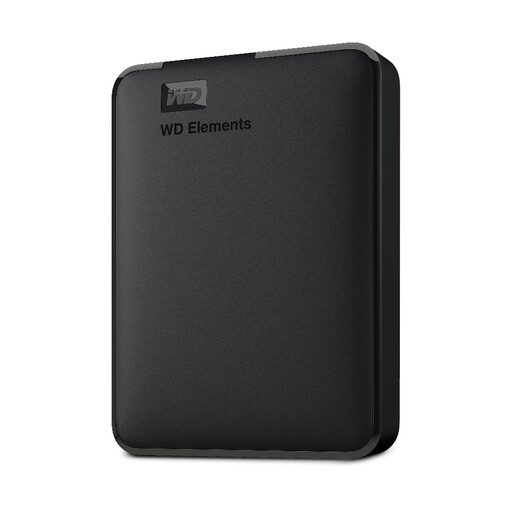
WD Elements Portable external hard drive 2TB, USB 3.0, black
A portable HDD option for storing documents externally; check that the connection and format suit your computer.
Capacity: 2 TB. USB 3.0. Formatted for PC and Mac, according to the product name.
Joybuy
 No image available
DigiEra Magnetic Portable SSD 1TB, model LPS2000M-2, white
A portable SSD option if you want to store scans externally; check that the connection is suitable for your computer.
Capacity: 1 TB. USB 3.2 Gen 2×2. The product name lists transfer speeds of up to 2000MB/s and compatibility with the iPhone 15/16 Series and other USB-C devices.
Joybuy
Frequently asked questions
Is one external drive enough to back up my scans?
Not if that drive is the only place where your scans are stored. Keep a separate copy and check that you can restore your files from it; VeiligInternetten describes a backup as a copy that lets you restore files.
Can I use the same drive for Windows and Time Machine without preparing it first?
First check the file system and what you’ll use the drive for. Apple recommends APFS or APFS Encrypted for a Time Machine backup drive and warns that formatting erases existing data.
How do I safely disconnect the drive?
Eject the drive through your operating system before unplugging the cable. Microsoft’s Windows feature for this is called ‘Safely Remove Hardware’.
What if the drive fails sooner than expected?
For purchases made by consumers in the Netherlands, statutory warranty may apply if a product doesn’t perform as you could reasonably expect under normal use. ACM ConsuWijzer explains that the seller is then responsible for an appropriate remedy at no extra cost; a warranty isn’t a substitute for keeping a backup of your files.
Can I store scans containing personal data on an external drive?
According to the Dutch Data Protection Authority, the GDPR doesn’t apply to personal or household use only. If an organisation processes personal data, it must decide which security measures are appropriate. For sensitive work documents, the regulator advises using the work server; if that isn’t possible, it mentions an encrypted USB stick as an alternative. This isn’t a general recommendation to buy a particular drive model for personal scans.


