A portable SSD is a better fit if you regularly transfer photo folders or often take the drive with you. An HDD may suit you if roomy archive storage is the priority and longer transfer times are less of a concern. Check the capacity of the exact version and make sure the connection is compatible with your computer. You should also keep a separate back-up: one external drive isn’t a complete back-up strategy.
Who is this choice relevant to?
Keeper of irreplaceable photos
You want to be able to recover historic images if they’re lost or a drive fails. So think beyond the drive itself: keep a separate copy and check that you can open files from it. The National Cyber Security Centre advises keeping at least three versions of important business data: the original files and two back-ups.
Frequent photo transferer
You regularly move photo folders between workspaces and want to know whether an SSD and your available USB connection will make transfers suitable for your computer. Manufacturers’ speed figures are maximums; your host computer and how you use the drive also matter.
Keeper of a growing archive
You want space for existing and new images, and storage capacity may matter more to you than short transfer times. Compare the capacity of the exact version with the size of your collection and the space you’ll need for future files.
What should you consider when choosing?
Portable SSD
A better fit if: you regularly transfer photo folders or often take the drive with you.
Consider: check your computer’s port and cable. Maximum stated speeds don’t guarantee how long it will take to copy your files.
Portable HDD
A better fit if: a roomy local archive copy is your priority and you usually use the drive in one place.
Consider: an HDD has moving parts and is more susceptible to knocks than an SSD, as the Dutch Consumers’ Association noted in July 2022.
| What to consider |
What to look for |
Who is this most relevant to? |
| Recoverable back-up |
Keep a separate copy in another location and test that you can retrieve your files. |
I want to be able to recover my historic photos if they’re lost. Around 33% of consumers prioritise recoverability. |
| Regular transfers |
Compare the USB connection and cable with your computer; don’t treat stated maximums as guaranteed transfer speeds. |
I often transfer photo folders and want to know whether my computer can make use of the connection I choose. Around 27% of consumers prioritise transfer time. |
| Space for your archive |
Add up your current files and allow for new images and any extra copies. Seagate lists 4 TB for model STKM4000400; Western Digital lists 5 TB for model WDBPKJ0050BBK-WESN. |
I want to store my existing and growing collection, even if copying takes longer. Around 27% of consumers prioritise archive space. |
| Connection and back-up method |
Check the ports and cables, and make sure the drive suits the method you plan to use. Apple warns that setting up a Time Machine drive may require it to be erased. |
I want to avoid choosing a drive that isn’t compatible with my computer or back-up method. Around 13% of consumers prioritise compatibility. |
Common pitfalls
-
Keeping your working copy and back-up on one external drive
If that drive or its storage location is lost, both copies could become inaccessible at the same time. A standalone drive is therefore not a complete back-up strategy in itself.
Keep a separate copy too, preferably in another location, and regularly check that you can retrieve important files. The National Cyber Security Centre advises keeping three versions of important business data: the originals and two back-ups.
-
Treating a stated speed as a guaranteed transfer time
Actual speeds also depend on your computer, software and how you use the drive. Kingston says a USB 3.2 Gen 2 host is needed to achieve optimal XS1000 speeds.
Check your computer’s port and cable, and don’t choose a drive based only on a theoretical maximum.
-
Formatting a drive while it still contains photos
Apple warns that setting up a drive for Time Machine may involve erasing it. Any files already on the drive could be lost.
First, save the files to another drive and check that you can open them there before configuring your back-up drive.
Brands to consider
Samsung
The Portable SSD T7 Shield range is worth considering if you regularly take a photo back-up with you or often transfer files.
- Samsung specifies USB 3.2 Gen 2 for the T7 Shield 1 TB, maximum sequential read and write speeds of 1.050/1.000 MB/s, and IP65 protection against dust and water.
- These are specifications and manufacturer claims, not an independent test or a guarantee against immersion or data loss.
Kingston
The XS1000 is a compact range of external SSDs, with 1 and 2 TB versions for portable file copies.
- Kingston lists a USB-A host cable and adapter, and maximum read and write speeds of 1.050/1.000 MB/s.
- According to Kingston, speeds vary depending on hardware, software and usage. The stated maximum storage capacity isn’t entirely available for files.
Seagate
The Expansion Portable range includes an HDD version for a substantial local archive copy.
- Seagate specifies model STKM4000400 as a 4 TB drive with USB 3.0 and power supplied via the USB cable.
- According to Seagate, the drive needs to be reformatted for use with Time Machine. The stated Rescue service isn’t available in every country, so don’t assume it’s available in the Netherlands without confirmation.
Western Digital
The My Passport HDD range includes a portable 5 TB version for a roomier archive copy.
- Western Digital identifies model WDBPKJ0050BBK-WESN as a black 5 TB My Passport.
Portable SSDs at Joybuy
These products are portable SSD options for storing and regularly transferring photo files. Check that the capacity and connections of each version suit your computer and back-up plan.
 No image available
SanDisk Portable SSD 1 TB
A portable SSD option for anyone who regularly transfers photo files.
Stated capacity: 1 TB.
Keep a separate copy too; one external drive isn’t a complete back-up strategy.
View product
 No image available
Portable SSD 1 TB, 1000 MB/s
A portable SSD option for anyone who regularly transfers photo files.
Stated capacity: 1 TB; stated speed: 1000 MB/s.
Keep a separate copy too; one external drive isn’t a complete back-up strategy.
View product
 No image available
Samsung Portable SSD T7 2 TB, blue
A portable SSD option for anyone who regularly transfers photo files.
Stated capacity: 2 TB; the product name lists USB Type-C 3.2 Gen 2 (3.1 Gen 2).
Keep a separate copy too; one external drive isn’t a complete back-up strategy.
View product
 No image available
Samsung Portable SSD T7 1 TB, blue
A portable SSD option for anyone who regularly transfers photo files.
Stated capacity: 1 TB; the product name lists USB Type-C 3.2 Gen 2 (3.1 Gen 2).
Keep a separate copy too; one external drive isn’t a complete back-up strategy.
View product
 No image available
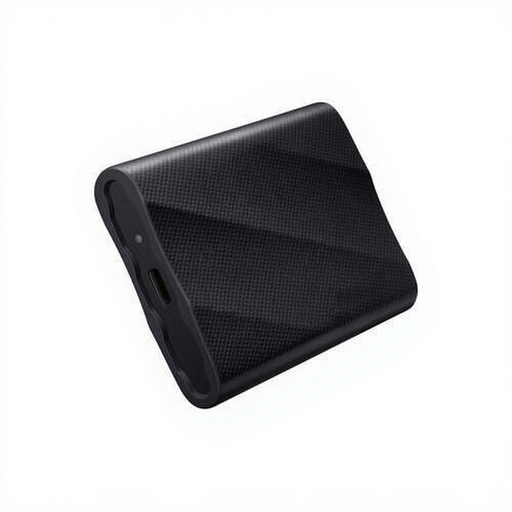
Samsung Portable SSD T9 1 TB Black, MU-PG1T0B
A portable SSD option for anyone who regularly transfers photo files.
Stated capacity: 1 TB; version: black; model: MU-PG1T0B.
Keep a separate copy too; one external drive isn’t a complete back-up strategy.
View product
Frequently asked questions
Is a fast external drive enough to keep historic photos safe?
No. The Netherlands’ National Cyber Security Centre advises keeping multiple versions of important business data and storing a copy in another location. Use an external drive as part of your back-up, check that the copy has completed, and try opening a file again.
Can I use a drive with Time Machine without preparing it first?
Not always without making changes. Apple explains how to configure an external drive for Time Machine and warns that your Mac may ask to erase it in the process. First, make sure existing files are safe; Apple recommends using the Time Machine drive only for Time Machine back-ups.
What happens if a drive fails, and does the manufacturer’s warranty replace a back-up?
No. A warranty on the drive doesn’t replace keeping a separate copy of your photos. According to the Dutch Government, the Netherlands has no fixed statutory warranty period; if a product is faulty, you should be able to seek a solution from the seller. A statutory guarantee and any manufacturer’s warranty aren’t the same thing.


