A portable SSD is a better fit if you often transfer large film files or regularly carry the drive with you. An HDD is more suitable if getting plenty of storage for your money matters more than speed. Western Digital generally reports a lower cost per GB for HDDs, while the Consumentenbond noted in the July 2022 issue of Digitaalgids that HDDs are more susceptible to wear and shocks than SSDs. Before transferring the files, check the capacity you need, the connection and the customer’s computer file system. Also consider appropriate protection for anyone identifiable in the films.
Which drive is right for you?
Videographer with a large delivery
You want to deliver lots of film files, or particularly large ones, within a reasonable time, and need a connection that works with the customer’s computer too. Apple Support and Microsoft Learn explain why the file system and file size matter.
Filmmaker with an extensive archive
You’re mainly transferring a large collection and value storage space and cost per GB more than speed. The Consumentenbond describes HDDs as more susceptible to wear and shocks than SSDs; Seagate documents a 2 TB Expansion Portable model.
Someone transferring personal footage
You’re handing over films that may show identifiable people, and want to consider who can access them, appropriate security and whether sharing them is permitted in this situation. The Autoriteit Persoonsgegevens explains that identifiable images are personal data and says organisations cannot share personal data without good reason.
What should you look for?
Portable external SSD
Choose this option if: you regularly copy large files, take the drive with you or work directly from it.
Bear in mind: the cost per GB is generally higher than for an HDD. Actual transfer speeds also depend on the port and computer you use.
Portable external HDD
Choose this option if: you’re mainly transferring a large film collection in one go and storage space matters more than copying speed.
Bear in mind: moving parts make an HDD more susceptible to shocks than an SSD, as the Consumentenbond explains in the July 2022 issue of Digitaalgids.
For a customer handover, the key considerations are usually whether the files can be opened, how much space you need, how long copying will take and how you handle identifiable people. Apple Support and Microsoft Learn explain what to consider about file systems and file sizes; the Autoriteit Persoonsgegevens provides guidance on protecting and sharing personal data.
| What to consider |
What to check before buying |
Who should pay particular attention? |
| Can the customer open the films? |
Ask which operating system and USB port the customer uses. Test that all the films can be opened from the chosen file system. |
I want to be sure the customer can open the films on their computer before handing them over. Around 31% of consumers put accessibility first. |
| Will the entire delivery fit? |
Add up the file sizes and check the capacity of the exact model, not just the product range. |
If I’m handing over a complete film collection, I want to know in advance that all the files will fit. Around 25% of consumers give having enough space for the full delivery top priority. |
| Copying time and portability |
Check the port and cable at both ends, then make a test copy of a representative large file. |
For large files or regular travel, I want to consider both copying time and resistance to knocks; around 25% of consumers prioritise speed or portability. |
| Protecting personal footage |
Consider who should have access and how you’ll share any password. Keep a copy of your own until receipt and readability have been confirmed. |
When films show identifiable people, I want to check who will have access and how the files will be protected. Around 19% of consumers put protecting personal footage first. |
Common buying mistakes
-
Checking only Mac and Windows compatibility or the connector
The connection and the file system are two separate things to check. Microsoft Learn states that FAT32 has a file size limit of 4 GiB, so a larger film file won’t fit.
Ask which device the customer uses and test the actual files on the chosen file system before handing over the drive.
-
Assuming the advertised maximum speed is your copying speed
A quoted peak speed isn’t a guaranteed transfer speed. The host computer’s port and the files also make a difference; manufacturers such as Kingston and Samsung quote maximum speeds for specific models.
Check the port and cable at both ends, then try a representative file. Don’t pay extra just for a speed your equipment may not be able to make use of.
-
Keeping the delivery drive as your only copy
An SSD or HDD can fail. If the only copy is lost, it may be impossible to recover the films.
Keep a separate copy until the customer has confirmed receipt and that the files can be opened. The Autoriteit Persoonsgegevens lists recoverable backups as a possible security measure.
Brands to compare
Samsung
The portable T7 range is designed for compact file transfers. The T7 Shield is a more robust option to compare if you’ll be carrying the drive around.
- Samsung says the T7 comes with USB-C-to-C and USB-C-to-A cables. For the T7, Samsung lists optional password protection with AES 256-bit encryption.
- For the specific 2 TB T7 Shield, Samsung quotes sequential read/write speeds of up to 1.050/1.000 MB/s and an IP65 rating. These are manufacturer specifications for that model, not independently measured results.
Kingston
The XS1000 is a compact external SSD range worth comparing for transfers and backups.
- Kingston lists USB 3.2 Gen 2, USB-C and USB-A support, and speeds of up to 1.050 MB/s.
- The quoted speed is the manufacturer’s maximum; the host computer and connection also affect performance. Check whether you’re buying the 1 TB or 2 TB model too.
Seagate
The Expansion Portable is an HDD option to compare if you’re mainly making a large one-off film transfer.
- Seagate documents the STKM2000400 model as having 2 TB of storage and being powered via its USB cable.
- The documentation consulted dates from 2021. Check the exact model and current service terms, and bear in mind that HDDs are susceptible to shocks.
SanDisk
The Extreme Portable SSD is another SSD range to compare for compact storage of larger projects.
- For the 2 TB Extreme Portable SSD V3, model SDSSDE70-2T00-G25, SanDisk quotes read speeds of up to 2.000 MB/s.
- This is a manufacturer specification for that particular model. Check the model number, as other Extreme models may have different specifications.
Joybuy products
This selection of Joybuy products includes portable SSDs and external HDDs for storing films and transferring them to a customer. For the exact model, check that the capacity, connection and file system are right for the files and the recipient’s computer.
 Image unavailable
SanDisk Portable SSD 1 TB
A portable SSD option for films that fit within the available 1 TB of storage.
Listed features: read speeds of up to 800 MB/s and drop protection from heights of up to 2 m.
View at Joybuy
 Image unavailable
SanDisk Extreme PRO Portable SSD 1 TB
A compact SSD option for films that fit within the available 1 TB of storage, and for anyone who wants a drive they can take with them.
The product information lists USB-C, drop protection and speeds of up to 2.000 MB/s. Actual transfer speeds also depend on the port and cable you use.
View at Joybuy
 Image unavailable
My Passport for Mac 2 TB Blue
A portable HDD option for a larger film collection, provided all the files fit within the available 2 TB of storage.
The product information lists USB 3.0, password protection and hardware encryption. Check that the file system works with the customer’s computer. As an HDD, this drive is more susceptible to shocks than an SSD, as the Consumentenbond explains in the July 2022 issue of Digitaalgids.
View at Joybuy
 Image unavailable
WD Elements Portable 2 TB USB-C Graphite
A portable HDD for a larger film collection that fits within the available 2 TB of storage.
The product name lists USB-C; check that the connection is compatible with the customer’s computer. An HDD is more susceptible to shocks than an SSD, as the Consumentenbond explains in the July 2022 issue of Digitaalgids.
View at Joybuy
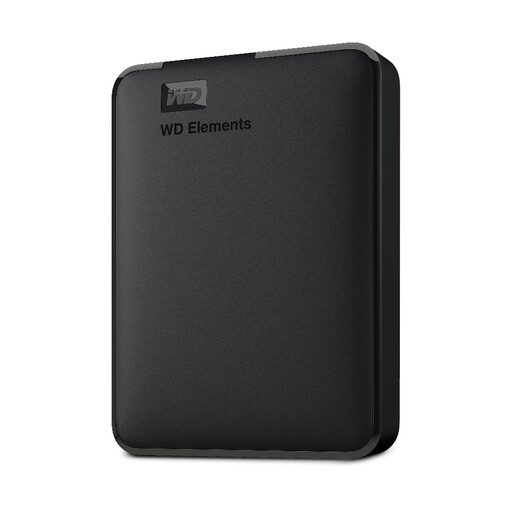 Image unavailable
WD Elements Portable 2 TB USB 3.0
A portable HDD option for films that fit within the available 2 TB of storage.
The product name lists USB 3.0 and formatting for PC and Mac; check that the existing file system is suitable for the intended use. An HDD is more susceptible to shocks than an SSD, as the Consumentenbond explains in the July 2022 issue of Digitaalgids.
View at Joybuy
Frequently asked questions
Which file system should you choose if your customer uses Windows and you use a Mac?
For a drive that needs to be writable on both Windows and macOS, Apple Support lists exFAT as a Windows-compatible file system. Microsoft Learn states that FAT32 supports a maximum file size of 4 GiB. Check both parties’ computers and test the finished films before transferring them.
Should you format the drive first?
Only format the drive if its existing file system isn’t suitable for the intended use. Check the file system before copying anything, and make a copy of any files already on the drive first.
What if the drive develops a fault after you buy it?
For a consumer purchase in the Netherlands, the seller is responsible under the statutory guarantee if the product doesn’t do what you could reasonably expect under normal use. ACM ConsuWijzer explains that any manufacturer’s guarantee doesn’t replace this right. For a business purchase, check the applicable contract separately.
Can you hand over a drive containing films of identifiable people to a customer?
Identifiable people in films may count as personal data. The Autoriteit Persoonsgegevens says organisations cannot share personal data with others without good reason and that appropriate security is needed. Whether a particular transfer is permitted depends on factors including the parties’ roles, the original purpose and the content; choosing a drive won’t answer that question.


