
Designer with limited desk space
You want to archive design versions locally without a bulky enclosure or extra power supply taking up space at your workstation. Compare the dimensions of the exact model and its connection before choosing.


Start by checking the size of your existing design versions and how much space you’ll need for new ones. Then compare the dimensions, capacity and connections of the exact drive you’re considering. A compact SSD may suit a small desk and frequent file transfers, while a portable HDD is an option if you prioritise more local archive space. Don’t keep important designs as the only copy on a single drive.
You want to archive design versions locally without a bulky enclosure or extra power supply taking up space at your workstation. Compare the dimensions of the exact model and its connection before choosing.
You keep lots of previous designs and want to avoid running out of capacity too quickly. A portable HDD and a compact SSD offer different options for capacity and size.
You want to be able to recover files if a drive fails or goes missing. If you handle personal data, it’s also important to choose security measures that are appropriate to the risks involved.
A good fit if: you have limited space and regularly move design files.
Keep in mind: the Kingston XS1000 range we looked at goes up to 2 TB; the stated speed depends on the computer and how you use the drive.
A good fit if: you mainly want to keep lots of versions locally and don’t use the drive as your day-to-day working drive.
Keep in mind: the 4 TB Seagate Basic we looked at takes up more space than the Kingston XS1000 and may need reformatting for Mac use.
| What to consider | What should you check? | Who should prioritise this? |
|---|---|---|
| Recoverability | Decide which project folders you need to be able to restore, and plan separate copies. | If I don’t want to lose important designs, I need a recoverable copy as well as my working archive. Around 31% of consumers prioritise recoverability. |
| Space for versions | Check the size of your existing design folder and decide how many new versions you want to keep. | If I want to keep lots of existing versions and my archive is still growing, enough capacity comes first. Around 25% of consumers prioritise archive space. |
| Desk space | Compare the length, width and thickness of the exact model, and allow room for the cable. | On a small desk, I want to give up as little working space as possible for storage. Around 25% of consumers prioritise a small form factor. |
| Connection and transfers | Check your computer’s ports, the included cables and the file system before moving files. | If I use the drive with computers that have different ports, I want to transfer files without unnecessary connection problems. Around 19% of consumers give connection and transfers top priority. |
The National Cyber Security Centre advises keeping at least three copies of important business data: the originals and two backups. An archive drive is therefore not automatically a complete backup.
If the only saved version is on one drive, that drive failing or going missing could mean losing the files too.
Decide in advance which files you need to be able to recover, and make separate copies of them.
A second storage device or a separate storage location requires extra storage and maintenance.
Manufacturers quote maximum speeds for suitable hosts and operating conditions. These figures aren’t a promise of the speed you’ll get with every computer or file transfer.
Check your computer’s port and cable before choosing a drive based on speed.
Reformatting can erase existing data. Crucial warns about this for the X9 Pro; the Seagate Basic we looked at may need reformatting for Mac use.
Check the required file system and save any existing files elsewhere before formatting.
The XS1000 range is a compact SSD option for anyone short on desk space.
The Basic STJL4000400 is a 4 TB portable HDD option for a larger local archive of versions.
The 2 TB T7 may be worth considering if you switch between computers with USB-C and USB-A connections.
The 2 TB X9 Pro is a compact SSD option where you may also want to consider the file system and use across different systems.
These product picks include portable SSDs and HDDs for storing design versions locally and transferring them.
 Image unavailable
A portable SSD option for a small workspace and transfers between USB-C and USB-A devices.
The product description lists 1 TB of storage, a USB-C cable and USB-A adapter, and password protection with 256-bit AES.
The stated read speed of up to 2.000 MB/s requires a compatible USB 3.2 Gen 2x2 host; the description notes that the write speed is lower.
 Image unavailable
A portable HDD option for anyone who wants to keep lots of design versions locally.
The product description lists 5 TB of storage, USB-C and a weight of 240 g.
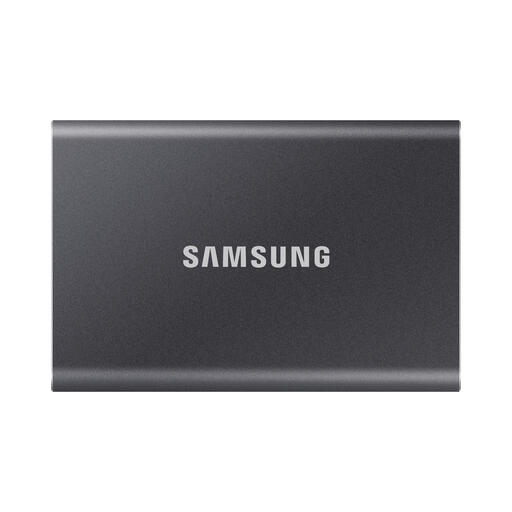 Image unavailable
A 2 TB portable SSD option for design versions and use with USB-C and USB-A computers.
The product description lists USB-C-to-C and USB-C-to-A cables, AES 256-bit encryption, and stated speeds of up to 1.050 MB/s read and 1.000 MB/s write.
 Image unavailable
A compact SSD option for a growing design archive and transfers between devices.
The product description lists 2 TB of storage, included USB-C cables, hardware encryption and a weight of 122 g.
 Image unavailable
A portable 2 TB SSD option for design files in a small workspace.
The product description lists stated read and write speeds of up to 1.050 and 1.000 MB/s, and IP65 protection against dust and water jets.
IP65 protection doesn’t mean the drive can be submerged.
No, not if it contains the only saved copy. For important data, the National Cyber Security Centre advises keeping three copies: the originals and two backups, on two different types of media, with one copy stored elsewhere. Decide which files you need to be able to recover.
First check the current file system, the requirements of both computers and whether there are already files on the drive. Seagate says the Basic we looked at may need reformatting for Mac use; Crucial warns that reformatting erases data on the X9 Pro.
The rules described don’t set a single product specification requiring every drive to have a particular type of built-in encryption. If your organisation processes personal data, the GDPR requires appropriate security based on the risks; the Dutch Data Protection Authority lists encryption as one possible measure. Assess the data and how you’ll use the drive before choosing security features.
Consumer purchases in the Netherlands are covered by a statutory guarantee, in addition to any manufacturer’s warranty. If the product doesn’t perform as you could reasonably expect under normal use, the seller must offer an appropriate solution, such as a repair, replacement or refund, according to ACM ConsuWijzer. The statutory guarantee doesn’t have one fixed duration for every drive.