Who is this guide for?

People who regularly copy project files

You often move large concert projects or open files directly from the drive. In that case, it’s worth looking beyond the stated maximum speed: the connection and the type of files matter too. ID.nl explains why fast access matters when you work from an external SSD.

Recording archivists

You keep growing project folders and mainly want enough space for your archive. Before choosing a capacity, work out how much you store now and which projects you want to keep.

Creators working on location

You take recordings between the concert venue and your workplace. Check the protection offered by the model you choose, and keep a separate backup as well.

What should you look for when buying?

Portable SSD as a working drive

Choose this option: if you regularly copy large project folders or work directly from the drive, and your computer, cable and drive all support the same USB connection.

Bear in mind: a maximum sequential speed won’t tell you how long it will take to transfer each project folder containing lots of small files.

Portable HDD as an archive drive

Choose this option: if you mainly store projects and capacity matters more than frequent, fast transfers.

Bear in mind: in the Dutch comparison cited, HDDs are slower than SSDs; ID.nl published the test on 17 September 2024.

Working drive plus separate backup

Choose this option: if you want to work between locations and be able to recover files if a drive is lost or fails.

Bear in mind: a separate copy requires a second storage device or location, as well as ongoing management.

What to consider What to check Who is this important for?
Transfer times and working from the drive Compare SSDs and HDDs, read and write speeds, and the USB specification of the drive, computer and cable. If transfer time is the deciding factor, look for test results using a similar type of file. If I often move large project folders or open them directly from the drive, I want to minimise unnecessary waiting. Around 33% of consumers put transfer time first.
Room for growing project folders Check the size of your current folders, decide how many projects you want to keep and confirm the capacity of the exact model. Usable space after formatting is not the same as the advertised capacity. If I want to keep recordings and my archive is growing, having enough space matters more to me than the fastest transfer speed. Around 27% of consumers give archive space top priority.
Taking the drive between workplaces Check the protection offered by the exact model and the manufacturer’s terms. Also check whether the required cables are included with the model you choose. If my drive needs to go to different locations, I want to know what protection the model actually offers and whether it connects to my equipment. Around 20% of consumers prioritise portability and protection.
Recovering recordings Decide which files you want to be able to recover, keep a separate copy and check that you can restore your files from it. If losing or having my portable drive fail could put my work at risk, I want a backup that doesn’t depend on that one drive. Around 20% of consumers prioritise recoverability.

Common pitfalls

  • Assuming a maximum MB/s figure is the transfer time for an entire project folder

    Manufacturer figures show maximum sequential performance. In practice, the connection and type of files also affect transfer speeds.

    Check your computer’s USB port and cable. If transfer time is crucial, compare test results for files similar to those in your project folders.

  • Relying on a portable drive as your only safe backup

    A drive you take with you can be lost or fail. Protection against knocks is not a recovery plan.

    Keep a separate copy and check that you can restore your files from it.

  • Confusing the LaCie Rugged Mini HDD with the Rugged Mini SSD

    The similar product names refer to different types of storage, so you can’t simply apply the HDD’s specifications to the SSD.

    Check the product page to see whether it’s an HDD or SSD, and compare the full model number.

Brands to consider

Samsung

The T7 Shield is a portable SSD option for anyone looking to combine fast transfers with extra protection from the casing.

  • For the T7 Shield model reviewed, Samsung lists USB 3.2 Gen 2, maximum read/write speeds of 1.050/1.000 MB/s and IP65.
  • These are manufacturer specifications for the range and model reviewed, not independent measurements of transfer times for a concert project. Check the specifications of the model you choose.

Kingston

The XS1000 is a compact SSD option for copying and carrying files.

  • Kingston lists 1 TB and 2 TB models of the XS1000, USB 3.2 Gen 2, and maximum speeds of 1.050 MB/s read and 1.000 MB/s write.
  • Check that the connection is compatible with your equipment and that the model you want is available.

LaCie

The Rugged Mini HDD is an archive option for anyone looking for capacity and a portable casing; don’t confuse it with the SSD with a similar name.

  • For the Rugged Mini HDD model reviewed, Seagate lists a maximum speed of 130 MB/s and describes protection against drops and rain.
  • These details don’t automatically apply to the Rugged Mini SSD or every HDD model; check the full model name and capacity.

Crucial

The X9 Pro is a portable SSD option if the connection and protection offered by the casing are important to you.

  • For the X9 Pro 2TB model reviewed, Crucial lists maximum read and write speeds of 1.050 MB/s and describes dust and splash resistance.
  • Crucial says the speed was measured under specific test conditions, and that formatting or the host device can affect usability.

Joybuy products for concert projects and archiving

This selection includes portable SSDs for copying and carrying concert projects, plus an HDD option for anyone mainly looking for archive space.
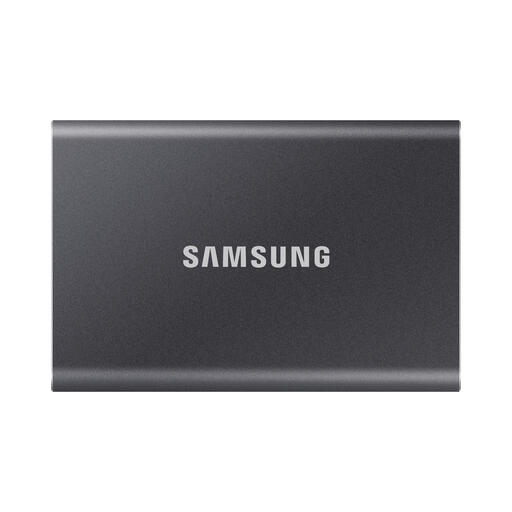
Samsung Portable SSD T7 2TB, grey

Samsung Portable SSD T7 2TB USB Type-C 3.2 Gen 2 (3.1 Gen 2), grey

This external SSD is an option for anyone who wants to carry or copy large project folders.

Capacity: 2 TB. Connection: USB 3.2 Gen 2. Stated sequential read and write speeds: up to 1.050/1.000 MB/s.

The product description lists AES 256-bit encryption, USB-C-to-C and USB-C-to-A cables included, and drop resistance up to 2 metres.

View at Joybuy

Samsung MU-PE1T0S 1TB, black

Samsung MU-PE1T0S 1TB USB Type-C 3.2 Gen 2 (3.1 Gen 2), black

This portable SSD is an option if you want to copy project folders and take the drive between workplaces.

Capacity: 1 TB. Connection: USB 3.2 Gen 2. Stated read and write speeds: up to 1.050/1.000 MB/s.

The product description lists IP65 dust and water resistance and drop resistance up to 3 metres. IP65 protection is designed for temporary exposure to water; don’t immerse the drive for long periods. Make separate backups of important files too.

View at Joybuy

Samsung MU-PG2T0B 2TB, black

Samsung MU-PG2T0B 2TB USB Type-C 3.2 Gen 2x2, black

This portable SSD is an option if you want to take project files with you and transfer them between devices.

Capacity: 2 TB. Connection: USB 3.2 Gen 2x2. The product description lists hardware encryption and drop resistance up to 3 metres.

This model is described as weighing 122 grams and comes with USB-C-to-C and USB-C-to-A cables. Check that the connection is compatible with your computer.

View at Joybuy

SanDisk Extreme Pro Portable SSD 1TB

SanDisk Extreme Pro Portable SSD 1TB

This portable SSD is an option if you want to read a project directly from the drive or take your storage between workplaces.

Capacity: 1 TB. Connection: USB 3.2 Gen 2x2. The product description gives a maximum read speed of up to 2.000 MB/s; the write speed is lower.

The product description lists IP65 protection and drop protection up to 3 metres. The stated read speed requires a compatible USB 3.2 Gen 2x2 host device.

View at Joybuy

Western Digital My Passport USB-C 4TB, black

Western Digital My Passport USB-C 4TB, black

This external HDD is an archive option if your project collection needs plenty of storage space.

Capacity: 4 TB. Connection: USB Type-C 3.2 Gen 1. The product description lists AES 256-bit hardware encryption and a portable 2.5-inch casing.

The product description lists compatibility with Windows and macOS. If you often copy large project folders, bear in mind that the Dutch comparison cited describes HDDs as slower than SSDs; ID.nl published the comparison on 17 September 2024.

View at Joybuy

Frequently asked questions

Will a fast USB-C SSD automatically be fast on my computer?

No. Check the USB specification of the drive, cable and computer. Samsung’s maximum sequential manufacturer figures of 1.050/1.000 MB/s for the T7 Shield don’t guarantee a particular transfer time for your project folder.

How should I set up my drive so I can recover files?

First, decide which project files you want to be able to recover, and keep a separate backup. For business data, the National Cyber Security Centre recommends the 3-2-1 approach: three copies, two types of media and one copy in a different location. This is security advice, not a legal requirement for every buyer.

Does my statutory warranty in the Netherlands automatically end after two years?

No. ACM ConsuWijzer explains that statutory warranty in the Netherlands does not have a fixed two-year term: what matters is what you can reasonably expect from a product under normal use. A separately stated manufacturer’s warranty is different.

Can I copy and share concert recordings on the drive?

The Government of the Netherlands allows you to make a private copy of a copyright-protected work for your own use, but not to distribute or make it public without the necessary rights. Whether a particular concert recording was made lawfully or can be shared is not determined solely by owning the drive or by this general rule.

Does an identifiable voice in a recording affect privacy rules?

Yes. According to the Dutch Data Protection Authority, a sound recording in which someone is identifiable may contain personal data. Which GDPR obligations apply depends, among other things, on whether the recording is for personal or professional use and what you do with it; the drive model you choose does not determine this on its own.
