What should you look for in an external SSD for family films?
Start by working out how much space you need for your existing films and future recordings. Then check access and compatibility, arrange a separate back-up, and only then decide what transfer speed you need.
| What to consider |
What to look for |
Who is this important for? |
| Capacity and growth |
Compare the capacity of the exact model with your current film archive and the space you want to leave for new recordings. |
If I want to expand my film collection, I need room for more than just the files I have now. Around 28% of consumers prioritise capacity and room to grow. |
| Access and compatibility |
Check the USB ports and included cables. Also check which file format you need if you use the drive with both Windows and Mac. |
If several people use the same computer, I want the files to be accessible without unnecessary connection or format issues. Around 22% of consumers prioritise shared access and compatibility. |
| Separate back-up |
As well as your working archive, keep an up-to-date copy in another storage location and agree who will update it. |
If the family films are irreplaceable, I don’t want to rely on a single drive. Around 22% of consumers prioritise preserving their files and keeping a separate back-up. |
| Transfers and editing |
Match the SSD’s USB standard to your computer’s. Stated maximum speeds do not guarantee the speed you’ll get with your own setup. |
If I often copy large video files or edit directly from the SSD, I want to know whether my computer supports the connection. Around 17% of consumers prioritise active copying or editing. |
| Privacy and access |
Decide who can open the films, and check whether any password protection will work on the systems you use. |
If personal recordings are stored on a shared computer, I want to decide who can view them. Around 11% of consumers prioritise keeping personal films private. |
External SSDs at Joybuy
These Joybuy products are portable SSDs for storing and transferring family films on a shared computer. Check the capacity and connection of the model that best suits the way you use it.
 No image available
SanDisk Portable SSD 1TB
A portable SSD for taking your film archive with you or storing it.
The product description lists read speeds of up to 800 MB/s, a fastening loop and drop protection from a height of up to 2 metres.
View at Joybuy
 No image available
Portable SSD 1TB 1000MB/s
A portable SSD for storing and regularly transferring video files.
The product description lists USB 3.2 Gen 2 and read speeds of up to 1,000 MB/s. Compatibility is listed for Windows, macOS, iPadOS and Android.
View at Joybuy
 No image available
Samsung Portable SSD T7 1 TB Blue
A 1 TB model for a film archive where connecting to different types of USB port is important.
The product description lists USB 3.2 Gen 2, read speeds of up to 1,050 MB/s and write speeds of up to 1,000 MB/s, plus USB-C-to-C and USB-C-to-A cables.
View at Joybuy
 No image available
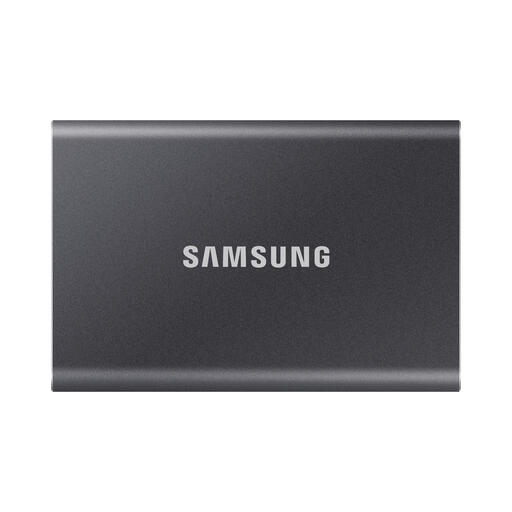
Samsung Portable SSD T7 2TB Grey
A 2 TB model for anyone who wants to match the capacity to the size of their film archive and how much it is expected to grow.
The product description lists USB 3.2 Gen 2, read speeds of up to 1,050 MB/s and write speeds of up to 1,000 MB/s, plus USB-C-to-C and USB-C-to-A cables.
View at Joybuy
 No image available
Samsung T7 Shield 1TB Blue
A portable model to consider if you’ll be taking the SSD with you regularly.
The product description lists USB 3.2 Gen 2, read speeds of up to 1,050 MB/s and write speeds of up to 1,000 MB/s, along with IP65 protection and drop resistance from a height of up to 3 metres. IP65 does not mean the drive can be submerged in water.
View at Joybuy
Frequently asked questions about external SSDs for family films
Can a USB SSD make films available to different computers at the same time?
Not as a network service just because the SSD is connected over USB. To access the files from other computers, you need to set up file sharing on the connected PC or Mac and decide who can access them.
Which format is best if you use the SSD with both Windows and Mac?
Apple Support recommends exFAT for an external drive larger than 32 GB that is also used with Windows. Before formatting, check which files are on the drive: formatting erases its data.
Is one SSD enough to back up family films?
No, not if that SSD is the only place where the films are stored; a back-up is a separate copy. Keep an up-to-date copy in another storage location too.
What warranty and cooling-off period apply to an online purchase in the Netherlands?
For a consumer purchase, the product must meet what you could reasonably expect from it under normal use under the statutory warranty. The seller is responsible, as ACM ConsuWijzer explains. Online purchases generally come with a statutory cooling-off period of up to 14 days after delivery, although exceptions apply. A manufacturer’s warranty does not replace the statutory warranty.
Does the GDPR apply when family members watch films on a shared work computer?
That depends on how the films are used and shared. According to the Dutch Data Protection Authority, the exception for personal or household use applies when images remain private or are shared only within a very limited circle. The fact that it is a ‘shared work computer’ does not, by itself, determine which situation applies.


