Who is this guide for?

Creator with a growing project archive

You keep lots of completed projects and their source material, and mainly need plenty of space in one place. The Consumers’ Association describes moving or copying files you don’t need every day; compare the capacity with your complete project folders.

Creator who wants to be able to restore projects

You want to be able to find old projects, so you plan for separate copies and an archive structure you can check. The Library of Congress recommends keeping copies on different storage media and in different physical locations; CISA recommends keeping backups and testing recovery.

Creator who re-edits or takes projects with them

You regularly retrieve project folders, work in different places or open files from external storage. As well as capacity, consider portability, the connection and the conditions required to achieve the specific model’s stated speed.

What should you look for when choosing?

Desktop HDD

Best for: storing lots of completed projects at a fixed workstation when maximum transfer speed isn’t the priority.

Bear in mind: it needs a separate power adapter and is less portable.

Portable HDD

Best for: taking project folders with you without a separate power adapter, provided the model you choose has enough capacity.

Bear in mind: the capacity of the specific version and whether it needs formatting for use with your computer.

Portable SSD

Best for: transferring large files often, working on the go or reopening projects.

Bear in mind: your computer and cable need to support the stated USB speed. A top speed doesn’t guarantee the speed you’ll get when transferring a complete project folder.

What to consider What should you check? Who is this important for?
Space for project folders Measure the complete folders you want to keep, include the projects you expect to add, and compare the total with the capacity of the exact version. If I want to keep lots of complete project folders and source files, I need to know how much space my archive really requires; around 33% of consumers prioritise capacity.
Recoverability Plan a separate copy on another medium or in another location, and test whether you can retrieve your files from it. If I don’t want to lose old projects, I need to be able to keep more than one usable copy; around 27% of consumers give recoverability top priority.
Speed when retrieving files Check the USB connection on the drive, cable and computer together; stated sequential speeds don’t guarantee the speed of a complete file transfer. If I often open or move large projects, I want quick access without assuming the top speed is a constant transfer speed; around 20% of consumers prioritise transfer speed.
Portability and connection Check whether the drive needs a separate adapter, which cable it uses and whether its file system works with the computers you use. If I take project folders between workstations, I want a drive that’s practical to connect and power there; around 20% of consumers prioritise portability.

Common purchasing mistakes

  • Using your archive drive as your only copy

    A warranty or data recovery service isn’t a separate, usable copy of your project. If the drive fails or goes missing, your archive may be the only version you have.

    Keep separate copies and test whether you can restore a project from them. The Library of Congress recommends storing copies on different media and in different locations; CISA recommends keeping backups and testing recovery.

    Allow for the extra storage and time needed to manage copies and test recovery.

  • Comparing only the stated top SSD speed

    Crucial’s stated top speed for the X9 Pro depends on using a suitable host and cable. A sequential speed doesn’t automatically tell you how quickly a complete project folder will transfer.

    Check your computer’s USB capabilities and the supplied cable before taking the stated speed into account.

  • Formatting without first securing your files

    Formatting erases files on the drive. Toshiba says the Canvio Basics model reviewed here uses NTFS by default and needs to be reformatted for use with a Mac; Apple warns that formatting erases files.

    Check the file system before use and copy any existing data to another location first.

Brands to compare

Seagate

The Expansion Desktop range is worth considering for large archives kept at a fixed workstation. Seagate lists an 8 TB EMEA version.

  • The desktop version is one to compare if you’re looking for plenty of archive space.
  • According to Seagate, this version requires a power adapter. Any Rescue service is no substitute for a separate backup.

Toshiba

Canvio Basics is a range of portable HDDs. Toshiba lists a 4 TB version with USB power.

  • The version reviewed here is designed for anyone looking for a portable drive without a separate power adapter.
  • According to Toshiba, this version is formatted as NTFS by default and needs to be reformatted for use with a Mac.

Samsung

The portable T7 Shield is an SSD option for anyone who takes files with them or transfers them regularly. Samsung identifies the black 4TB version as MU-PE4T0S/EU.

  • For this model, Samsung specifies sequential read and write speeds of up to 1.050/1.000 MB/s and an IP65 rating.
  • These are manufacturer specifications, not an independent measurement of a complete project transfer or a guarantee against data loss.

Crucial

The X9 Pro is a portable SSD option. Crucial identifies the 4TB version as CT4000X9PROSSD9.

  • Crucial lists speeds of up to 1.050 MB/s for the X9 Pro.
  • According to Crucial, you need a suitable USB 3.2 Gen 2 host and cable for the best speed. The drive comes formatted as exFAT; formatting erases any existing data.

Joybuy products for video projects

This selection includes external desktop and portable HDDs, plus a portable SSD, for storing, taking with you and retrieving video project folders.

WD Elements Desktop 6 TB external desktop HDD

WD Elements Desktop 6 TB

A desktop HDD for project folders kept mainly at a fixed workstation.

Capacity: 6 TB. Connection: USB 3.0. Mains adapter included. Default format: NTFS; formatting it for other uses may erase existing data.

Joybuy

My Passport USB-C 2 TB portable HDD, black

My Passport USB-C 2 TB, black

A portable HDD for project folders you want to take between workstations.

Capacity: 2 TB. USB-C connection and USB power are specified.

Joybuy

Western Digital My Passport USB-C 4 TB portable HDD, black

Western Digital My Passport USB-C 4 TB, black

A portable HDD for anyone who wants to take project folders with them and share files between Windows and Mac.

Capacity: 4 TB. USB-C connection, USB bus power and exFAT are specified.

Joybuy
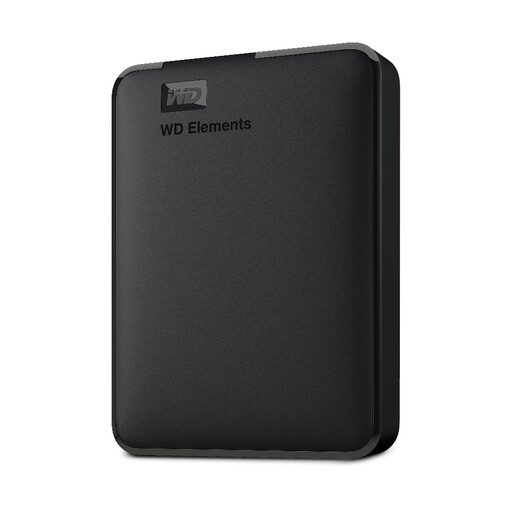
WD Elements Portable 2 TB portable external HDD

WD Elements Portable 2 TB

A portable HDD for project folders you want to take with you over USB.

Capacity: 2 TB. USB 3.2 Gen 1 and plug-and-play are specified.

Joybuy

Samsung MU-PE2T0R 2 TB portable SSD, blue

Samsung MU-PE2T0R 2 TB, blue

A portable SSD for projects you regularly take with you or reopen.

Capacity: 2 TB. USB 3.2 Gen 2. Stated sequential read and write speeds: up to 1.050/1.000 MB/s; actual speed also depends on the connection and configuration.

Joybuy

Frequently asked questions

How do I work out how much capacity my video archive needs?

Measure the complete folders you want to keep, and include the projects you expect to add and any separate copies you want to keep. Then choose a capacity that suits the collection; there’s no single TB threshold that works for every archive.

Can I use the same archive drive with a Mac and a Windows PC?

That depends on how it’s formatted. Apple lists exFAT as a Windows-compatible option for drives larger than 32 GB; Toshiba says the Canvio Basics model reviewed here uses NTFS by default and needs to be reformatted for use with a Mac. First, copy any existing files elsewhere, as formatting erases them.

Is one external drive enough to keep a completed project?

Not if it contains the only copy. The Library of Congress recommends keeping copies on different media and in different physical locations; CISA recommends keeping backups offline and testing recovery.

What does a warranty mean when buying an external drive in the Netherlands?

For a consumer purchase, the Dutch government says you’re entitled to a product that works as it should; there is no fixed legal two-year warranty period in the Netherlands. If a product is faulty, contact the seller. Manufacturer warranties and any data recovery services have their own terms; check the relevant agreement for a business purchase.

Does every online purchase come with a 14-day cooling-off period?

No, not in every case. The Dutch government says many distance purchases by consumers come with a 14-day cooling-off period, but there are exceptions. Buying from a private individual isn’t the same as buying remotely from a business; check which terms apply to your purchase.
