
Keeper of irreplaceable notes
You want to be able to retrieve research notes and earlier versions if something is lost or goes wrong. The National Cyber Security Centre advises testing a backup by opening files from it.


If your archive will mostly stay at your home office and you need space for notes and attachments, compare portable and desktop HDDs. If you often take the drive with you or regularly transfer large files, compare portable SSDs. Before buying, check the size of your archive, your computer’s USB connection and its file system. An external drive is not a separate backup in itself: the National Cyber Security Centre advises keeping multiple copies and testing that you can recover your files.
You want to be able to retrieve research notes and earlier versions if something is lost or goes wrong. The National Cyber Security Centre advises testing a backup by opening files from it.
You store notes alongside scans or other attachments and want to match the capacity and connection to the files you actually plan to keep.
You move the drive around or use it with different computers. Portability, connection, cable and formatting may all matter; Which? describes HDDs as more susceptible to knocks than SSDs.
| Consideration | What should you check? | Who is this important for? |
|---|---|---|
| Being able to recover your notes | Decide where to keep a separate copy, which folders your backup software includes and how you would restore files. | I don’t want to rely on a single drive and need to be able to open my important notes if something goes wrong. Around 31% of consumers prioritise recoverability. |
| Space for a growing archive | Count your current files and decide which attachments and earlier versions you want to keep; compare this with the capacity of the exact model. | I keep scans or attachments as well as text, and want room for the archive I plan to build. Around 25% of consumers prioritise archive storage space. |
| Computer and backup method | Check the USB port, included cable, formatting and the requirements of your backup software. | I want the drive to work with my computer and chosen backup method, without any surprises about the connection or formatting. Around 19% of consumers prioritise compatibility. |
| Taking it with you and transferring files | Check the size, cables and ports; don’t assume a stated maximum speed guarantees a particular copying time. | I regularly take my archive with me or move it between computers, so portability and transfer speeds matter. Around 13% of consumers prioritise portability and transfers. |
| Data confidentiality | Decide who needs access and how you would recover any encrypted copy later. | I want to protect sensitive or identifiable notes appropriately and manage access to my files. Around 12% of consumers prioritise confidentiality. |
If the drive fails or the files turn out to be unreadable, you won’t have another copy to fall back on.
Keep a separate copy and try opening important files from it. The National Cyber Security Centre advises testing backups in practice.
A stated maximum speed doesn’t tell you how long it will take to copy your files; your computer and connection also play a part.
First check the size of your archive, the ports and the cables. Only then compare the specifications of the exact drive model.
The Toshiba Canvio models mentioned are pre-formatted for Windows. Toshiba says that reformatting is required for the listed macOS versions; formatting can erase existing data.
Check the file system and your backup method’s requirements before saving files or formatting the drive. First, keep existing files somewhere else.
The portable Canvio Basics and Canvio Ready ranges are worth comparing for an archive kept at or alongside your home computer.
The Expansion Desktop range is worth comparing if the drive will stay at a permanent home office setup.
The portable T7 SSD is worth comparing if you often take your archive with you or transfer larger files.
The portable X9 SSD is an option to compare for file transfers and backups.
This selection includes portable HDDs and SSDs for storing and carrying research notes and attachments. Check the capacity, connection and any requirements of your backup method for each model.
 No image available
A portable SSD for taking notes and other files with you.
Capacity: 1 TB. Read speeds of up to 800 MB/s. Drop protection up to 2 metres.
 No image available
A portable HDD for a Mac archive you want to use with Time Machine.
Capacity: 2 TB. The title mentions Time Machine compatibility and password protection; the product information lists hardware encryption and a USB-A cable with a USB-C adapter.
 No image available
A portable HDD for an archive where you need 2 TB of storage.
Capacity: 2 TB. The product information lists password protection, 256-bit AES hardware encryption, automatic backup software and USB power.
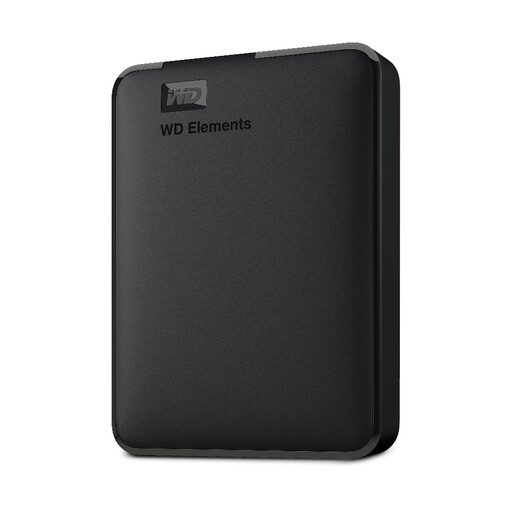 No image available
A portable HDD for an archive of notes and attachments.
Capacity: 2 TB. The product name mentions formatting for PC and Mac; the product information lists USB 3.2 Gen 1 and plug-and-play use.
 No image available
A portable SSD for an archive you regularly take with you or transfer.
Capacity: 1 TB. The product information lists USB-C, USB 3.2 Gen 2, read speeds of up to 1.000 MB/s and drop protection up to 2 metres.
Not if it’s the only copy of notes you want to keep. Store a separate copy and test that you can open important files from it; the National Cyber Security Centre advises checking backups.
Microsoft describes File History as a way to copy personal files to an external drive or network location. Check that your research folders are included, then try restoring a file.
Don’t assume so without checking. For the Canvio models mentioned, Toshiba specifies NTFS and says they need reformatting for the listed macOS versions. Apple explains how to choose an external drive for Time Machine; check your Mac’s current requirements and store existing files elsewhere before formatting.
For a consumer purchase, statutory rights may still apply after a commercial warranty has expired if the product does not perform as you could reasonably expect under normal use. ACM ConsuWijzer says the retailer is responsible; there is no single fixed statutory warranty period for all external drives.
The Dutch guidance mentioned does not set a single product requirement for every user. Safe Internetting lists encryption as a possible extra layer of protection; the Dutch Data Protection Authority says organisations processing personal data must determine appropriate security measures based on the risks. The obligations that apply depend on the data and your role.