
Student with a large portfolio at home
Wants to keep source files and earlier versions locally and rarely takes the drive out. Microsoft Support explains how File History can back up libraries on a Windows computer.


An external HDD is a good fit for a portfolio that stays mostly at home and needs plenty of storage space. An SSD makes more sense if you often take the drive with you or move large files. Coolblue’s buying guide describes HDDs as more susceptible to knocks and SSDs as better suited to being carried around, but neither guarantees protection against data loss. Check that your backup contains all the folders and versions you need, test that you can restore your files, and keep the copy separate from your computer.
Wants to keep source files and earlier versions locally and rarely takes the drive out. Microsoft Support explains how File History can back up libraries on a Windows computer.
Regularly moves large portfolio, photo or video files between workspaces, so portability and a case that can withstand being carried around matter.
Wants to know whether their chosen backup method can restore files, or how to protect sensitive files if a drive is lost. Not every portfolio contains personal data.
Start by considering the size of your portfolio and the files you want to keep. Then choose between a permanent storage spot and a drive that’s easy to carry, and finally check that your computer can create and restore the backup.
| What to consider | What should you check? | Who is this important for? |
|---|---|---|
| Space for your portfolio and versions | Add up your portfolio, source files and other relevant files, and allow room for future versions. Apple recommends a drive with at least twice the Mac’s storage capacity for a full Time Machine backup; this isn’t a general minimum for a standalone portfolio copy. | If I want to keep all my source files and earlier versions locally, I need enough capacity for them. Around 36% of consumers see having enough space as their top buying priority. |
| Taking it with you and transferring large files | Compare a fixed HDD set-up with the greater portability of an SSD. For an SSD, also check that your computer’s port and cable support the advertised speed. | If I regularly change workspaces or move large files, size and connectivity matter. Around 29% of consumers prioritise portability and file transfer. |
| Recovery and computer compatibility | Check that Windows File History includes all your portfolio folders. On a Mac, check the format required for Time Machine before formatting a drive; formatting can erase existing files. | If I want to be sure I can restore the right folders after a problem, I should test the backup method first. Around 21% of consumers prioritise recoverability and compatibility. |
| Access to sensitive files | If your portfolio contains sensitive files, check whether the drive or backup supports encryption and how to store the recovery password securely. | If I keep sensitive files on a portable drive, I want to limit unwanted access without making recovery impossible. Around 14% of consumers prioritise access protection. |
Windows File History only includes folders in the selected libraries. As a result, a folder outside that selection may be missing when you try to restore your files.
Check which folders are selected and restore a test file before your submission deadline. Collecting or recreating missing portfolio files could take extra time.
Apple says a new Time Machine drive may need to be erased and reformatted. Files stored only on that drive could be lost in the process.
Check the format and save any existing files somewhere else before confirming the erase.
Crucial says the X9’s maximum read speed can vary depending on the host device. The connection, cable and computer all affect the speed you actually get.
First check which ports your computer has, and only pay for extra speed if it suits your files and how you work.
A warranty covers the product and doesn’t, by itself, recover files stored on a faulty drive. The ACM ConsuWijzer explains that, under the applicable terms, a seller must resolve issues with a product that doesn’t meet expectations during normal use.
Keep your working files and backup separate, and check that your latest copy is usable.
The portable T7 and T7 Shield ranges are worth comparing if you’re looking for a compact SSD.
The X9 is a compact SSD option for a portfolio you take between devices.
The Expansion Portable HDD is an option if you mainly want to keep a local archive.
My Passport is an HDD range worth comparing if you want local storage and an encryption option.
These product options are suited to storing a portfolio locally: portable SSDs and HDDs for a fixed or portable backup set-up.
 No image available
A portable SSD option if you want to take a local backup with you. Compare its capacity with the size of your portfolio and check that the connection works with your computer.
Capacity: 1 TB.
 No image available
A desktop HDD for a permanent backup spot at home, when storage space matters more than portability. Bear in mind that this model needs a power adapter and a mains socket.
Capacity: 6 TB. Connection: USB 3.0.
 No image available
A portable HDD option for local storage if your computer has a compatible USB-C connection. Check that it works with your backup method before transferring files.
Capacity: 2 TB. Connection: USB-C.
 No image available
A portable HDD option if you’re looking for more local storage space. Check that the USB-C connection works with your computer and that the capacity suits the files and versions you want to keep.
Capacity: 5 TB. Connection: USB-C.
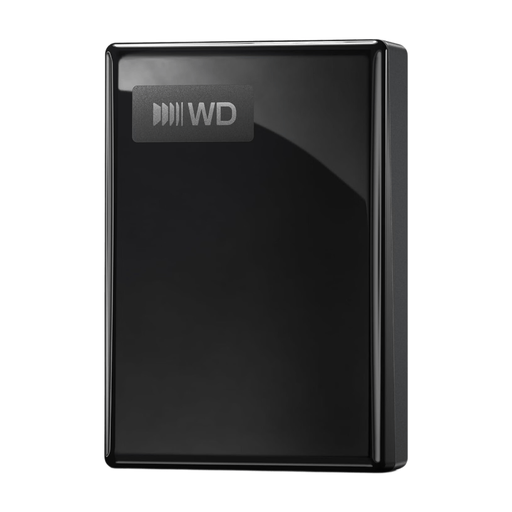 No image available
A portable HDD option for a local copy if your computer has a compatible USB-C connection. Compare 1 TB with the size of your portfolio and the versions you want to keep.
Capacity: 1 TB. Connection: USB-C.
Yes. Windows File History can regularly save copies to a connected external drive and restore earlier versions. Check that all your portfolio folders are in the selected libraries; add folders stored elsewhere if needed.
Not always. Apple Support recommends APFS or APFS Encrypted for a Time Machine drive; a drive formatted for Windows may need to be erased and reformatted during set-up. Save any existing files somewhere else first.
Check that the folders you need are there and restore a test file. Microsoft Support explains how to restore earlier versions using File History; on a Mac, you can check the progress and date of the most recent backup in Time Machine.
Encryption can provide extra protection if you store sensitive files, but keep your recovery password somewhere safe. The Dutch Data Protection Authority outlines security obligations for organisations that process personal data; whether those obligations apply to your situation depends, among other things, on what you store and whether you use it solely for personal purposes.
In the Netherlands, ACM ConsuWijzer says that, under the applicable terms, the seller must resolve issues with a product that doesn’t meet what you could reasonably expect during normal use. For an online purchase from a business, the Dutch government generally also provides a 14-day cooling-off period; this is a separate right from the warranty. A replacement drive won’t automatically bring lost files back.