If you often work directly from the drive and have a small desk, compare compact external SSDs. For a growing archive that you access less often, a portable HDD may be a better fit. Choose based on the capacity you need, the connection and cable, and keep a separate copy of completed projects too. Stated SSD speeds are maximums under suitable conditions, not a guarantee of performance with your music software.
Who is this relevant to?
Producer with active sessions
You often open or move projects and want a compact drive for working storage. Check the ports, cable and storage location of all the media you use. Kingston and Samsung describe compact external SSDs designed for this type of use.
Creator with a growing project archive
You mainly store completed sessions and need to balance storage capacity with the space available on your desk. Western Digital describes, among other options, a portable 2 TB My Passport model.
Creator who wants to be able to restore projects
You want a separate copy of complete projects, not just extra space for your current working files. Steinberg explains how to archive or back up projects in Cubase; also check which media your project needs.
What should you consider when choosing?
First decide whether you’ll mainly use the drive for active sessions, an archive or a recovery copy. Then check that its capacity, connection and file system suit your computers and workflow.
| What to consider |
What should you check? |
Who is this most relevant to? |
| Working from a compact drive |
Check the space available on your desk, the drive’s dimensions and whether the supplied cable fits your USB port. Don’t assess a stated speed without considering your computer and how you’ll use the drive. |
If I often open sessions and want to keep the drive on my small desk, its size and connection are decisive. Around 33% of consumers prioritise working from a compact drive. |
| Space for a growing archive |
Compare the capacity of the exact model with your complete project folders. When archiving, also gather any files your project refers to. |
I mainly want to store completed projects and need to know whether the media I used should be included in the archive. Around 25% of consumers prioritise archive space. |
| A recoverable back-up |
Keep a copy separate from the working version and check that the project opens from the copy with the media it needs. |
If I want to be able to restore a session after losing the working copy, I need a separate copy. Around 25% of consumers prioritise a recoverable back-up. |
| Sharing files between computers |
Check the cable, file system and whether you can write to the drive on each system. For example, a Mac may be able to read NTFS files but not write to them. |
I want to use projects on more than one computer system and need to know in advance whether I can write to the drive on both. Around 17% of consumers prioritise compatibility between systems. |
Common pitfalls
-
Moving your only copy to a new drive and calling it a back-up
A back-up is a copy you can use if the original files are lost. If only one version remains, you don’t have a separate recovery copy.
Keep the working version and the copy separate, and check that the project opens from the copy.
-
Archiving only the DAW project file
Projects may refer to media files that aren’t included in the same file. For Cubase Pro 15.0, Steinberg explains how to collect external files for an archive, as well as an exception for VST Sound content in project back-ups.
Follow your DAW’s archiving or back-up procedure and check the result from a different storage location.
Tracking down missing audio or other media later can take extra time.
-
Assuming a USB-C plug or high speed guarantees full compatibility
The connection alone doesn’t tell you whether your computer can write to the drive. The file system and supplied cable matter too.
Before buying or formatting the drive, check the ports, file system and software requirements. Make a copy of any existing files before formatting.
You may need extra preparation to use a different cable or change the file system.
Brands to consider
Kingston
The XS1000 range is a compact SSD option for working storage on a small desk.
- Kingston lists the XS1000’s dimensions as 69,54 × 32,58 × 13,5 mm, with USB 3.2 Gen 2 and 1 TB and 2 TB models.
- The stated speeds are maximums from the manufacturer’s tests. Kingston says actual speeds also depend on the host hardware, software and usage. Check which cable and adapter are included with the model.
Samsung
The Portable SSD T7 is a compact SSD option for moving files between computers with USB-C or USB-A connections.
- For the Dutch T7 model MU-PC1T0T/WW, Samsung lists supplied C-to-C and C-to-A cables, and read and write speeds of up to 1.050 and 1.000 MB/s respectively.
- These are manufacturer maximums for this model under suitable conditions, not measured speeds for music projects. Check the specifications of the model you choose.
Western Digital
My Passport comes in portable HDD models, including a 2 TB model, for archive use.
- For the black 2TB model, Western Digital lists USB 3.2 Gen 1/USB 3.0 and a supplied USB-A cable.
- Western Digital says a separate NTFS driver, available to download, is needed to write to the drive on supported Macs. Check the file system and your computer’s requirements before using the drive as shared working storage.
Seagate
The Portable HDD range is an option for storing a portable archive or back-up without a separate power supply.
- Seagate lists models with capacities of 1, 2, 4 and 5 TB, and USB 3.0.
- Check the connection and capacity of the exact model you’re considering.
Crucial
The X9 is a compact SSD option for copying and sharing files.
- Crucial lists an exFAT file system for the X9 model reviewed.
- Crucial warns that reformatting erases data on the drive. Compatibility and achievable speeds also depend on the computer and connection, so check the exact model.
Joybuy products
This selection includes portable HDDs for archives and external SSDs for compact working storage. Compare their capacities and connections with your own needs and equipment.
 No image available
My Passport 6 TB White portable hard drive
A portable HDD option for storing completed projects and archives.
Capacity: 6 TB. USB 3.0, 2.5-inch form factor and weight of 210 g. Dimensions: 10,7 × 7,5 × 2,06 cm.
Don’t move the drive while transferring data.
Joybuy
 No image available
1 TB portable external SSD
A compact SSD option for project files you use regularly.
Capacity: 1 TB. USB-C and USB 3.2 Gen 2, with an integrated USB-C cable. Stated read speed of up to 1.000 MB/s.
Joybuy
 No image available
DigiEra LPS2000M-3 portable SSD 1 TB, pink
A portable SSD option for compact storage of project files.
Capacity: 1 TB. USB 3.2 Gen 2×2 and USB-C. Stated speeds of up to 2.000 MB/s read and 1.800 MB/s write. Weight: 1,62 oz.
Joybuy
 No image available
Samsung Portable SSD T7 2 TB blue
An SSD option for active projects if you’re looking for 2 TB of storage.
Capacity: 2 TB. USB 3.2 Gen 2. The product description lists a credit-card-sized design and supplied USB-C-to-C and USB-C-to-A cables.
Joybuy
 No image available
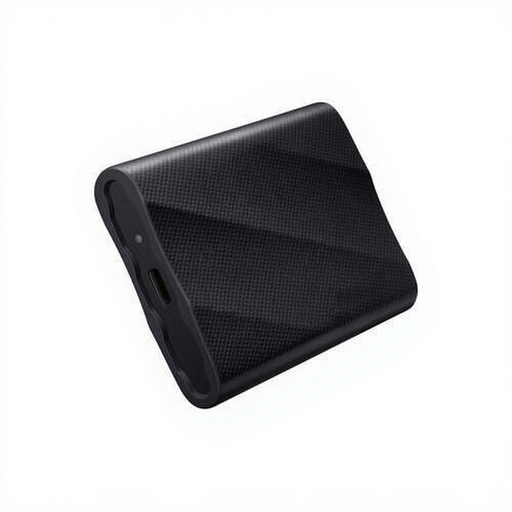
Samsung Portable SSD T9 1 TB black, MU-PG1T0B
A compact SSD option for project files if you’re looking for 1 TB of storage.
Capacity: 1 TB. USB 3.2 Gen 2×2. Stated read and write speeds of up to 2.000 MB/s. Weight: 122 g. The product description lists USB-C-to-C and USB-C-to-A cables.
Joybuy
Frequently asked questions
Is one external drive with my active sessions automatically a back-up?
No. A back-up is a copy you can use if the original files are lost. Keep a separate copy and check that the project opens from it.
Should I copy only the project file?
Check the media you’ve used too. For Cubase Pro 15.0, Steinberg explains that projects can refer to media files and that Prepare Archive can collect external files; Back up Project doesn’t copy VST Sound content. Follow the documentation for your DAW if you use a different one.
Which file system is useful if I switch between Windows and Mac?
ExFAT is one option to consider if you want to use files between Windows and Mac. Apple says a Mac may be able to read NTFS but not write to it. Before formatting, check your software’s requirements and make a copy of any existing files.
Is there a fixed statutory two-year warranty period for an external drive in the Netherlands?
No. According to the Dutch government, there is no fixed statutory warranty period in the Netherlands. If a product is faulty, contact the retailer; a manufacturer’s warranty is in addition to your statutory rights.
What should I do if a project refers to media files outside the project folder?
Use your DAW’s archiving or back-up procedure to include the necessary files, then check that the project opens from the copy. The exact steps vary between software, so Steinberg’s Cubase procedures don’t automatically apply to other DAWs.


