
Group accounts administrator
Wants to be able to restore and open an earlier spreadsheet after a mistake or computer failure. The NCSC advises testing recovery, rather than simply checking that a copy has been made.


Start by choosing a back-up method that lets you restore and open an older spreadsheet version. Then work out how much storage you need and check the connections on the group’s computers. A portable HDD may be a good fit if capacity and keeping the drive in one place are your priorities, while a compact SSD can be practical if you’ll be carrying it around often; according to the Consumentenbond, SSDs are less vulnerable to knocks than traditional hard drives. If the files contain personal data, also consider who will have access and what security measures are appropriate for the data and risks involved. The NCSC stresses that a single external drive is not a complete back-up strategy.
Wants to be able to restore and open an earlier spreadsheet after a mistake or computer failure. The NCSC advises testing recovery, rather than simply checking that a copy has been made.
If spreadsheets contain personal data, the group needs to consider who should be able to open the copy and the potential consequences of losing it. The Dutch Data Protection Authority stresses that security measures should be appropriate for the data and the risks involved.
You may use different computers, so it’s worth checking in advance which connection and cable you’ll need, and whether the files can be read on the device used for recovery. Manufacturers such as Seagate and Kingston list cables for specific USB connections with certain products.
| Consideration | What should you check? | Who is this important for? |
|---|---|---|
| Restoring older versions | Check whether the back-up method keeps versions; restore an older spreadsheet and open it. | If I need an earlier version after overwriting a file or a computer failure, I want to be able to restore and open it. Around 36% of consumers prioritise restoring older versions. |
| Access to data | Consider what personal data is stored, who needs access and how security will be set up and managed. | If our spreadsheets contain personal data, I want to know who can open the copy and what losing the drive would mean. Around 29% of consumers prioritise data protection. |
| Connections to group computers | Check for USB-A and USB-C ports, the cables you’ll need and whether the file system works on the device used for recovery. | If the drive is shared between volunteers’ computers, I want to be able to connect it and read the files on the recovery device. Around 21% of consumers prioritise connectivity and use across different computers. |
| Space for files and versions | Check the size of your files and decide how many versions the group wants to keep before choosing a capacity. | I want enough space for our files and the agreed number of versions, without choosing a larger capacity based on an arbitrary rule of thumb. Around 14% of consumers prioritise capacity and cost. |
A copy of the current version alone won’t help if you need an earlier version that you can use. The NCSC points out that retention periods determine how far back you can go in your back-up history.
Agree how many versions to keep, then test whether you can restore and open an older spreadsheet.
A drive can go missing or be managed by several people. If it contains personal data, security measures should be appropriate for the data and risks involved, as the Dutch Data Protection Authority advises.
Decide who will have access, where the drive will be kept and whether encryption is needed and will actually be enabled.
The speeds manufacturers quote for products such as the Samsung T7 and Kingston XS1000 are measured under specific testing and connection conditions. They don’t prove that a higher speed will noticeably speed up spreadsheet back-ups.
First compare your recovery needs, the capacity you need, how often the drive will be moved and the USB ports on the group’s computers.
The Expansion Portable is a range of portable HDDs for local storage, with a 2 TB option among the variants.
The portable T7 SSD may be worth considering if a compact drive and access protection are important to you.
The compact XS1000 is an external SSD for anyone who needs to consider both USB-A and USB-C computers when backing up files.
This selection includes portable SSDs and HDDs for storing group files and back-ups. Choose according to the capacity you need, the device you’ll use for recovery and how often you’ll be carrying the drive.
 Image unavailable
A portable SSD to consider if you’ll be taking the back-up between locations.
Capacity: 1 TB. The product description states read speeds of up to 800 MB/s and drop protection from up to 2 metres.
 Image unavailable
A portable SSD to take along when the group uses the back-up in different locations.
Capacity: 1 TB. The product title states 2000 MB/s.
 Image unavailable
A portable hard drive for a Mac back-up set-up; check that your chosen recovery method works with the group’s computers.
Capacity: 2 TB. The product information mentions use with Time Machine.
 Image unavailable
A portable hard drive to consider if the group needs storage space and a file-based back-up method.
Capacity: 2 TB. The product description mentions password protection activated through WD Discovery; check that this setting is enabled before storing sensitive files.
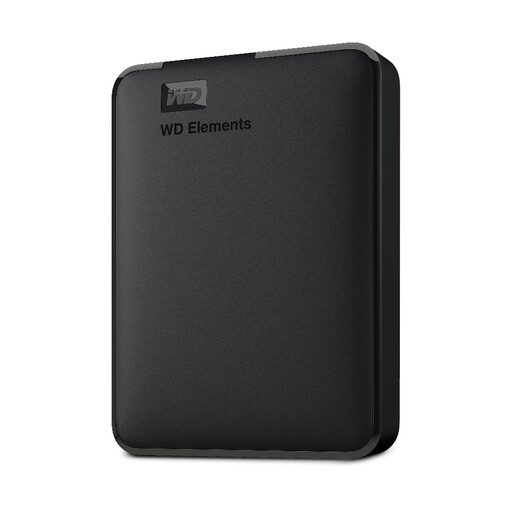 Image unavailable
A portable hard drive for group files; check that the stated formatting is suitable for the computer used for recovery.
Capacity: 2 TB. The product title states that it is formatted for PC and Mac and has USB 3.0.
Not as a complete strategy for important group files. The NCSC recommends keeping at least three versions of important data: the originals and two back-ups. Agree how often the group will make copies, and test whether files can be restored and opened.
That depends on what the group needs to restore if something goes wrong. A file back-up focuses on the spreadsheets; a system back-up may also include programmes and settings. Choose a recovery method that meets your needs, and test it.
Restore a file and open the spreadsheet; don’t rely solely on a message saying the copy was successful. If possible, test it on the computer that would be available for recovery. The NCSC advises testing back-up recovery.
The Dutch Data Protection Authority does not prescribe one standard for drives in every situation. If the group processes personal data, security measures should be appropriate for the data and risks involved; encryption may be one such measure. Assess the files and your set-up before deciding which measures are appropriate.