
Home cook who wants to protect their recipes
You also keep recipes on your computer and want to be able to restore a copy if files go missing. Safe Internetting and Microsoft Support describe storing and restoring files as parts of a backup.


For recipes that mostly stay at home, a portable HDD suits an archive stored in one place; an SSD makes more sense if you regularly take the drive with you. If you use both Windows and Mac, check the file format as well as the connection. When making a backup, keep the original on your computer.
You also keep recipes on your computer and want to be able to restore a copy if files go missing. Safe Internetting and Microsoft Support describe storing and restoring files as parts of a backup.
You want to be able to open and save the same recipes on both computers. The connection and file format matter here; Apple Support explains which formats work with different Mac applications.
You may keep scans or photos as well as text, and want to check the size of your archive before choosing a capacity. The Consumers' Association describes external HDDs and SSDs as different storage options.
Suitable for: an archive or backup that usually stays with your home computer.
Bear in mind: the Consumers' Association says HDDs are more susceptible to shocks than SSDs. An external drive also isn’t a backup if you move your only files onto it.
Suitable for: files you regularly take with you or use on different computers.
Bear in mind: a high advertised speed isn’t necessarily important for individual recipe documents. An SSD can also be lost or fail, and doesn’t replace a separate backup.
When storing recipes on a home computer, the main things to consider depend on how you save and restore files, and whether you might take the drive with you.
| What to consider | What should you check? | Who does this matter most to? |
|---|---|---|
| Restorable backup | Copy your recipe folder and keep the original. Microsoft Support advises adding folders outside the File History libraries to a library if needed; also try restoring a file. | I want to be able to restore my recipes if something happens to my computer, so I keep the original as well as the copy. Around 36% of consumers prioritise having a restorable backup. |
| Connection and file format | Check the USB port and the cable supplied. Apple Support says exFAT is compatible with Windows and recommends APFS or APFS Encrypted for Time Machine; formatting can erase existing files. | I want to be able to open and save recipes on both Windows and Mac; having the right plug alone isn’t enough. Around 29% of consumers prioritise compatibility. |
| Space for your archive | Check the size of your recipe folders, including any scans and photos, and compare it with the capacity of the exact model. | If my archive also includes scans or photos, I want to know how much space they take up before choosing a drive. Around 21% of consumers prioritise having enough space for their archive. |
| Taking it with you regularly | Check the connection and cable for the exact model. The Consumers' Association says HDDs are more susceptible to shocks; don’t treat a manufacturer’s drop-protection claims as a replacement for a backup. | I take my drive with me regularly and want its connection and design to suit how I use it. Around 14% of consumers prioritise portability. |
A backup is a copy you can restore. If you move the original, you no longer have a second copy on your computer.
Copy the folder, keep the original and try opening or restoring a file from the external drive.
Having the right connection alone doesn’t guarantee you can save files on both computers. Apple Support says exFAT is compatible with Windows; a Mac may not be able to write to NTFS.
First decide whether you want to transfer regular files or use the drive for Time Machine. Back up any existing files elsewhere before formatting.
A USB connection alone doesn’t tell you whether the cable supplied will fit, and an advertised speed doesn’t automatically show how quickly your computer will copy files.
Check your computer’s ports and cables. If you’re looking at a speed specification, check the conditions for the exact model.
The Expansion Portable range includes portable HDDs, such as the 2 TB STKM2000400 model.
The XS1000 is a compact external SSD range, available in 1 TB and 2 TB versions.
The Portable SSD V3 range includes a 1 TB model with the code SDSSDE31-1T00-G25.
This Joybuy selection includes portable external SSDs and HDDs for storing recipe files on your home computer or while you’re out and about.
 No image available
A portable SSD option if you want to store recipe files externally and take the drive with you.
Capacity: 1 TB.
 No image available
A portable SSD option if you want to store recipe files externally and take speed specifications into account.
Capacity: 1 TB. The quoted read speed of up to 2.000 MB/s requires a compatible USB 3.2 Gen 2x2 host; actual performance may vary.
 No image available
A portable SSD option if you want to store recipe folders externally and take the drive with you regularly.
Capacity: 1 TB. The quoted read speed is up to 1.000 MB/s. A USB-C to USB-A adapter may be needed to connect to USB-A.
 No image available
An HDD option if you want to keep a larger recipe archive in one place.
Capacity: 4 TB. The product description says the drive is formatted for Windows; it needs to be reformatted for use with macOS.
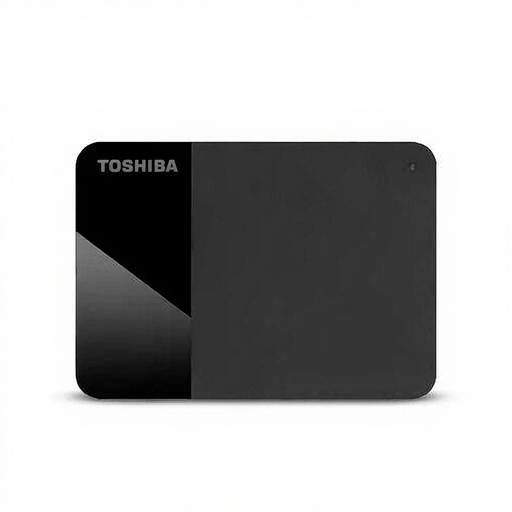 No image available
An external HDD option for storing recipe documents and other files.
Capacity: 1 TB. The product description states that it is powered via USB.
Connect an external drive and set up File History through Control Panel. Microsoft Support says libraries are included; if a recipe folder is outside a library, add it to one if needed. Then check that you can restore a file.
Yes, with a suitable connection and file format. Apple Support says exFAT is compatible with Windows and warns that a Mac may not be able to write to an NTFS drive. For a Time Machine drive, Apple recommends APFS or APFS Encrypted; formatting can erase existing data.
No. The Dutch government says there is no fixed statutory warranty period in the Netherlands, and that you should contact the seller if a product is faulty. A manufacturer’s warranty is an additional benefit; check the terms for extra services, such as data recovery, separately.
According to the Dutch Data Protection Authority, the GDPR does not apply to personal data you process solely for personal or household use. This is not a general exemption for business use or for making other people’s data public.