
Producer with active projects
You work on projects or samples from external storage and want a drive that fits on your small desk.


If you regularly work on projects or samples directly from an external drive, compare compact SSDs and check that your computer’s USB port supports the speed you need. For a large archive or a separate backup, you could also consider a portable HDD. Whichever drive you choose, make sure you also keep important projects in a separate backup.
You work on projects or samples from external storage and want a drive that fits on your small desk.
You mainly store finished sessions and large libraries, and are weighing up the capacity you need against speed for active use.
You want a separate backup, so there isn’t just one drive holding your work.
Best for: projects and samples you regularly use directly from the drive.
Worth noting: stated speeds are maximums; the host device, connection and usage all affect actual speed.
Best for: a large archive or storage for a separate backup, when speed for active use is less important.
Worth noting: allow for desk space and a free USB port; Ableton recommends using a separate port for the audio interface and hard drives where possible.
| What to consider | What to look for | Who it matters to |
|---|---|---|
| Active use | Check your computer’s USB capabilities, the cable and whether you can connect the drive directly. | If I want to work on projects and samples from the drive, active access comes first. Around 33% of consumers prioritise working with projects and samples. |
| Archive space | Add up your current project folders and libraries, then estimate how much extra space you’re likely to need. | If I mainly store finished sessions and libraries, I want enough space for my archive. Around 25% of consumers give archive space top priority. |
| Desk space and connection | Compare the drive’s dimensions and included cables with the available space and ports on your computer. | When desk space is limited, I want a drive that’s practical to connect and position. Around 25% of consumers put size and connection first. |
| Separate backup | Plan where you’ll keep your working copy and separate backup; when transferring files, check that the audio files you use are included. | If I want to be able to recover my projects if my working drive is lost or has problems, I keep a separate copy. Around 17% of consumers give an independent backup top priority. |
A drive for everyday use and a separate backup protect you against different situations. If that one drive is unavailable, you may not have another copy of your projects.
As well as your working copy, keep a separate copy of your projects and recordings on another storage device or using a different backup solution.
A separate backup requires extra storage and a consistent routine.
An SSD won’t automatically reach its advertised maximum speed through every computer port, cable or hub.
Check your computer’s USB capabilities, the cable supplied and whether you can connect the drive directly.
In Ableton Live, audio files may be stored outside the project folder. The ‘Collect All and Save’ function also doesn’t include third-party plug-ins.
Collect the audio files you’ve used following your DAW’s instructions, then open a test copy of the project after transferring it.
You may have to spend time tracking down missing audio files or plug-ins.
The Portable SSD T7 is a compact SSD range for projects you open regularly.
The 2 TB X9 Portable SSD is an option if your active library needs more space.
The XS1000 range includes compact external SSDs in 1 and 2 TB capacities.
The Expansion Portable range is a portable HDD option for extra storage or an archive.
The My Passport range includes portable HDDs, including a 4 TB model for a large archive.
This selection includes portable SSDs for active use and external HDDs for project storage and archiving.
 No image available
A portable SSD option for projects you want to store or work on using external storage.
1 TB; USB-C and USB 3.2 Gen 2; stated read speed of up to 1.000 MB/s.
Don’t use this drive as the only backup for important projects.
 No image available
A portable HDD option for storing a growing project archive.
2 TB; USB 3.2 Gen 1; USB bus-powered.
Don’t use this drive as the only backup for important projects.
 No image available
A portable HDD option for a project archive you can take with you.
2 TB; USB 3.2 Gen 1; Micro-USB B; USB bus-powered; 2.5-inch model.
Don’t use this drive as the only backup for important projects.
 No image available
A portable SSD for projects or samples you want to store on external storage.
2 TB; USB 3.2 Gen 2; maximum speeds of 1.050 MB/s read and 1.000 MB/s write; USB-C-to-C and USB-C-to-A cables.
Actual speed also depends on the host and usage. Don’t use this drive as your only backup.
 No image available
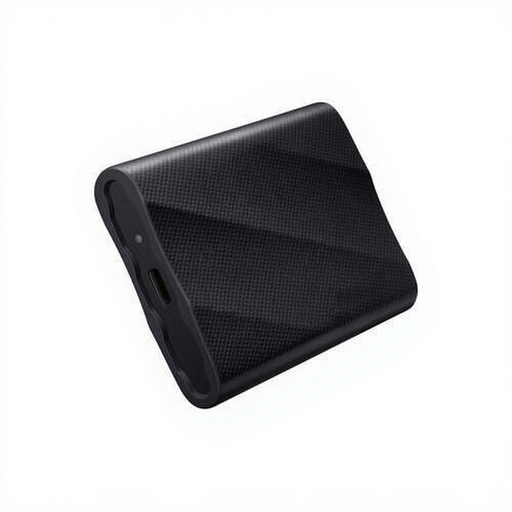
A portable SSD option for projects you want to use from external storage.
1 TB; USB 3.2 Gen 2x2; stated speeds of up to 2.000 MB/s; USB-C-to-C and USB-C-to-A cables.
Actual speed also depends on the host and usage. Don’t use this drive as your only backup.
Yes, Ableton Live projects, samples and Packs can be stored on external storage. Ableton recommends installing the Live application and plug-ins on the system drive; for another DAW, check its own instructions and choose a connection that suits your workflow.
If you use Ableton Live, ‘Collect All and Save’ can include the audio files you’ve used in the project folder. Third-party plug-ins aren’t copied over in this way, so check that the project opens fully after transferring it.
For sharing between Mac and Windows, Apple lists ExFAT as a Windows-compatible format for volumes larger than 32 GB. Format the drive to suit the systems you use, and make a copy of any existing files before reformatting.
According to the Dutch government, you have 14 days to change your mind when buying at a distance. You also have statutory rights if a product isn’t as it should be; the Netherlands has no fixed statutory warranty period, and the seller is your point of contact. A manufacturer’s warranty doesn’t replace these statutory rights.