
Vandaag of morgen in huis

Kwaliteit gegarandeerd

Welkomstaanbiedingen ontgrendelen: GRATIS bezorging | Tot 80% korting | Gratis 30 dagen JoyPlus-proefperiode
Download de app
An exercise bike can be a practical way to cycle at home, but not every model is right for every household. A compact fitness bike for gentle exercise requires different features from a spin bike for intensive training. Marketing terms such as “professional”, “quiet” or “app-enabled” only mean something when you check the technical specifications.
More levels do not automatically mean a better workout. On some models, the differences between levels are minimal. Therefore, look at the type of resistance and how it is adjusted.
Magnetic resistance usually works without direct contact between the magnet and the flywheel. This can help reduce wear and noise. With a spin bike, the weight of the flywheel is also relevant to the pedalling motion. A heavier flywheel can provide a smoother feel, but it often makes the equipment heavier too.
A belt drive and magnetic resistance can produce relatively little noise. Even so, you will still hear the flywheel turning, the pedals moving and, potentially, contact with the floor. If you live in a flat, it is sensible to look for:
Specifications such as “under 20 dB” come from the brand’s product information. The actual experience may vary depending on the flooring, assembly and training intensity.
An adjustable exercise bike should suit your height and riding position. Do not only check whether the saddle can be raised and lowered, but also whether it can be adjusted forwards and backwards. With a recumbent bike, the backrest, step-through access and distance to the pedals are particularly important.
Also always check the maximum user weight. This is not a guideline to ignore, but a product limit that you should take into account before buying.
For gentle cycling, warming up or exercising regularly, an exercise bike with several magnetic resistance levels is often sufficient. Keen athletes may benefit more from a spin bike with finely adjustable resistance and a sturdy flywheel.
An indoor cycling trainer with an upright seating position generally encourages a more active cycling posture. A recumbent fitness bike, on the other hand, provides more back support and may appeal to users who prioritise comfort and easy access. Choose based on how you actually want to train, rather than solely on appearance.
Pay attention to these features:
Correct adjustment helps prevent you from constantly changing your posture while cycling. Place the equipment on a flat, stable floor and, after assembly, check that the pedals, bolts and stabilisers are securely fastened.
An exercise bike with an LCD display usually shows time, speed, distance and calories. This is useful for basic tracking, but the accuracy of calorie and heart-rate readings can vary from one machine to another. Treat these figures primarily as an indication of your workout.
An exercise bike with an app may use Bluetooth to synchronise data or track training goals. Before buying, check which app is supported and whether your smartphone is compatible. “App-compatible” does not automatically mean that every fitness app will work.
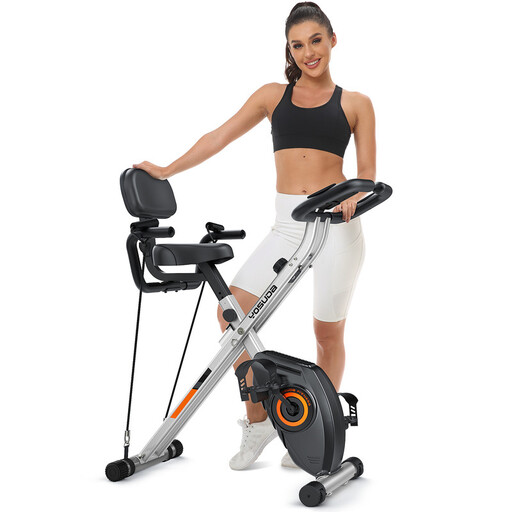
Why it suits this profile: This foldable exercise bike combines cycling with arm and leg exercises and is designed for users who want to save space. The transport wheels make it easier to move between rooms.
The product information lists 8 magnetic resistance levels, an LCD display and a foldable X-frame. However, check the available storage space before buying.
Maximum load of 150 kg, LCD display, resistance bands and a design that, according to the product description, can save up to 70% of storage space.
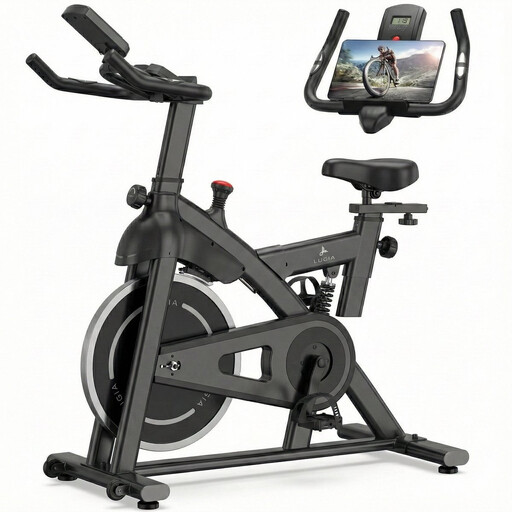
Why it suits this profile: This model is designed for taller users and more intensive daily use. The stated adjustability is suitable for users up to 210 cm tall.
The specifications list 100 manually adjustable magnetic resistance levels and wide stabilisers. This allows you to fine-tune the intensity more precisely than with just a few levels.
A 6 kg flywheel, maximum user weight of 150 kg and a stated noise level below 20 dB according to the product description.
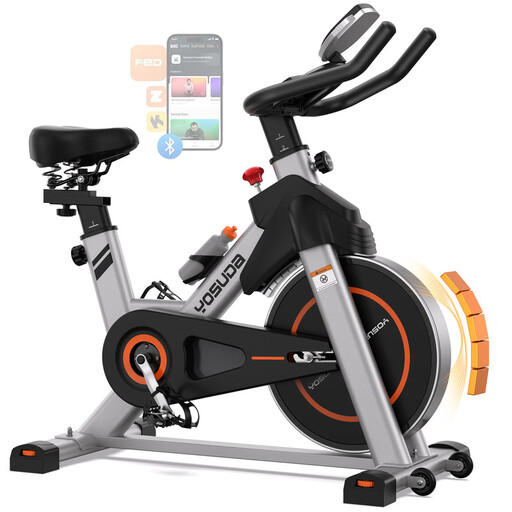
Why it suits this profile: This is a spin bike for users who want to train more intensively and track their workout data via Bluetooth and an app.
The product details list a saddle adjustable in four directions, adjustable handlebars, magnetic resistance and a belt drive. Check app support on your smartphone.
An 8 kg flywheel, maximum load of 160 kg, HD LCD display, Bluetooth app connectivity and transport wheels.
We have put together a complete, up-to-date list of products that fully meet these strict selection criteria and the applicable European safety regulations.
Place the exercise bike on a level floor and use a training mat if necessary. Adjust the saddle and handlebars before you start. Check the bolts, pedals and adjustment knobs regularly. Wipe away sweat and dust with a slightly damp cloth and store the cardio equipment in a dry place.
Start with low resistance and increase the intensity gradually. Stop if you experience pain, dizziness or any other unusual sensation. The product warnings and maximum load stated in the manual always take priority.
A model with magnetic resistance and a belt drive can help reduce noise and vibrations. The result also depends on the flooring, assembly and training intensity. A mat under the equipment helps reduce direct contact with the floor.
Power consumption is usually limited when the display runs on batteries. With models featuring Bluetooth or an app, your smartphone, tablet and internet connection may use additional power. Check the product specifications to see whether the display uses batteries or mains electricity.
Its lifespan depends on the frame, drive system, maintenance and training frequency. A sturdy metal frame and correct assembly help, but wear parts such as belts, pedals and resistance components may require maintenance or replacement over time. Also check the warranty and available support before placing your order.
