
Vandaag of morgen in huis

Kwaliteit gegarandeerd

Welkomstaanbiedingen ontgrendelen: GRATIS bezorging | Tot 80% korting | Gratis 30 dagen JoyPlus-proefperiode
Download de app
Trainers are handy for work, shopping, walking and leisure. But a purchase doesn’t always work out. A style may look great in photos, yet feel too narrow in practice, offer little support or get dirty quickly. Use these practical checks to compare women’s, men’s and unisex trainers based on the features that really matter.
A narrow toe or low-profile shoe may look fashionable, but it won’t necessarily suit every foot. Slim-fitting lifestyle trainers such as the PUMA Speedcat need particular consideration if you have wider feet. Always check:
A style can be the right length and still feel too narrow.
Trainers are often promoted as comfortable using vague claims. It’s better to look for features you can check. An EVA or IMEVA midsole, a padded insole or a soft ankle collar tell you more about the construction than a general claim about comfort.
Also consider what you’ll use them for. A casual trainer isn’t automatically suitable for running or prolonged, intensive exercise. A flexible sole is useful for light sporting activities, but a particular sport may call for additional features.
White trainers made from synthetic leather are easy to wipe clean, while suede, canvas and mesh need different care. For example, Vans Old Skool trainers made with suede and canvas need different care from a style with a fully synthetic upper.
Before buying, check:
This helps prevent your new pair from looking less smart than expected after just a few weeks.
Measure both feet at the end of the day and compare the longer foot with the size guide for that specific style. Sizes vary between brands and silhouettes. For example, the adidas Run 70s 2.0 lists foot lengths alongside EU and UK sizes. The PUMA Speedcat is described in the product information as true to size.
Between sizes? Follow the guidance on the product page. For some sportier-fitting styles, sizing up is recommended if you’d like more room.
The sole has a big impact on how a trainer feels underfoot. Look out for:
Trainers with rubber soles are a practical choice for commuting and everyday wear, but check the tread too if you often walk outdoors in wet weather.
Textile and mesh generally let more air through than synthetic leather. This can be useful in warmer weather or if you do a lot of walking. Synthetic leather is easy to wipe clean and works well for white trainers worn to the office or with casual outfits.
Here are a few examples:
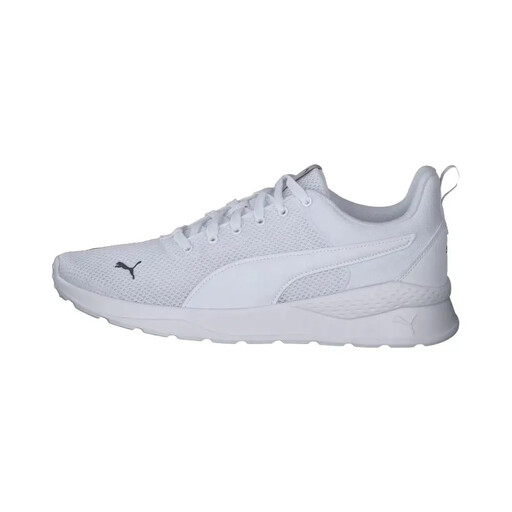
Why it suits this profile: A versatile white unisex style for shopping, commuting, leisure and light activities.
The product information lists mesh, an EVA midsole and a SoftFoam+ insole. This gives you specific details about the features that support comfort, rather than just a general claim.
Mesh upper, EVA midsole, textile lining and synthetic outsole. Sizes from EU 35.5 to 48.5 are listed.
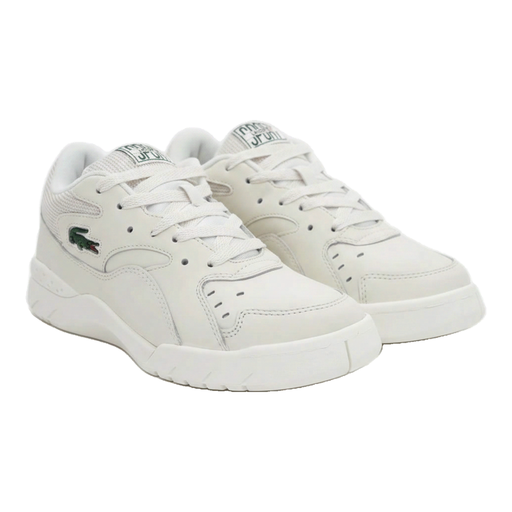
Why it suits this profile: A smart retro court style for anyone looking for one pair to wear with jeans, chinos and smart-casual clothes.
The materials and care instructions are clearly specified: synthetic leather, a soft textile lining and cleaning with a damp cloth. This makes it a more predictable choice than a style with an unspecified upper.
Monochrome off-white design, padded insole and sturdy rubber outsole. This pair is available in size 41.
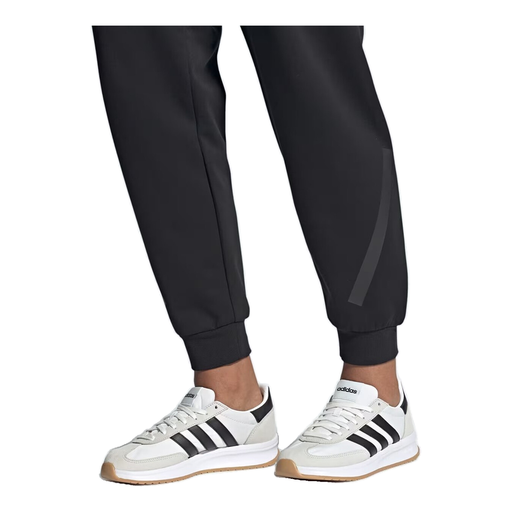
Why it suits this profile: For anyone who wants to pair a retro running silhouette with walking, everyday activities and casual outfits.
The product description lists a lightweight, flexible rubber outsole and a size guide showing foot length. This makes it easier to choose a style that suits both your needs and your foot size.
A combination of synthetic leather and textile, a breathable textile lining and a rubber outsole. The listed foot length for size 40 is 25.5 cm.
Other popular choices each have their own distinctive look. The Vans Old Skool is recognisable by its flat sole, suede-and-canvas combination and padded collar. The PUMA Speedcat, by contrast, has a very slim silhouette, leather upper and rubber outsole. For a sportier look, you could also consider the PUMA Milenio or PUMA Smash 3.0. Check the current size availability and material information for each style.
We’ve put together a complete, up-to-date list of products that meet these strict selection criteria and the current European safety regulations.
Measure your foot in centimetres and compare it with the size guide for the style you’ve chosen. Don’t rely on your usual EU size alone. Fit, last and brand can all vary. If your foot length falls between two sizes, follow the recommendation on the product page.
Their lifespan depends on how often you wear them, the surfaces you walk on, your body weight, the materials and how well you care for them. A pair worn every day will wear out faster than shoes you rotate with another pair. Alternating between two pairs, removing dirt straight away and letting your shoes dry naturally can help keep the materials in good condition for longer.
This isn’t recommended for many styles. It’s better to use a soft, damp cloth and follow the manufacturer’s care instructions. Leave your trainers to air-dry, away from direct heat. Machine washing or high temperatures can damage suede, leather and glued soles in particular.
