
Vandaag of morgen in huis

Kwaliteit gegarandeerd

Welkomstaanbiedingen ontgrendelen: GRATIS bezorging | Tot 80% korting | Gratis 30 dagen JoyPlus-proefperiode
Download de app
As a dog owner, you naturally want the best nutrition for your loyal companion. The shelves are packed with options, and marketing promises don't make the decision any easier. A prominent name in premium dog food is Eukanuba. But how do you know which formula is right for your dog? In this guide, we'll help you make the right choice and avoid common pitfalls.
Before you place a bag of food in your shopping cart, it's wise to consider a few common missteps.
To find the right Eukanuba dog kibble, you can focus on three clear specifications. These will help you look beyond the marketing and make a choice based on your dog's needs.
Your dog's age is the most important starting point. Each stage has unique requirements.
Your dog's size determines not only the portion size but also the food's composition.
Premium dog food distinguishes itself through the quality of its ingredients. Eukanuba often uses chicken as its primary protein source, which is a highly digestible source of animal protein. Additionally, the manufacturer often mentions a specific fibre blend (prebiotics FOS and beet pulp) to support digestion and natural sources of omega fatty acids for skin and coat.
Based on these criteria, we have matched several Eukanuba products to specific dog owner profiles.
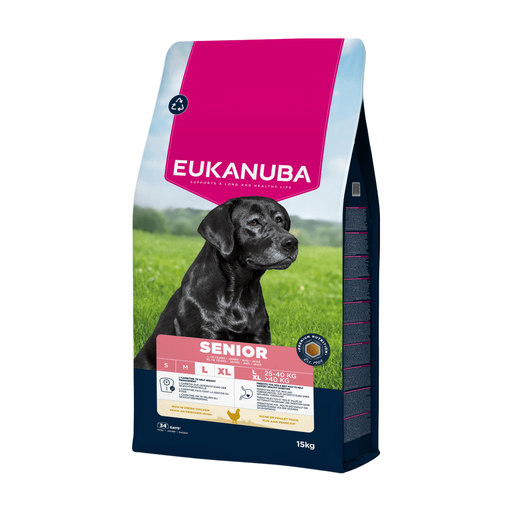
Why it's a match: Ideal for owners of large dogs (9+ years) who need extra support for joints and weight management. The Eukanuba 15kg bag is practical and economical for long-term use.
This food is specifically tailored for large senior dogs, thus avoiding the "one-size-fits-all" pitfall of generic senior food.
According to its specifications, it contains L-carnitine for weight management and glucosamine and chondroitin to support healthy joints.
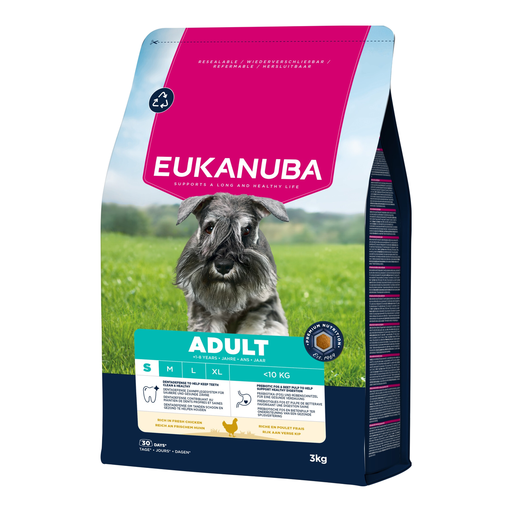
Why it's a match: Suitable for adult small breed dogs (1-8 years) with an active lifestyle. The smaller kibble is tailored to their jaws and energy needs.
The unique hexagonal kibble with the DentaDefense system addresses a common problem in small breeds (tartar), something generic food often ignores.
The formula contains L-carnitine to help maintain an optimal weight, and the special kibble shape supports dental health.
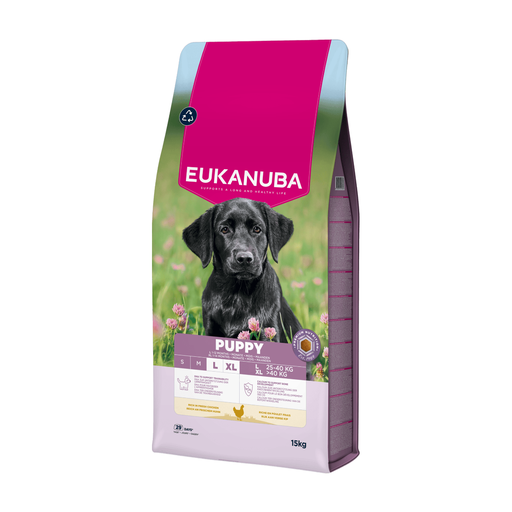
Why it's a match: For owners who want to give their large breed puppy (1-12 months) a foundation for healthy, controlled growth.
This Eukanuba puppy food is specifically for large breeds, avoiding the pitfall of 'regular' puppy food. It focuses on balanced growth to prevent overloading the skeleton.
According to the manufacturer, it contains DHA to support learning ability and an adjusted calcium level for healthy bone development.
Choosing the right food is an important decision. If the options above aren't exactly what you're looking for, browse our complete assortment.
A sudden change in diet can cause gastrointestinal upset. It is recommended to introduce the new food gradually over a period of about seven days. Start with a ratio of 25% new food to 75% old food, and increase the amount of new food every few days until you have fully transitioned.
Eukanuba puppy food is intended for the initial, rapid growth phase (usually up to 12 months). For some large breeds, a 'Junior' formula is available. This is an intermediate step for the period after the first growth spurt (e.g., from 12 to 18 months), during which nutritional needs change again before the dog transitions to adult food.
The kibble size is adapted to the dog's jaw size and eating behaviour. Dog food for small dogs has smaller kibble to encourage chewing and prevent choking. Dog food for large dogs has larger kibble that discourages bolting and helps clean the teeth through chewing.
