Who is this lighting choice for?

Printmaker building a portfolio

You want to photograph the whole print and its paper colour consistently. In this case, positioning two lights evenly matters more than creating lighting effects; the Canadian Conservation Institute describes lighting from both sides as a starting point.

Documenting relief

You want to capture the plate mark or paper texture as well as taking a standard photograph. You can use a separate raking-light setup for this; the Library of Congress describes using a single low-angle light source.

Photographer with a small worktable

You mainly take close-ups and need to fit the panel, mount and power supply into a compact home setup. A compact panel may be easier to position, but check its coverage if you also want to photograph the whole print.

What should you look for when choosing?

Two adjustable panels

Choose this if: you want to capture the entire etching evenly. The Canadian Conservation Institute describes using two light sources on either side as a starting point.

Bear in mind: you’ll need space, mounts and power for both lights.

One movable panel

Choose this if: you want to take a separate photograph of the plate mark or paper texture as well as a standard reproduction photograph. The Library of Congress describes using a single low-angle light source for this.

Bear in mind: shadows can make details harder to see; raking light is not a substitute for an evenly lit overall photograph.

Compact panel for close-ups

Choose this if: you have limited workspace and mainly photograph details.

Bear in mind: test whether the light covers the whole print before using it for a larger reproduction.

What to consider What to check before buying Who should pay particular attention?
Even lighting Can you position two similar light sources on either side? Also check whether diffusers and stands are included with the version you’re considering. If I want to reproduce the whole etching evenly, I pay attention to positioning the lights on both sides and to reflections. Around 36% of consumers prioritise even reproduction.
Colour and paper white Check the white-light range and dimming settings of the exact model. For a series of photographs, take a test shot first using the same camera settings. If I want to capture the ink and paper white consistently across a series of photographs, adjustable white light and fixed settings are important. Around 29% of consumers prioritise colour consistency.
Showing relief Check whether you can move and tilt the panel to create low-angle light. Plan to take a separate photograph for this. When I want to document a plate mark or paper texture, I need a separate raking-light photograph as well as the overall image. Around 21% of consumers consider relief their top priority.
Space and power Check the mount, cables, adapter and accessories included with the specific version. If my worktable has limited space, the panel, mount and power supply all need to fit the setup. Around 14% of consumers prioritise limited workspace and a simple power setup.

Common pitfalls

  • Expecting one small camera light to illuminate a whole print evenly

    A small light is not necessarily enough to illuminate an entire etching evenly. The Canadian Conservation Institute describes lighting from both sides as a starting point for even illumination.

    Test the coverage across the whole print and compare the setups you’d need before opting for a compact light.

  • Using raking light as your only reproduction photograph

    Low-angle light can highlight texture, but it can also create shadows that make parts of the image harder to see.

    Take an evenly lit overall photograph and, if relief is important, a separate raking-light photograph as well.

  • Assuming accessories or the right version are included

    What’s in the box varies by version. For battery use with the LEDP260C, Godox specifies two NP-F970 batteries, which are sold separately. The white Ulanzi VL49 is also a different version from the VL49 RGB.

    Check the full model name, package contents and power options before ordering.

Relevant brands to consider

Godox

The LEDP260C is a bi-colour panel, also available as a two-light kit. This may be useful if you want to position a light on either side of the etching.

  • Godox lists a colour temperature range of 3300–5600 K for the LEDP260C.
  • For battery use, the manual specifies two NP-F970 batteries, which are sold separately. Godox publishes its own EU declaration of conformity for this model; this is a manufacturer’s declaration, not an independent performance test.

NEEWER

The NL660 is available as a single bi-colour panel and as a two-panel kit, which may suit a setup with lighting on both sides.

  • NEEWER lists 3200–5600 K and CRI ≥96 for the NL660.
  • For the two-panel kit described, the manufacturer lists adapters and diffusers, but not NP-F batteries. The colour-rendering figures are manufacturer specifications, not the result of an independent colour test.

amaran

The P60x is a single panel with adjustable white light, for anyone looking for a controllable light source that can be moved around a home setup.

  • Aputure lists 3200–6500 K and CRI ≥95 for the P60x, and publishes its own declaration of conformity for this model.
  • These manufacturer details alone can’t predict what your finished photograph of the etching will look like.

Ulanzi

The white VL49 is a small, rechargeable panel for a compact close-up setup; don’t assume it can replace two larger panels without testing it first.

  • For the white VL49, Ulanzi lists 5500 K, built-in diffusion and 200 lux at 1 m.
  • The VL49 RGB is a different version, with a different type of light and colour temperature range.

LED lights at Joybuy

These Joybuy picks are portable LED video lights for a compact setup with adjustable lighting. Take a test shot to check whether one light illuminates your entire etching evenly enough.
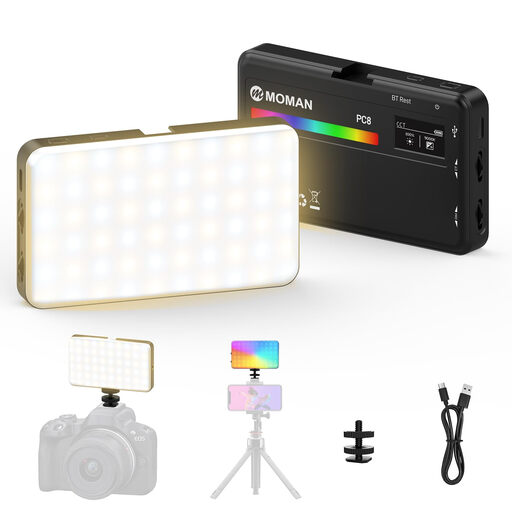
MOMAN PC8 RGB portable camera light

MOMAN PC8 RGB camera light

For a compact, portable setup where you want to adjust the white light.

Adjustable colour temperature from 2500–9000 K and adjustable brightness.

The description lists CRI 95+/TLCI 96+, a built-in battery and 1/4-inch mounts.

According to the product description, wireless use at full power lasts up to 80 minutes.

View at Joybuy
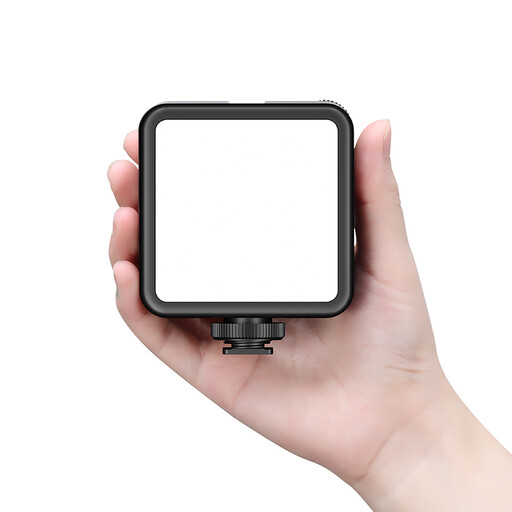
Ulanzi VL81 rechargeable LED video light, black

Ulanzi VL81 rechargeable LED video light, black

For a portable worktable setup where you want to adjust the colour temperature.

Adjustable colour temperature from 3200–5600 K and adjustable brightness.

The product description lists 81 LEDs and a built-in rechargeable battery.

According to the description, the light can be mounted using a cold shoe or on a tripod.

View at Joybuy

Frequently asked questions

How should you position lights for a standard photograph of your etching?

Start with two similar light sources on either side, at an angle of around 45 degrees. Take a test shot to check that the print is evenly lit and free from reflections. The Canadian Conservation Institute describes this setup as a starting point. For relief, also take a separate photograph using a single low-angle light source.

When is raking light useful for an etching?

Use raking light if you want to show the plate mark, paper texture or unevenness. The Library of Congress describes using a single low-angle light source. Also take an evenly lit overall photograph, as shadows can make details harder to see.

Can you leave lights shining on a delicate etching for a long time?

Avoid unnecessary exposure and switch the lights off when you’re not taking photographs. According to the Library of Congress, light damage to art on paper can build up and is irreversible; this is not a product-specific safe exposure time.

Do you need anything else to use the light on battery power?

That depends on the model and what’s included in the package. For battery use with the LEDP260C, Godox specifies two NP-F970 batteries, which are sold separately. Also check which adapter, cables and mounting parts are included with the version you choose.

What compliance information is relevant for an electric LED panel?

Electrical equipment placed on the market in the Netherlands must comply with the applicable EU rules. Where CE marking is required, the manufacturer must also draw up an EU declaration of conformity. The rules that apply depend in part on the power supply and any wireless features; CE marking is not independent approval.
