What should you consider when choosing?
One panel with a white reflector
Best when: you’re photographing a smaller etching and a test shot shows that the shadow side and edges are still clear.
Trade-off: a reflector can bounce light back, but gives you less independent control than a second light. FARO lists a reflective white panel as an alternative to a second light source.
Two separately positioned panels
Best when: one panel and a reflector don’t light the whole sheet evenly enough, or you want to be able to adjust each side separately.
Trade-off: this setup needs more space, mounts and power. The Canadian Conservation Institute suggests lighting from two sides at around 45 degrees as a starting point for even lighting, not a fixed setting for every etching.
Compact rechargeable panel
Best when: you take detail shots in a small workspace and need to move the light frequently.
Trade-off: a compact panel won’t automatically replace two separate lights for a larger etching; take a test shot to check coverage across the whole sheet.
FARO and the Cultural Heritage Agency of the Netherlands recommend assessing the whole object and relevant details separately. The Canadian Conservation Institute describes raking light as a way to emphasise surface texture; this doesn’t mean it’s automatically suitable as the only light for an evenly lit overview shot.
| What to consider |
What should you check? |
Who is this for? |
| Lines and relief |
Check whether the panel and mount allow a low angle of light, and take test shots of both the lines and the shadow areas. |
If you want to bring out fine lines and perhaps take a separate shot of the relief, this should be your first priority. Around 40% of consumers with this buying question prioritise clear lines and relief. |
| How the paper and ink appear |
Keep the light position and camera white balance the same when comparing test shots. Assess the photo, not just the stated CRI. |
If you want to compare several etchings side by side in a portfolio, you’ll want the paper and ink to appear as consistently as possible. Around 30% of consumers with this buying question prioritise this comparability. |
| Coverage and reflections |
Check the centre and corners in a test shot. If the etching is behind glass, move the light sources and see whether reflections are still visible in the image. |
If you’re photographing a larger etching or a work behind glass, you’ll want to make the whole sheet clear first and manage distracting reflections. Around 20% of consumers with this buying question prioritise coverage and reflections. |
| Setup and what’s included |
For each version, check whether the mount, power supply, diffuser and any stand are actually included and suitable for your workspace. |
If you have limited space or move the light frequently, you’ll want to know how to mount it and power it. Around 10% of consumers with this buying question start by looking for a practical setup that suits their needs. |
A Joybuy product for a movable setup
This Joybuy product pick is suited to a compact, movable LED light for product and detail photography of an etching.
 No image available
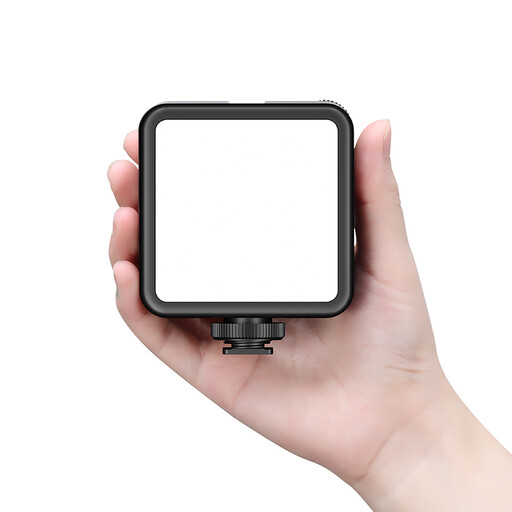
Ulanzi VL81 rechargeable LED video light, black
This rechargeable video light is worth considering if you’re looking for a movable light source for detail shots.
The product information lists a built-in battery, brightness and colour temperature controls, and a cold shoe mount. Check that the mount is compatible with your support, and take test shots to assess light coverage across the whole sheet.
For this exact version, check which EU safety information and any CE marking apply. Follow the warnings in the product description: avoid prolonged direct exposure to the light, use the lamp at maximum power in a well-ventilated space, and keep the connections dry.
View at Joybuy
Frequently asked questions
Should you buy two LED panels straight away for your etching?
No. Start with one adjustable panel and take a test shot. FARO lists a reflective white panel as an alternative to a second light; consider two separately positioned panels if one light and a reflector don’t illuminate the whole sheet evenly enough.
How can you show the paper texture without making the overview shot uneven?
If needed, take a separate detail shot using low-angle raking light, alongside an evenly lit overview shot. The Canadian Conservation Institute describes raking light as a way to emphasise surface texture, and lighting from two sides at around 45 degrees as a starting point for even documentation.
What can you do about reflections if the etching is behind glass?
Move the light sources and check for reflections in a test shot. FARO describes shielding shiny objects from distracting reflections. A polarising filter may help, but according to this source it isn’t a cure-all and can change how colours appear.
Which parts should you check when buying a light kit?
Compare the parts list for the exact version, as accessories vary between kits. The NL660 two-light kit described by NEEWER includes stands and adaptors, but the NP-F batteries aren’t included.
What Dutch safety and returns information is relevant?
An electrical panel placed on the market in the Netherlands must comply with the applicable European product safety rules; CE marking is required where the product category falls within their scope. Business.gov.nl explains these obligations. For online consumer purchases, you generally have a statutory cooling-off period of up to 14 days after delivery, subject to legal exceptions. The Netherlands Authority for Consumers and Markets explains this cooling-off period. Check the information for the exact version and seller.


