Who is this choice relevant to?

Collector recording an etching

You want a recognisable overview photo and, if needed, separate images of a signature, the condition or details in the paper, without immediately investing in professional equipment. The Cultural Heritage Agency of the Netherlands considers a good phone or compact camera suitable for photographing objects.

Maker of detailed reproductions

You want to capture fine lines and the entire print consistently, so you’re comparing the lens, camera position and lighting. The Cultural Heritage Agency of the Netherlands notes that prints and drawings can sometimes be better scanned, depending on their size.

Owner of a fragile or framed etching

You need to consider reflections and how you handle the original. The Library of Congress describes light damage to works of art on paper as cumulative, so keep exposure to a minimum.

What should you look for when choosing?

Your existing phone or compact camera

When to choose it: if you mainly need an overview photo for your own records and a test shot shows the details you want.

The trade-off: you won’t need to buy a camera body, but check that the finest lines and corners remain visible.

Mirrorless camera with interchangeable lens

When to choose it: if you regularly take close-up shots or want to choose a lens that captures the etching at your shooting distance, filling enough of the frame.

The trade-off: compare the camera body with a suitable lens and the setup you’ll need; megapixels alone don’t prove that you’ll get a better reproduction.

Scanner or specialist reproduction

When to choose it: if a suitable unframed print can be digitised flat, or a straightforward photograph doesn’t meet your reproduction requirements.

The trade-off: suitability depends partly on the print’s size and condition; don’t remove a fragile etching from its frame yourself to scan it.

What to consider What should you check? Who is this important for?
Fine lines and details Take an overview photo and a close-up; check that the lens suits your shooting distance and the framing you want. If you want to capture a signature, plate mark or fine lines clearly, pay attention to the combination of camera and lens. Around 40% of consumers prioritise detail when making this choice.
Even, stable shots Check that the camera can be positioned securely and straight, and that the whole sheet, including the corners, is in focus. If you want to compare shots taken in window light, keep the camera position and lighting as consistent as possible. Around 30% of consumers prioritise control over the shot.
Reflections and preservation Check whether the etching is behind glass and briefly test your setup without moving the original unnecessarily. With a framed or fragile etching, you’ll want to minimise reflections and avoid exposing the original to light for longer than necessary. Around 20% of consumers prioritise care of the object.
Complete setup Compare what you already own with everything included in the kit; check whether you’ll need a lens or other equipment. If you mainly need a usable record photo, you won’t want to buy equipment you don’t need. Around 10% of consumers prioritise matching their equipment to its intended use.

What to watch out for when buying

  • Choosing based on megapixels alone

    A sensor specification won’t tell you whether the chosen lens will capture the etching sharply and fill enough of the frame.

    Compare the camera body with the actual lens, and test the finest details from the distance you plan to shoot at.

    You may need an additional suitable lens or a different setup.

  • Comparing a camera body with a complete kit

    The Sony ILCE-6400 listing reviewed here is for the body only, while the Canon EOS R50 and Nikon Z50II kits include a lens. Nikon also states that the Z50II kit doesn’t include a charger.

    Check what’s included in the exact offer before comparing equipment or suitability.

    If you buy a body without a lens, you’ll need to factor the lens in separately.

  • Leaving the etching by the window for too long to get better light

    According to the Library of Congress, light damage to works of art on paper is cumulative.

    Prepare your setup in advance and keep a fragile original’s exposure to a minimum.

Camera brands to compare

Canon

The EOS R50 is worth comparing if you’re looking for a mirrorless camera supplied with a standard zoom lens.

  • Canon Netherlands specifies that the EOS R50 has an APS-C sensor with 24.2 effective megapixels and an RF mount.
  • The kit reviewed here includes an RF-S 18-45mm lens. Check that it gives you the framing you want at your shooting distance; these specifications aren’t an independent reproduction test.

Sony

The Alpha ILCE-6400 is worth considering if you want to compare an APS-C body with an E mount and choose a lens separately.

  • Sony Netherlands lists approximately 24.2 effective megapixels and RAW shooting for the ILCE-6400.
  • The listing reviewed here is for the body only, so also compare the lens you’ll need. The specifications don’t demonstrate an advantage over other bodies for reproducing etchings.

Nikon

The Z50II standard zoom kit is worth considering if you want to look at the body and lens together.

  • According to Nikon, this kit includes the Z50II and a NIKKOR Z DX 16-50mm f/3.5-6.3 VR lens.
  • Nikon states that a charger isn’t included. Check the focusing distance and what extra equipment you’ll need for your shot.

Joybuy products

The Joybuy options below include compact cameras and a Sony mirrorless camera. Treat the specifications listed as product information, not as proof that a model will reproduce your etching better.
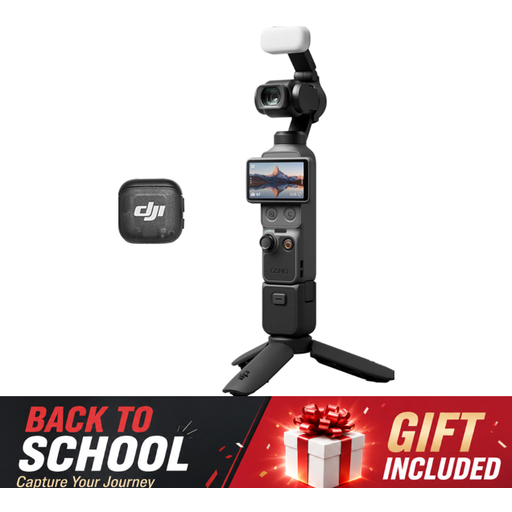
DJI Osmo Pocket 3 Creator Combo camera

DJI Osmo Pocket 3 Creator Combo

This compact camera could be an option if you’re looking for a small setup for a test shot.

The product title lists a 1-inch CMOS sensor, 4K/120fps video, mechanical 3-axis stabilisation and an included microphone. These details alone don’t prove how sharply it will reproduce an etching.

Joybuy

Songdian Pocket Camera, 44MP, pink

Songdian Pocket Camera, 44MP, pink

This pocket camera is a compact option for taking a test shot of your etching.

The product title lists 44MP and 16× digital zoom. These claims alone don’t show how much detail your etching will retain in the final image.

Joybuy
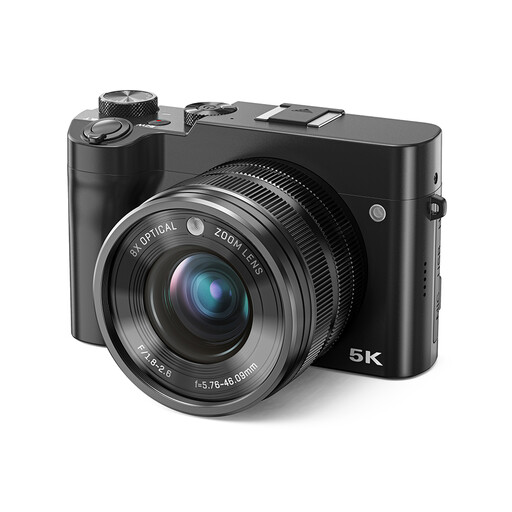
Songdian digital camera, 5K, 64MP, 8× optical zoom, black

Songdian digital camera, 5K, 64MP, 8× optical zoom, black

This digital camera could be worth considering for a test shot where you want to set the focus area.

The product title lists 64MP, 5K and 8× optical zoom; the product description mentions manual focus and focus-area selection. These details aren’t an independent assessment of how well it captures the details of an etching.

Joybuy
Sony ZV-E10 with 16-50mm zoom lens

Sony ZV-E10 with 16-50mm zoom lens

This mirrorless camera with kit lens is worth comparing if you want to take photos regularly using an interchangeable-lens system.

The product description lists a 24.2 MP APS-C sensor and an E PZ 16-50mm lens. It states that the adapter/charger and SD memory card aren’t included. Take a test shot to check whether the lens suits the size of your etching and your shooting distance.

Joybuy

Frequently asked questions

Do I need to buy a mirrorless camera for a single etching?

Not necessarily: the Cultural Heritage Agency of the Netherlands also considers a good phone or compact camera suitable for recording a collection. Start with an overview photo, then check whether it shows the details you need.

How should I get started photographing by a window?

Start with a quick test shot of the entire print and check the corners and any reflections. Keep your setup as consistent as possible between shots, and don’t leave a fragile original in the light for longer than necessary.

Does every mirrorless camera come with a suitable lens?

No; check whether a lens is included with each offer. The Canon EOS R50 and Nikon Z50II kits reviewed here include a standard zoom lens, while the Sony ILCE-6400 listing reviewed here is for the body only. Whether a lens is suitable for your etching depends partly on its size, your shooting distance and the details you want to capture.

What warranty applies to a camera bought in the Netherlands?

If a product breaks down prematurely under normal use, the retailer is responsible under the legal guarantee. According to ACM ConsuWijzer, your entitlement depends on what you could reasonably expect from the product; don’t assume there’s a universal fixed end date of two years.

Can I publish my photo of an etching online?

That depends on the rights to the etching shown and how you intend to use the image. The Dutch government says that making a copy for private use is allowed, but that you may not distribute or make protected work available to the public without permission. Before publishing, check whether the work is still protected and whether you have permission or an applicable licence to use it.
