
Vandaag of morgen in huis

Kwaliteit gegarandeerd

Welkomstaanbiedingen ontgrendelen: GRATIS bezorging | Tot 80% korting | Gratis 30 dagen JoyPlus-proefperiode
Download de app
At first glance, choosing a spool of eSUN PLA+ filament, 1.75 mm, 1 kg seems straightforward. But differences in diameter, winding, colour and print settings can have a big impact on the results. A cheap spool that feeds poorly through the extruder can end up costing you more in material and time than you expect.
This buying guide helps beginners, makers and small businesses choose the right PLA+ 3D printer filament without taking marketing claims at face value.
An attractive colour says little about how easy the filament is to print with. Always check whether it’s suitable for your FDM 3D printer, the nozzle temperature recommended by the manufacturer, and whether the spool is suitable for the print speed you want.
A filament may be described as suitable for high-speed printers, but actual print speed also depends on the hotend, nozzle, cooling, layer height and slicer settings. So, filament for high-speed 3D printers still needs the right setup.
Most printers with a standard 1.75 mm extruder can use this size, but not all printers use the same temperature settings. Also check the maximum spool dimensions, especially if you have an enclosed system or an automatic filament changer.
A consistent diameter is important for an even flow of material. According to eSUN’s product information, the PLA+ spools mentioned have a diameter of 1.75 mm and a tolerance of ±0.03 mm. This is a verifiable product specification that matters for consistent extrusion.
The same information states that each spool contains around 340 to 350 metres of filament. The exact length may vary by colour and material density, but a 1 kg filament spool is practical for prototypes, decorative models and regular hobby use.
PLA+ is a modified version of standard PLA. According to eSUN’s product information, it’s designed to be tougher and stronger than standard PLA. This makes it worth considering for parts that need to be less brittle, such as housings, holders and functional models for indoor use.
That doesn’t mean PLA+ is suitable for every technical application. PETG or another material may be a better choice for prolonged exposure to high temperatures, outdoor use or heavy mechanical loads.
A neat, even winding helps reduce snags and tangles during printing. Once opened, store the spool somewhere dry and dust-free. Moisture can cause more stringing, an uneven surface or inconsistent extrusion with various types of filament.
When changing material, follow the instructions to preheat the nozzle first. This is stated explicitly in the product information for the eSUN PLA+ variants mentioned here. Also, always use the recommended temperature settings as a starting point, then adjust them with a small temperature tower or test model.
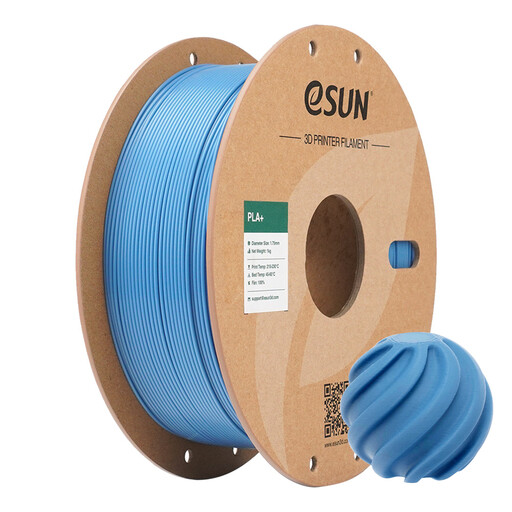
Why it suits this user: The Haze Blue variant combines a popular size with a colour that works well for decorative models, prototypes and everyday practice prints. According to the product information, the material is designed for easy printing.
The stated diameter of 1.75 mm and tolerance of ±0.03 mm give you specific information upfront, rather than just a general claim about print quality.
1 kg per spool, around 340–350 metres according to the product information, and compatible with many FDM printers.
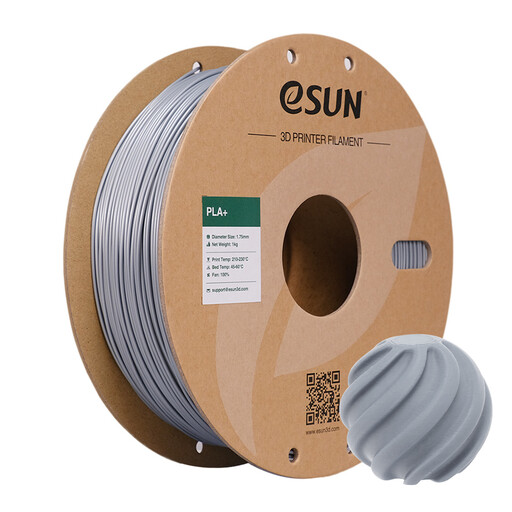
Why it suits this user: Silver works well for models where the finish will be on show, such as props, product prototypes and presentation models. The specifications will appeal to users who care about dimensional accuracy and material feed.
The product information specifies a precise diameter tolerance and an evenly wound spool. Do check your printer’s temperature and retraction settings yourself.
According to eSUN, PLA+ is made using plant-based starch sources; the spool has a diameter of 1.75 mm and weighs 1 kg.
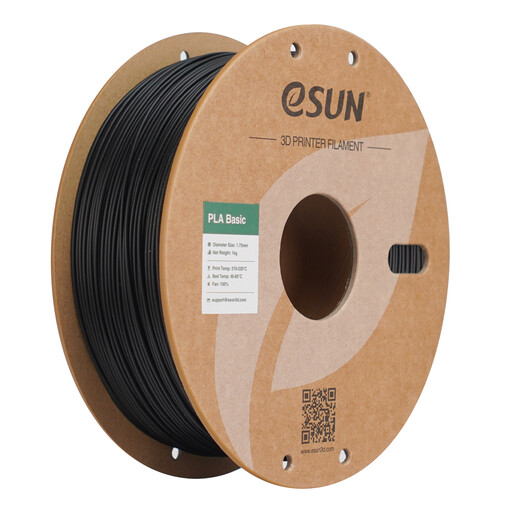
Why it suits this user: This ePLA-Basic variant is designed for users with a high-speed printer or higher print throughput. The product description states that it supports print speeds of up to 300 mm/s under the specified conditions.
The speed claim is linked to a stated flow rate of 35 mm³/s with a 0.4 mm nozzle. Treat this as a product specification, not a guarantee for every printer setup.
Black PLA filament, 1.75 mm and 1 kg; the product description lists compatibility with, among others, Bambu Lab X1/P1P, Creality K1 and AnkerMake M5.
The product information lists compatibility with many FDM models, including Bambu Lab, Creality K1, Ender 3, Prusa, UltiMaker and MakerBot. Before buying, check:
For an Ender 3, a standard PLA profile is often a useful starting point. A Bambu Lab or Creality K1 printer can handle higher speeds, but only when the flow rate, temperature and cooling are set up for higher speeds.
We’ve put together a full, up-to-date list of products that meet these strict selection criteria and the applicable European safety regulations.
According to the product information, eSUN PLA+ is compatible with Ender 3 models, among others. Use 1.75 mm filament and start with the recommended PLA settings. If you’re using a new colour or spool, print a small test first.
That depends on the infill, layer height and size of your models. According to the product information, a 1 kg spool contains around 340 to 350 metres of filament. You may get plenty of prints from one spool when making small decorative models, while large functional parts will use up material more quickly.
The price per spool isn’t the only factor. Also consider failed prints, dry storage, the print temperatures needed and how much material each model uses. Filament with clearly stated diameter and weight makes it easier to estimate the cost per print in advance.
