
Vandaag of morgen in huis

Kwaliteit gegarandeerd

Welkomstaanbiedingen ontgrendelen: GRATIS bezorging | Tot 80% korting | Gratis 30 dagen JoyPlus-proefperiode
Download de app
At first glance, choosing a spool of eSUN PLA filament, 1.75 mm, 1 kg seems straightforward. However, small differences in material type, temperature settings and finish can have a big impact on your print. A spool that looks suitable for fast printing may need extra adjustments on a standard printer.
For home users, makers, students and designers, there are three pitfalls to watch out for:
First, check that your FDM printer uses 1.75 mm filament. Some older or specialist models use 2.85 mm. The wrong diameter won’t fit through the extruder correctly and can disrupt feeding.
Also check:
A 1 kg PLA spool is handy for larger models and multiple prototypes. Just check that the spool will physically fit on your printer’s holder or in its dry box.
PLA filament is popular because it is generally easy to print and suitable for decorative models, prototypes and many everyday hobby projects. It isn’t intended for applications where parts need to withstand high temperatures or heavy mechanical stress over long periods.
Choose based on the look you want:
Filament designed for fast printing isn’t automatically suitable for every printer. According to eSUN’s product listings, under suitable conditions, certain ePLA-Basic variants can support print speeds of up to 300 mm/s and flow rates of up to 35 mm³/s. These are specifications from the brand’s listings, not a guarantee for every printer.
So, start with the settings in the filament profile, then make gradual adjustments:
With silk PLA, printing the outer wall more slowly can help bring out the glossy effect. With matte variants, consistent extrusion is especially important for an even surface.
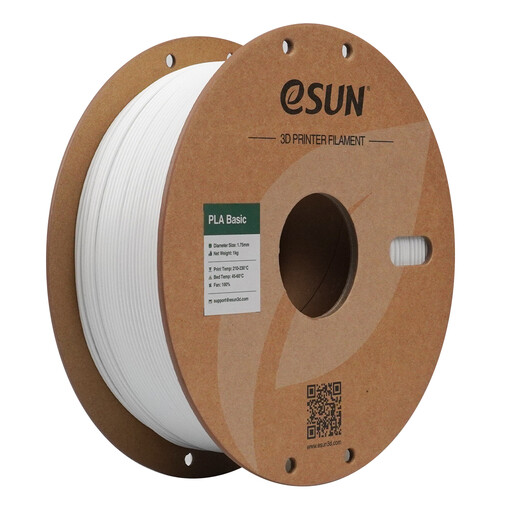
Why it suits this user: White PLA-Basic is a straightforward choice for first prints, prototypes and calibration models. The product listing specifies a 1.75 mm, 1 kg spool and compatibility with various high-speed printers.
The simple PLA-Basic finish means colour transitions or shine won’t complicate your first settings. Be sure to check your printer profiles before using high speeds.
1 kg spool, 1.75 mm diameter and a neutral white colour for models you plan to paint or finish later.
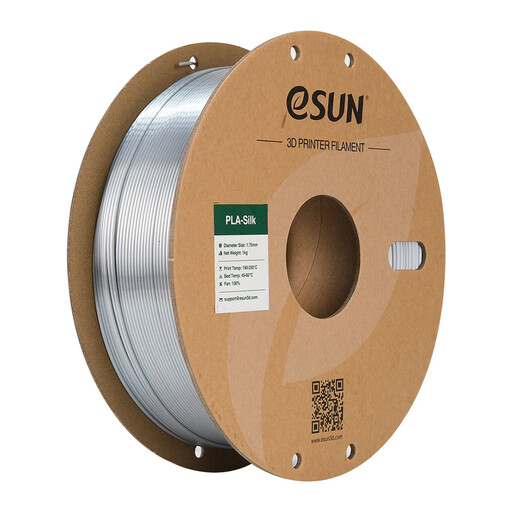
Why it suits this user: This variant is designed for decorative objects, art projects and models where a silky sheen matters more than maximum print speed.
The product information notes that excessive speed can reduce the shine. Printing more slowly on visible outer walls is therefore a sensible adjustment.
Silver silk finish and 1 kg of filament. According to the product information, the spool is vacuum-packed with desiccant.
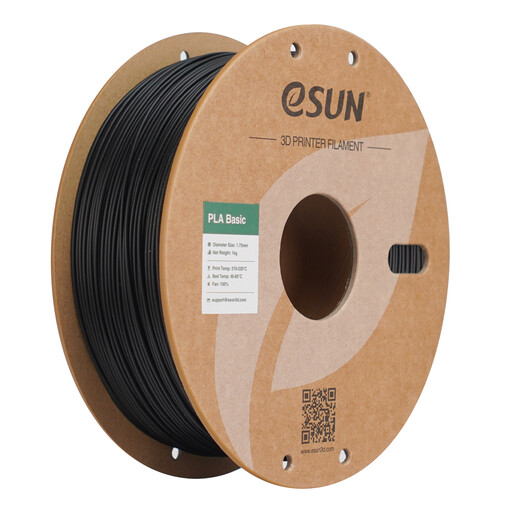
Why it suits this user: Black PLA-Basic is a good choice for making larger numbers of prototypes, dark models and projects where colour changes are less important.
According to the product listing, this ePLA-Basic variant is designed for high-speed printers. Use the stated values as a starting point and adjust the speed and temperature to suit your machine.
1.75 mm, 1 kg and black in colour. The listing mentions support for Bambu Lab and Creality models, among others; always check compatibility with your specific printer.
Ideally, store PLA in a sealed bag or box with desiccant. Don’t leave the filament exposed for long periods near a window, radiator or damp workspace. A damp spool can cause more stringing, inconsistent extrusion and a less even top layer.
When using a new spool, print a short test. Check:
PLA is often a practical choice for functional parts, but check the heat exposure and mechanical requirements first. For decorative prints, matte, silk, rainbow and colourful 3D filaments can give more interesting results than standard PLA.
We’ve put together a complete, up-to-date list of products that meet these strict selection criteria and comply with current European safety regulations.
It can be, as long as the printer uses 1.75 mm filament and its settings are suitable for PLA. Product listings mention various Bambu Lab and Creality models, but always check your printer’s manual, spool dimensions and recommended filament profile.
It depends on the model size, infill, wall thickness, supports and failed prints. Small decorative models may use just a few dozen grams, while larger prototypes can use a large part of the spool. Your slicer will usually show the estimated weight in advance.
The material used per gram is similar, but special finishes may need more adjustment. You may need to print silk PLA more slowly for a shinier result, while matte PLA is a good choice when you want a more subdued surface with less reflection.
