
Vandaag of morgen in huis

Kwaliteit gegarandeerd

Welkomstaanbiedingen ontgrendelen: GRATIS bezorging | Tot 80% korting | Gratis 30 dagen JoyPlus-proefperiode
Download de app
Buying an espresso machine for home seems straightforward, until you have to choose between whole beans, ground coffee, capsules, a steam wand or an automatic milk system. Marketing copy often focuses on high pressure, lots of programmes and attractive design. That does not always tell you much about everyday use.
The most important question is therefore not which machine has the most features, but which machine suits your routine, kitchen space and preparation preferences.
A pump pressure of 15 or 19 bar sounds impressive, but this figure alone does not predict how your espresso will taste. The grind, dose, temperature, freshness of the coffee and the way it is tamped also play a part. With a portafilter machine, you also need to learn how to use the filter holder and milk frother.
Treat pressure as a technical specification rather than proof of guaranteed results. A 15-bar machine may be suitable for home use, but a semi-automatic espresso machine still requires the right coffee and settings.
A compact espresso machine fits easily into a UK kitchen, but the water tank, drip tray and coffee-grounds container still need to remain accessible. Also check whether you have enough space above the machine to fill a reservoir or bean hopper.
A coffee machine with a milk frother requires additional cleaning. A steam wand should be wiped and purged after every use. An automatic milk system is more convenient, but it contains more parts that must be cleaned according to the instructions.
A Nespresso coffee machine or another capsule model is quick to get ready. However, the purchase price is not the only cost to consider. Capsules are an ongoing expense and generally limit you to a particular coffee system.
If you like switching between local roasters, different beans or ground espresso, a portafilter machine or fully automatic espresso machine gives you more flexibility. With capsules, also check the recycling instructions and availability of the correct capsule type.
A fully automatic espresso machine grinds the beans, doses the coffee and prepares the drink at the touch of a button. Models such as the De’Longhi Magnifica S and Philips 1200 Series have an integrated coffee grinder and adjustable coffee strength. This type is practical for households that make several cups a day.
An automatic milk system can make cappuccinos and latte macchiatos easier to prepare. However, check how the milk system is cleaned and whether the milk container, brewing unit and drip tray can be removed.
A semi-automatic espresso machine, also known as a portafilter machine, gives you more control over the grind, quantity and extraction time. You use ground coffee or grind the beans yourself with a separate coffee grinder. The steam wand takes a little practice, but gives you the freedom to control the texture and temperature of the milk.
At 14.9 cm wide, the De’Longhi Dedica EC685 is a compact option. The machine works with ground coffee and can also use E.S.E. pods with a separately available filter. The La Specialista Arte combines a portafilter with an integrated bean grinder offering eight grind settings.
A capsule machine is particularly suitable when speed, pre-measured portions and minimal preparation are the priorities. The Nespresso Essenza Mini has two programmes for espresso and lungo, a 0.6-litre water tank and a narrow width of 11 cm. The Lattissima One also adds automatic milk drinks.
A capsule machine is not automatically an espresso coffee maker in the traditional sense: you have less control over the grind and dose. In return, it offers straightforward operation.
Measure not only the space on the worktop, but also the room needed for opening, filling and cleaning. A compact espresso machine such as the Dedica is 14.9 cm wide, while a fully automatic model is often around 24 cm wide and may be deeper.
Also check the height of your cups. The De’Longhi Classic EM450 has a removable drip tray with space for glasses up to 13 cm high.
With a coffee machine with a bean grinder, the number of grind settings and the cleaning process are more important than a general claim about aroma. The Philips 1200 Series has a ceramic grinder with twelve settings. The De’Longhi Magnifica Evo ECAM290.61.SB lists thirteen grind settings. More settings give you greater scope for adjustment, but also require some attention when setting up the machine.
Use the grind size according to the instructions and only change the settings when permitted. A grind that is too fine can affect the flow time; a grind that is too coarse can produce a different result in the cup.
A tank of around 1.8 litres is practical when several people drink coffee. For occasional use, 0.6 to 1.1 litres may be sufficient and save space.
Pay attention to these checks:
A CE marking, clear safety information and a statutory warranty of at least two years are relevant checks for consumers in the European Union. Also read the instructions and check which parts are covered by any additional manufacturer’s terms.
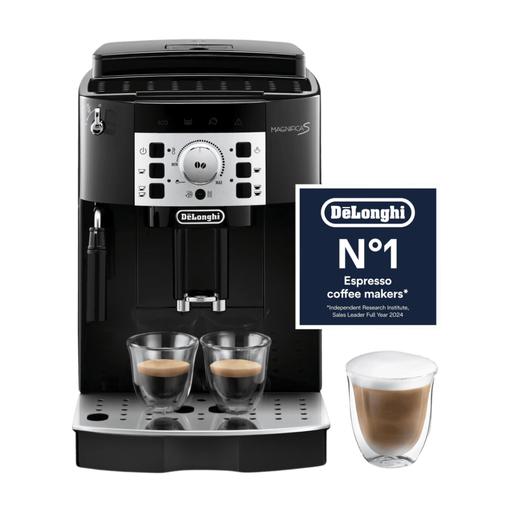
Why it suits this profile: This fully automatic espresso machine grinds beans automatically and can also use ground coffee. That makes switching to fresh beans easy.
The product information mentions a removable brewing unit and a manual descaling procedure. Maintenance therefore remains a visible part of everyday use.
1.8-litre water tank, 250-gram bean hopper, adjustable coffee strength and manual steam wand.
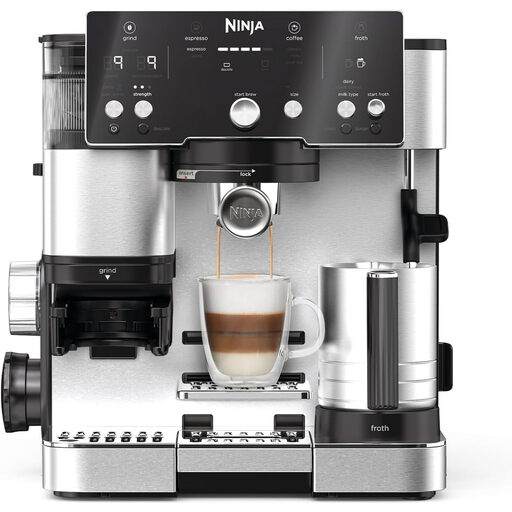
Why it suits this profile: Ideal for anyone who wants to prepare espresso and filter coffee with one appliance and values plenty of control over grinding and milk texture.
The specifications list 25 grind settings and an integrated scale. You are therefore not relying solely on a marketing claim about pump pressure.
Integrated grinder, two milk-frothing settings, 2-litre water tank and a choice of espresso or filter coffee.

Why it suits this profile: A household with several coffee drinkers can switch between two types of beans and automatically prepare several milk drinks.
The two interchangeable bean hoppers mean you do not have to empty one hopper every time you want to switch coffee.
Automatic milk drinks, two bean hoppers, hot-water function and a thermoblock heating system.
We have put together a complete, up-to-date list of products that fully meet these strict selection criteria and the applicable European safety regulations.
That depends on the system and the number of cups you make. Capsules involve a fixed cost per drink. With bean-to-cup machines, you pay for coffee beans and maintenance products. A portafilter machine can be cost-effective, but you may also need a separate coffee grinder. Compare the purchase price with your expected weekly usage.
Its lifespan depends on usage, water quality, cleaning and timely descaling. Follow the maintenance intervals in the instructions, clean the steam wand straight away and do not leave the machine for long periods with old water or milk residue. A statutory warranty of at least two years is an important consumer right, but it does not replace regular maintenance.
Choose a fully automatic model if you want to prepare coffee, cappuccino or lattes with minimal effort. Choose a semi-automatic model if you want to dose, tamp and froth the milk yourself. For a small kitchen, a compact portafilter machine may be more practical; for several users each day, a fully automatic coffee machine with a bean grinder generally offers a simpler workflow.
