
Student with limited worktop space
You’re looking for a machine that makes espresso and milk foam without taking up much permanent worktop space, and you’re happy to froth the milk by hand if needed.


Choose according to how much space you have, how much hands-on preparation you’re happy to do and how you want to froth your milk. A manual espresso machine lets you do it yourself; a capsule machine with a milk function cuts down on preparation but uses capsules; and a bean-to-cup machine makes coffee from beans and has a milk system. Whichever type you choose, factor in cleaning and ongoing costs too. These differences in use don’t represent a ranking of coffee quality.
You’re looking for a machine that makes espresso and milk foam without taking up much permanent worktop space, and you’re happy to froth the milk by hand if needed.
You want to make cappuccino with as few steps as possible and are comparing automatic milk functions without overlooking the cleaning involved.
You want to choose a brewing system and cleaning routine that suit shared use, taking capsules or beans and shared maintenance into account.
First, work out how much space you can spare and how many steps you want to take for each cappuccino. Then compare the coffee system and the cleaning involved in everyday use.
A good fit if: you have limited worktop space and want to make espresso and froth milk yourself. De’Longhi lists the Dedica Style EC685.M as 15 cm wide.
Bear in mind: frothing milk yourself adds an extra step. Also check which coffee and, where relevant, pods are compatible with the exact model.
A good fit if: you want to keep the number of steps to a minimum and the model’s capsule system suits you. Nespresso says the Lattissima One makes cappuccino at the touch of a button.
Bear in mind: capsules are the coffee system, and the milk container needs cleaning after use.
A good fit if: you want coffee made from beans and an automatic milk function. Philips lists this feature for the EP2333/40, while KRUPS lists a One-Touch cappuccino function for the Evidence EA8918.
Bear in mind: automatic preparation doesn’t remove the need to clean the milk parts or maintain the rest of the machine. Check the space required and the instructions for your specific version.
| What to consider | What to look for | Who should pay particular attention? |
|---|---|---|
| Space and manual milk frothing | Measure the space, including room for your cup and for frothing milk. De’Longhi lists the Dedica Style EC685.M as 15 cm wide. | If the worktop is already full, I want to know whether there’ll still be enough room to froth milk. Around 33% of consumers give limited space their top priority. |
| Fewer preparation steps | Check whether the exact model makes cappuccino and whether it has an integrated milk function. Philips and Nespresso describe automatic milk functions for the models mentioned. | When I want to keep morning preparation to a minimum, I compare the brewing process with the cleaning afterwards. Around 27% of consumers give minimal preparation their top priority. |
| Ongoing running costs | For your expected usage, compare the compatible capsules, beans or ground coffee, along with any recommended maintenance products. | If I plan to use the machine often, I want to factor in the cost of my chosen coffee and maintenance. Around 20% of consumers give running costs their top priority. |
| Milk system and cleaning | Read the instructions for the exact model and check which parts need cleaning after use. Store milk according to the packaging and advice from the Voedingscentrum. | In a shared kitchen, I want to agree who’ll clean the milk parts and how we’ll store them. Around 20% of consumers give easy maintenance their top priority. |
Even a narrow machine may need extra worktop space for a cup and for frothing milk by hand.
Measure the whole available area and check the machine’s full dimensions and preparation steps.
Even machines with an automatic milk function have parts that come into contact with milk and need to be cleaned according to the model-specific instructions.
Before buying, check which parts need attention after use and whether that routine will work in a shared kitchen.
Machines can differ in their coffee system and in the maintenance products needed for everyday use.
Compare the current cost of compatible coffee and maintenance products based on how often you expect to use your machine.
The Dedica Style EC685.M reviewed here is a narrow manual espresso machine for making espresso and frothing milk yourself.
The 2300 Series EP2333/40 reviewed here is a bean-to-cup machine with the LatteGo milk system.
The Lattissima One reviewed here is an Original capsule machine with an integrated function for milk-based drinks.
The Evidence EA8918 reviewed here is a bean-to-cup machine with a One-Touch cappuccino function.
These picks focus on espresso and cappuccino for a student kitchen, from machines that require you to froth milk by hand to bean-to-cup models with a milk function.
 No image available
An option if you want to froth milk yourself with a steam wand.
The product name lists a pressure gauge and a cup-warming plate.
According to the product description, the 1.1 l water tank is removable.
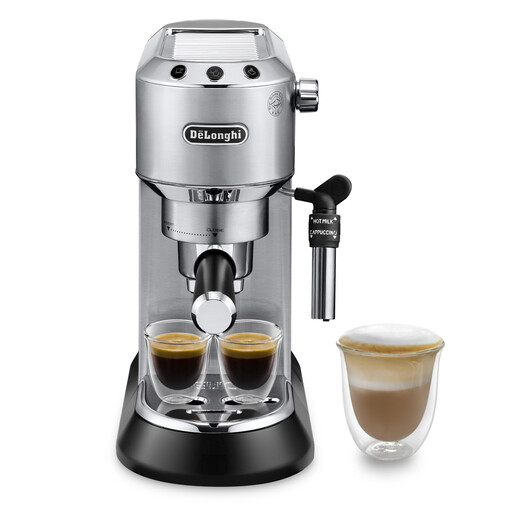 No image available
This suits you if you want to make cappuccino and froth milk yourself with the steam wand.
The product description lists a width of 14.90 cm and a removable water tank.
The machine uses ground coffee. According to the product description, a separate filter is needed for E.S.E. pods.
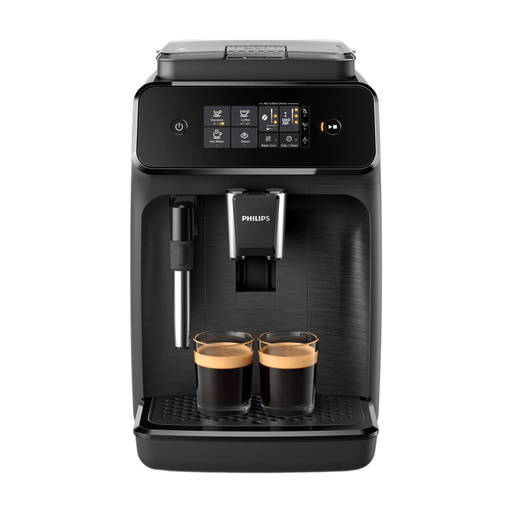 No image available
A bean-to-cup machine for making cappuccino and frothing milk yourself with the classic milk frother.
The product information lists 12 grind settings and a removable brew group.
Frothing milk requires a manual step.
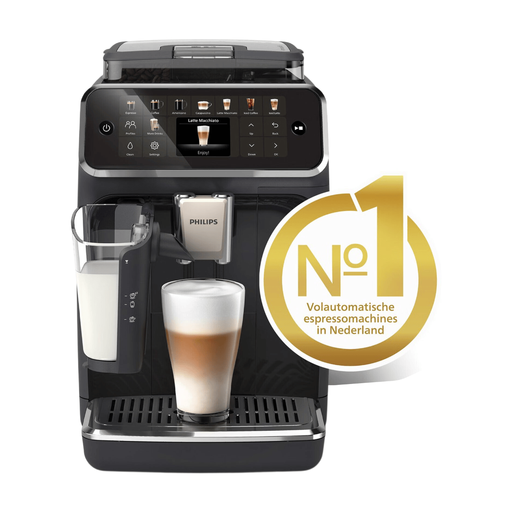 No image available
An option if you want to make cappuccino with minimal preparation using the LatteGo milk system.
The product name lists 20 drinks, a ceramic grinder and 12 grind settings.
Check the cleaning instructions for the milk parts on this version.
 No image available
A bean-to-cup machine for anyone who wants to make cappuccino with an automatic milk function.
The product name lists the LatteCrema system and interchangeable bean hoppers.
According to the product information, the milk container needs to be filled and connected to make milk-based drinks.
No, it depends on the model’s milk function. According to De’Longhi, the Dedica EC685.M has a manual cappuccino system; Philips describes an automatic milk function for the EP2333/40, as does Nespresso for the Lattissima One. For other models, check which functions they have.
Follow the cleaning instructions for the exact model and clean the parts that come into contact with milk as directed. Philips describes LatteGo as a two-part system with no tubes, while KRUPS provides cleaning instructions for each Evidence model. The Voedingscentrum recommends keeping pasteurised milk refrigerated.
As well as the machine itself, factor in coffee that’s compatible with your chosen system and any recommended maintenance products. Compare capsules, beans or ground coffee based on how often you expect to use the machine.
If a product is faulty, you’re entitled to a product that works properly and can contact the seller, according to the Dutch government. There’s no standard statutory guarantee period in the Netherlands for all products. ACM ConsuWijzer says that online purchases often come with a cooling-off period, usually up to 14 days after delivery. Check the terms and any exceptions that apply to your purchase.