Who is this choice for?

Workshop leader with a steady flow of participants

This workshop leader wants participants to be able to make soya cappuccinos one after another, without lengthy instructions on how to use the machine. The Consumentenbond lists the number of cups and level of automation as factors to consider when choosing.

Barista skills tutor

This tutor wants making espresso and frothing milk to be a visible part of the lesson, even if each cup takes more steps. According to Sage, the Sage Bambino Plus has a portafilter and steam wand that can be used automatically or manually.

Occasional workshop organiser

This organiser weighs up the machine against ongoing coffee and maintenance needs, as well as how often it will be used. The Consumentenbond recommends factoring in the purchase price and coffee costs.

What should you consider when choosing?

Bean-to-cup machine with an automatic milk system

A good fit if: several participants need to make cappuccinos one after another, with little instruction.

Bear in mind: the milk system and machine need cleaning; check that the specific model has automatic milk preparation.

Portafilter machine with a steam wand

A good fit if: participants will make espresso themselves and practise frothing milk.

Bear in mind: each cappuccino takes more steps and guidance; you may need a separate grinder for whole beans.

Capsule machine with a steam wand

A good fit if: the workshop is occasional and simple espresso preparation matters more than working with beans.

Bear in mind: capsules are an ongoing expense, and preparing the milk remains a separate step.

Consideration What should you check? Who is it most important for?
Quick preparation Check whether the exact model can prepare cappuccino automatically and how its milk system is cleaned. When participants are making cappuccinos one after another, I want to minimise the steps and instructions for each cup; around 36% of consumers prioritise a steady flow of drinks.
Soya drink and cleaning Check the model’s milk function and cleaning instructions and, if possible, try it with the soya drink you’ll use in the workshop. I want to know how my chosen soya drink froths and how to keep the parts that come into contact with milk clean; around 29% of consumers prioritise soya foam and cleaning.
Practising espresso-making Check whether the steam wand can be operated manually, which filter baskets are included and whether you’ll need a grinder. If participants are making espresso and frothing milk themselves, I’m happy to accept more steps per cup; around 21% of consumers prioritise those lesson activities.
Running costs For the same expected number of cups, compare the purchase price, coffee per cup and any maintenance products required. For workshops that only happen occasionally, I want to weigh up ongoing costs against how much the machine will be used; around 14% of consumers prioritise running costs.

Common pitfalls

  • Choosing a bean-to-cup machine without checking its milk function

    Not every bean-to-cup machine prepares milk automatically; the specific model determines which milk function it has.

    Check the exact model number to see whether it has a cappuccino programme and a milk system.

  • Assuming every plant-based drink froths in the same way

    Manufacturers’ claims about plant-based alternatives aren’t an independent comparison of every machine and soya drink combination.

    Before the workshop, try the machine with the soya drink you actually plan to use.

  • Comparing only the purchase price

    Depending on how much you use the machine, the balance between its purchase price and ongoing coffee costs can change. The Consumentenbond recommends taking these costs into account.

    Compare models based on the same expected number of cups, and factor in coffee and any model-specific maintenance.

  • Serving soya cappuccinos without checking for allergens

    Soya is an allergen; milk may also be relevant if you’re using dairy during the same workshop.

    Check the ingredients and cleaning procedure. If you sell or supply food or drink to customers, follow the NVWA allergen information that applies to your situation.

Brands to consider

Philips

LatteGo bean-to-cup machines are worth considering if participants want to prepare cappuccinos automatically; the Dutch EP2333/40 is one specific example.

  • Philips says the EP2333/40 can froth plant-based milk alternatives and describes LatteGo as a two-part milk system with no tubes.
  • This is information from the manufacturer, not a guarantee of foam with every soya drink. Check the cleaning instructions for the exact model too.

De’Longhi

According to the manufacturer, the Magnifica Evo Next ECAM310.60.GB is a bean-to-cup machine with cappuccino and LatteCrema Hot.

  • De’Longhi describes automatic hot milk preparation and lists soya as a plant-based option for LatteCrema technology.
  • The manufacturer’s claim doesn’t confirm the results with your specific soya drink. Check the model instructions and remember to clean the milk jug.

Sage

The Bambino Plus BES500 is a portafilter machine for workshops where participants practise making espresso and frothing milk.

  • Sage describes a portafilter and a steam wand that can be adjusted automatically and also used manually.
  • Each cup still requires separate espresso-making and milk-frothing steps. The product specifications don’t confirm the results with any specific soya drink.

Nespresso

According to Nespresso, the Creatista Plus combines espresso made with Original capsules and an automatic steam wand for drinks including cappuccino.

  • Nespresso describes cappuccino recipes and milk preparation using the steam wand.
  • You’ll need capsules for espresso, so factor in the ongoing cost of buying them. The product specifications don’t confirm how a specific soya drink will froth.

Products on Joybuy

This selection includes bean-to-cup machines with cappuccino or milk functions, as well as machines with a steam wand. They’re suited to workshops where participants either want to minimise hands-on work or practise the process themselves. Check each model’s milk function and how it performs with the soya drink you use.
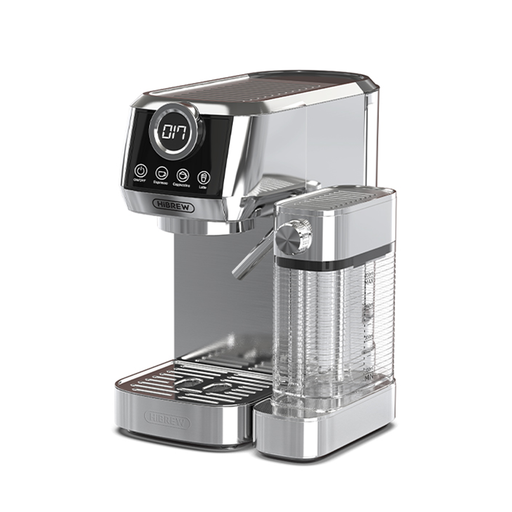
HiBREW H13A espresso machine

HiBREW H13A espresso machine

The title mentions one-touch cappuccino and latte preparation, making it an option for anyone looking to minimise manual steps.

Listed features include six brewing modes, PID temperature control, a dual boiler system, 20 bar pressure and automatic cleaning.

Joybuy

IAGREEA espresso machine with portafilter and manual steam wand

IAGREEA espresso machine, 20 bar

The portafilter and manual steam wand make this a good fit for a workshop where participants make espresso and froth milk themselves.

The product description lists separate temperature controls for brewing and steaming, a 1.5-litre water tank and a removable drip tray. Clean the steam wand after use, following the instructions.

Joybuy

Philips 1200 Series EP1220/00 espresso machine with Pannarello steam wand

Philips 1200 Series EP1220/00

The product description mentions a classic milk frother for cappuccino; check whether this frothing method suits your workshop and chosen soya drink.

According to the product information, this model has a Pannarello steam wand, 12 grind settings, adjustable coffee strength and volume, and a removable brew group.

Joybuy

Philips 5500 Series EP5547/90 LatteGo espresso machine

Philips 5500 Series EP5547/90 LatteGo

The product description mentions one-touch cappuccino and milk frothing, and lists plant-based drinks. Test the machine with your own soya drink.

According to the product information, LatteGo is removable and dishwasher-safe. The description also mentions a display, two user profiles and QuickStart.

Joybuy

De’Longhi ECAM290.61.SB Magnifica Evo bean-to-cup machine

De’Longhi ECAM290.61.SB Magnifica Evo

The product description mentions one-touch cappuccino preparation with LatteCrema Hot. The plant-based option listed is oat; check separately whether the machine suits your soya drink.

The product information lists a removable milk container, adjustable coffee strength and 13 grind settings.

Joybuy

Frequently asked questions

Do you need to use a special soya drink?

Not every machine and soya drink combination will produce the same foam. Philips lists plant-based alternatives for the EP2333/40; Alpro describes Barista Soya as a drink for coffee. Try your chosen combination before the workshop. These are manufacturers’ claims, not the results of an independent comparison test.

What should you clean after making cappuccino?

Follow the instructions for the exact model and clean every part that comes into contact with the drink. Allow time for cleaning during the workshop. Philips describes the EP2333/40’s LatteGo system as removable and tube-free; cleaning requirements vary between milk systems.

Which costs should you compare if the machine will be used after the workshop?

Compare the purchase price and the cost of coffee for the same expected number of cups, and include any maintenance products you’ll need. The Consumentenbond lists purchase and coffee costs as factors to consider when choosing an espresso machine.

Do you need to tell participants about soya and milk?

If you sell or supply food or drink to customers, the allergen rules described by the NVWA for that situation apply; customers must be informed about allergens such as soya and milk. For unpackaged products, the NVWA lists options including providing information on a menu or card, or verbally, as long as it’s clearly indicated that customers can ask. Whether these rules apply to your workshop depends on the specific circumstances.

Does your workshop need to be registered, and do you need a food safety plan?

That depends on what you sell. The NVWA states that businesses need to register and have a food safety plan if they sell food to consumers several times a year; it also lists an exemption from registration for businesses that sell food once a year. Don’t assume this applies to every cookery workshop.
