For a changing group of colleagues who want to make espresso with minimal effort, a bean-to-cup machine is often a better fit. A pod machine keeps brewing simple for occasional use, while a manual espresso machine is best for someone who wants to prepare the coffee themselves. Whichever type you choose, cleaning and agreeing who does which tasks are still essential. For espresso tonic, add the tonic and ice separately.
Which machine is right for whom?
Colleagues who want to make a shot quickly
If several colleagues use the machine, a simple brewing process may matter more than controlling the extraction yourself. The Consumentenbond describes bean-to-cup, pod and manual machines as different types of espresso machine.
The person who looks after the coffee area
Whoever manages the machine and coffee area will want to agree in advance who cleans the parts, tops up the water and clears away used coffee. Philips describes how to maintain the brew group on its espresso machines; for other models, follow the relevant manual.
The regular espresso maker
If you want to control the preparation yourself and are happy to put in the extra effort, a manual espresso machine may be worth considering. For the Barista Express, Sage lists features including a portafilter and adjustable grind settings.
What should you consider when buying for shared use?
First decide who will make the espresso and who will clean the machine. As Simon Lévelt’s recipe shows, espresso tonic needs tonic and ice as well as espresso.
| Consideration |
What to look for when buying |
Who is this most relevant to? |
| Quick, straightforward brewing |
See how to make one espresso and what you need to do to refill and tidy away the machine. |
If I work with different colleagues, I want everyone to be able to make an espresso without lengthy instructions. Around 36% of consumers say this is their main concern when buying. |
| Cleaning and sharing tasks |
Check which parts need cleaning and nominate someone to follow the instructions for the model you choose. |
If several colleagues use the machine, I want to know who cleans the brew group, capsule container or portafilter. Around 28% of consumers prioritise agreeing who will handle maintenance. |
| Control over the espresso |
Check the settings available on the exact model; grinding and dosing the coffee yourself involves more steps than a simple brewing process. |
If I want to tailor the espresso for my tonic, I’ll look at the options offered by the model I choose and accept that it may take extra effort. Around 22% of consumers are mainly concerned with having control over the shot. |
| Ongoing costs |
Compare coffee and maintenance supplies for the same expected number of drinks; factor in tonic and ice separately. |
If I organise the coffee area, I want to consider ongoing supplies as well as the purchase price. Around 14% of consumers mainly focus on the running costs. |
Which pitfalls can you avoid?
-
Comparing purchase prices alone
A lower purchase price doesn’t tell you how much coffee and other ongoing supplies will cost for the same number of drinks.
Work out the purchase price and ongoing supplies separately for each type, based on the same expected usage.
Remember to factor in time for maintenance, as well as tonic and ice for espresso tonic.
-
Assuming a bean-to-cup machine needs no maintenance
Making espresso automatically doesn’t mean you can skip cleaning the machine or the coffee area.
Read the manual for the exact model and agree who will carry out the maintenance tasks.
Allow time for cleaning and any maintenance tasks listed in the manual.
-
Choosing a manual espresso machine without a regular user
With a manual espresso machine, the user does some of the preparation themselves, which may be less suitable for a coffee area used by different people.
Choose this option if someone is happy to do the work; otherwise, also consider a bean-to-cup or pod machine.
Allow time for grinding, brewing and tidying up.
Which brands are worth considering?
De’Longhi
The Magnifica Start ECAM220.22.GB is a bean-to-cup machine with an espresso function.
- The Dutch model support site provides manuals and maintenance information.
- Automatic brewing doesn’t replace an agreed cleaning routine when the machine is shared.
Philips
The EP2220/10 is an automatic model with adjustable coffee strength and volume. Philips also makes the separate L’OR Barista Sublime pod machine.
- Philips lists a touch display and adjustable grind settings for the EP2220/10.
- Philips recommends maintaining the brew group; features of the EP2220/10 don’t necessarily apply to all Philips machines.
L’OR Barista
The LM9012/50 is a pod machine for anyone mainly looking for a straightforward way to make espresso.
- Philips says the L’OR Barista system can make two espressos at once or a double espresso in one cup.
- Check which capsules are compatible, and bear in mind the difference in ongoing coffee costs between beans and pods.
Sage
The Barista Express is a manual espresso machine with an integrated grinder, for someone who wants to make espresso themselves.
- Sage lists a portafilter and adjustable grind settings for this model.
- The range of settings means the user has to do more; this is not an independent comparison of the espresso produced.
JURA
The E6 is an automatic model to consider if your office wants regular coffee drinks as well as espresso.
- JURA describes the E6’s operating and cleaning functions.
- Check the terms of use and service for the model you choose before assuming it will suit a particular number of colleagues.
Joybuy espresso machines for shared use
This Joybuy selection features automatic espresso machines for anyone who wants to make espresso in a shared coffee area.
 No image available
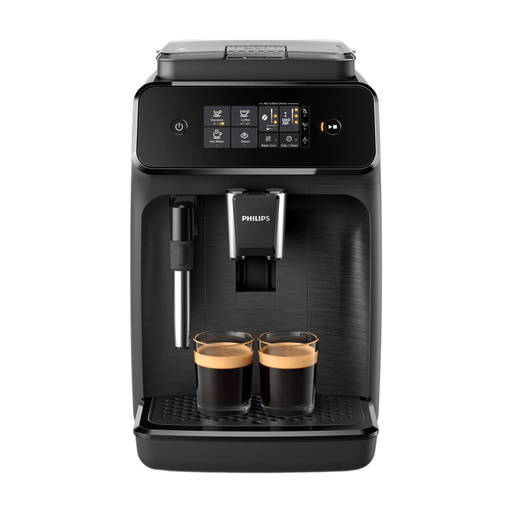
Philips 1200 Series EP1220/00
Suited to anyone looking for an automatic way to make espresso for different users; the product title mentions One-Touch Brewing.
The title also mentions a Pannarello steam wand. Add tonic and ice separately for espresso tonic.
View at Joybuy
 No image available
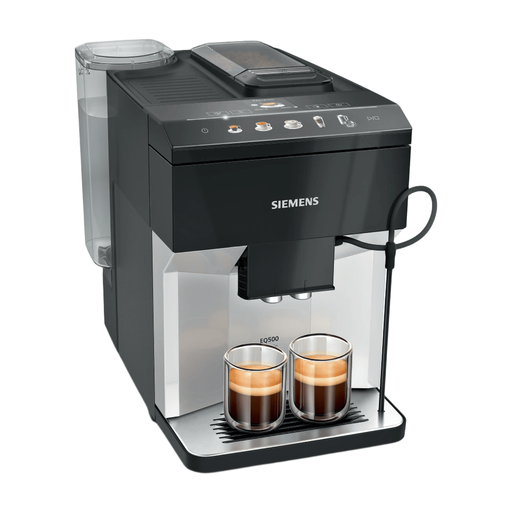
Siemens EQ500 TP511R01
An option for colleagues who want to make espresso without preparing it by hand; the title describes it as a fully automatic espresso machine.
The product title specifies the Light Silver finish.
View at Joybuy
 No image available
De’Longhi ECAM290.61.SB Magnifica Evo
Suited to a shared coffee area where users are looking for a fully automatic espresso machine.
The product title mentions an advanced milk frother and a touch display. Tonic and ice for espresso tonic need to be added separately.
View at Joybuy
 No image available
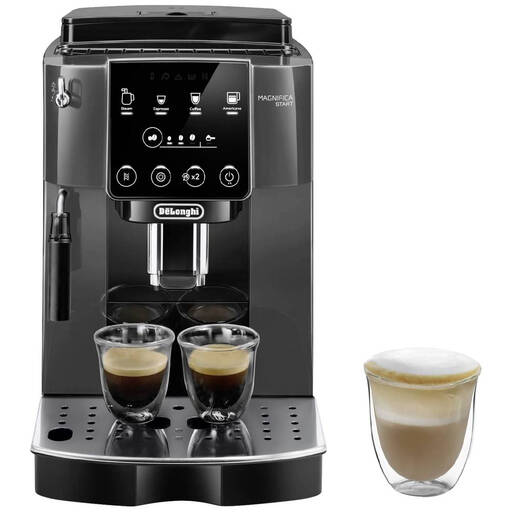
De’Longhi Magnifica Start ECAM220.22.GB
A fully automatic option for different users who want to make espresso; the product title specifies the Grey & Black colour combination.
The product description lists espresso as a one-touch coffee speciality. Tonic and ice are separate ingredients.
View at Joybuy
 No image available
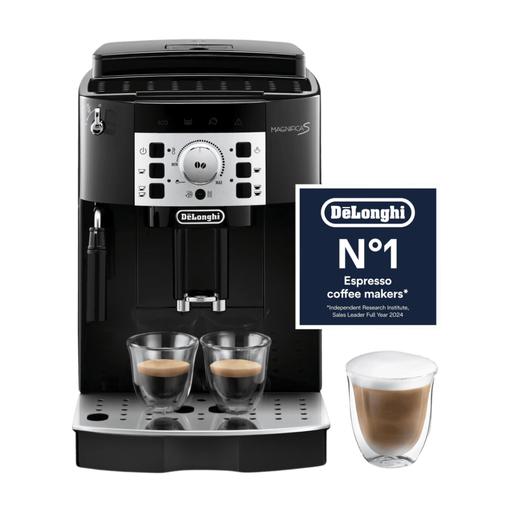
De’Longhi Magnifica S ECAM20.110
Suited to anyone who wants to make espresso automatically in a shared coffee area.
The product title describes it as a black bean-to-cup coffee machine.
View at Joybuy
Frequently asked questions
Does the machine make the whole espresso tonic?
No. In Simon Lévelt’s recipe, you make the espresso first, then add tonic and ice to the glass. Choose your machine based on the espresso you want to make, and get the cold ingredients separately.
Who cleans a shared bean-to-cup machine?
Nominate someone to follow the maintenance routine for the model you choose. Philips recommends maintaining the brew group on its espresso machines; for other models, follow the relevant manual.
Are pods always cheaper for the office?
No. According to the Consumentenbond, pod machines generally cost less to buy, while beans can be cheaper than capsules. Which option works out cheaper overall depends, among other things, on the number of drinks and the products you choose.
What warranty applies if the office buys the machine?
Before ordering, check whether the buyer is an individual or a business, and which terms of use and service apply. The Dutch government describes EU consumer rights for purchases made by individuals; don’t assume this guidance automatically applies to a business purchase.


