
Student who wants a quick iced latte
You want to add espresso to cold milk and ice without much preparation. Focus on ease of use, capsule compatibility and ongoing costs. Nespresso Netherlands describes an iced latte made with cold milk and ice.


A capsule machine is a good choice for an iced latte if you want to make an espresso with minimal effort. A manual espresso machine gives you more control, but takes more time to use and clean. A bean-to-cup machine is worth considering mainly if you regularly make coffee from beans. The Consumers’ Association (Consumentenbond) says bean-to-cup machines are generally more expensive to buy than capsule machines; also consider how much space you have and the maintenance involved.
You want to add espresso to cold milk and ice without much preparation. Focus on ease of use, capsule compatibility and ongoing costs. Nespresso Netherlands describes an iced latte made with cold milk and ice.
You share a small worktop and need to leave enough room not only for the machine, but also to make your drink and clear everything away.
You want to choose the ground coffee and control the brewing process, and are happy to spend more time on it.
Good for: making an espresso quickly with minimal preparation, especially if you have a small worktop.
The trade-off: the Consumers’ Association says capsules cost more than loose coffee and create waste; check which capsule system the model uses.
Good for: measuring out ground coffee and making espresso yourself.
The trade-off: filling, brewing and cleaning involve more steps; the Consumers’ Association describes ground coffee as the usual choice for a manual espresso machine.
Good for: regularly making coffee from beans, perhaps for housemates too, and for anyone who values automatic grinding.
The trade-off: these machines are generally more expensive to buy than capsule machines; remember to factor in space and cleaning, too.
Start with what matters most to you: the total cost of your coffee, worktop space, the steps involved each day or how much control you want over your espresso.
| What to consider | What should you check? | Who is this most important for? |
|---|---|---|
| Machine and coffee costs | Compare the machine, the type of coffee it takes and the cost of coffee based on how often you expect to use it. | If I want to keep an eye on ongoing coffee costs as well as the price of the machine, I compare capsules with ground coffee. Around 33% of consumers put the total cost first. |
| Worktop space | Measure the available space and check the full dimensions, including room for the reservoir and glass. | On a shared worktop, I want to leave enough room for my glass, milk and ice; the depth and height need to fit, too. Around 25% of consumers put available worktop space first. |
| Quick brewing and tidying up | Check the brewing steps and how to collect and dispose of used capsules or coffee grounds. | If I want to make my iced latte quickly and leave the kitchen tidy, I consider both brewing and clearing up. Around 25% of consumers put convenience when brewing and tidying up first. |
| Control over your espresso | Check which coffee or capsules the model uses and whether it can make a single or double espresso. | If the choice of coffee and the brewing process matter to me, I want to know how much I can control and what extra steps are involved. Around 17% of consumers put control over their espresso first. |
The Consumers’ Association says capsules cost more than loose coffee. How often you make coffee therefore plays a part in the overall cost.
Compare coffee costs based on how often you expect to use the machine, and check which type of coffee it accepts.
The basic recipe uses espresso, cold milk and ice, so you don’t need a hot milk function.
Check whether you’d also use the milk function for other drinks, and make sure the model actually supports the feature you want.
A feature you don’t use can still mean extra steps and cleaning.
The depth and height also determine whether the machine will fit on a shared worktop and leave enough room for your glass and preparation.
Measure the available space and compare it with the dimensions of the exact model you’re considering.
The Dedica Style is a compact manual espresso machine range for anyone who wants to make espresso themselves in a small kitchen.
L’OR Barista capsule machines are designed for single or double espresso; Philips also makes bean-to-cup machines.
The Essenza Mini is designed to make espresso and lungo using the Original capsule system.
Krups offers manual espresso machines for anyone who wants to make espresso by hand using ground coffee.
This selection focuses on espresso made with capsules, coffee powder or a semi-automatic brewing method, including combination models. Check what type of coffee each product takes and what steps are involved.
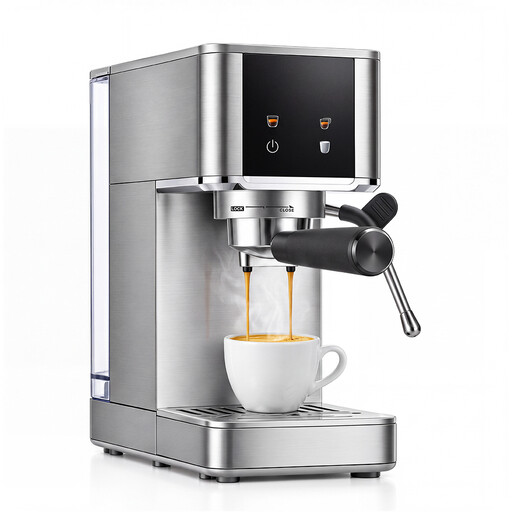 Image unavailable
Suitable if you want to use capsules or espresso powder and would find a removable reservoir useful.
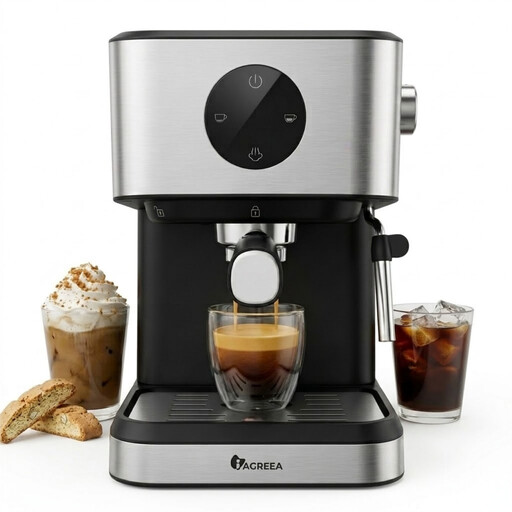 Image unavailable
Suitable if you want to measure ground coffee into a portafilter by hand and make your own espresso.
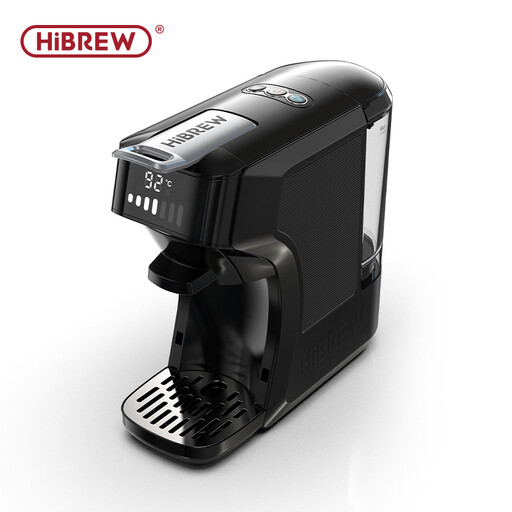 Image unavailable
Suitable if you want to switch between capsules and coffee powder and use different brewing settings.
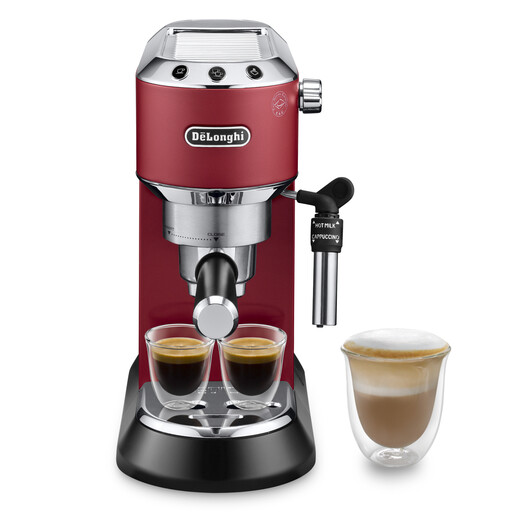 Image unavailable
Suitable if you want to use ground coffee and need to factor in the machine’s width when choosing one for a narrow worktop.
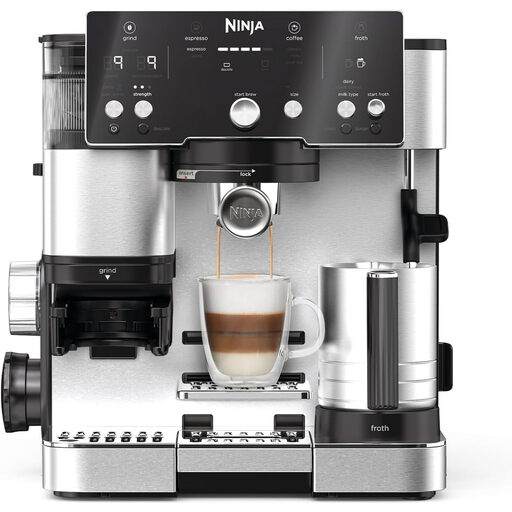 Image unavailable
Suitable if you want to make espresso from coffee beans and are looking for a built-in grinder and milk frother.
No, you don’t need a milk frother for the basic recipe of espresso, cold milk and ice. Cold frothing is an optional step if you want a different texture; check that your chosen machine supports this feature if you’d like to use it.
Put the milk back in the fridge promptly after use and keep it at 4 °C. The Netherlands Nutrition Centre (Voedingscentrum) advises not leaving highly perishable products such as milk out of the fridge for more than 2 hours.
Yes. The Consumers’ Association describes capsule machines as relatively easy to clean and descale, not maintenance-free. Follow the instructions for your chosen model to find out what to do and how often.
The Consumers’ Association says coffee from capsules costs more than coffee made from ground beans. How much this matters also depends on how often you make coffee and which capsule system the machine uses.