Who is this guide for?

Cookery workshop host serving coffee during the session

You want participants to focus on cooking, so you’re looking for an easy way to make cappuccino and keep cleaning to a minimum. The Consumentenbond highlights the milk function and ease of cleaning as important factors when choosing an espresso machine.

Cookery workshop host teaching barista skills

You want participants to make their own espresso and froth their own milk. In that case, manual operation can be part of the activity rather than an extra chore.

Organiser of an occasional, small-scale workshop

You don’t expect to make many cappuccinos, so you’re mainly considering the space available, the cost per use and whether making one cup at a time suits the workshop.

What should you consider when choosing?

Bean-to-cup machine with an automatic milk function

Choose this option: if you’ll be making cappuccino during the session and participants mainly want to focus on cooking.

The trade-off: automatic preparation saves you a few steps, but the milk components and machine still need maintaining.

Portafilter machine with a steam wand

Choose this option: if participants will make espresso and froth milk by hand as part of the lesson.

The trade-off: dosing, frothing and clearing up all add extra steps during the workshop.

Capsule machine with a milk function

Choose this option: if you want to make the occasional cappuccino one cup at a time and value simple operation.

The trade-off: check that the model can make cappuccino, and factor in the right capsules and cleaning the milk components.

What to consider What should you check? Who is this important for?
Operation and cleaning Check whether the exact model has a cappuccino programme and how to clean its milk components. If I’m making coffee while also leading the cookery lesson, I want to keep the number of steps in between to a minimum. Around 38% of consumers say ease of preparation is their main consideration.
Frothing milk yourself Check whether the model has a steam wand and whether a grinder is included or needs to be bought separately. If participants are meant to make their own espresso and milk foam, manual operation is part of the lesson. Around 23% of consumers prioritise this learning experience.
Making several cups in a row Work out how many cappuccinos you’ll need during the available break, then test the whole process, including refilling and cleaning. If several participants want coffee during the same break, I want to know whether the process can keep up. Around 23% of consumers say handling consecutive orders is their main consideration.
Space and running costs Measure the space available on your worktop and compare the cost of coffee, capsules and maintenance with how often you expect to use the machine. If I only use the machine occasionally, I want it to fit in the space available and for the running costs to suit how often I hold workshops. Around 16% of consumers prioritise space and cost.

Common buying mistakes

  • Assuming every bean-to-cup or capsule machine can make cappuccino

    Milk functions vary from machine to machine. Without the right function, you may need a separate appliance to froth the milk.

    Check how milk is frothed on the exact model you’re considering and whether cappuccino is one of its available recipes.

  • Assuming the water tank capacity tells you how many people the machine can serve

    The water tank capacity doesn’t tell you how many cappuccinos you can make during a workshop break.

    Work out how many orders you’ll need to prepare at once or one after another, then assess the whole process, including topping up the milk and cleaning. Don’t use the number of litres to estimate cups per hour.

  • Comparing only the purchase price

    As well as the initial cost, you’ll need to consider ongoing costs for coffee or capsules and maintenance.

    Compare costs based on the expected number of workshops and cappuccinos, without assuming a break-even point that hasn’t been calculated.

Brands to consider

Philips

The Philips bean-to-cup machines reviewed with LatteGo are worth considering if automatic cappuccino preparation and a detachable milk system are important to you.

  • Philips lists a cappuccino recipe for the EP3349/70 and describes LatteGo as a two-part system with no tubing.
  • Philips’ claim about how quickly it can be cleaned isn’t an independent measurement for a cookery workshop. The rest of the machine still needs maintenance, too.

De’Longhi

The Dedica Style EC685.M reviewed is a compact manual option with a steam wand, while the EN510.B prepares milk drinks automatically, one cup at a time.

  • De’Longhi lists an adjustable cappuccino system for the EC685.M.
  • Frothing milk with the EC685.M is still a manual process. The EN510.B’s features don’t automatically apply to the Dedica.

Sage

The Barista Express is a good fit for a workshop where grinding, making espresso and frothing milk by hand are part of the activity.

  • According to Sage, the Barista Express has an integrated grinder and a manual steam wand.
  • An integrated grinder means you don’t need a separate one, but it won’t make your cappuccino automatically. You’ll need to assess how long it takes to serve the group.

Nespresso

The Original system in the Lattissima One is an option for making milk drinks one cup at a time, with automatic milk preparation.

  • Nespresso describes the Lattissima One as making milk drinks at the touch of a button, with a milk container that can be cleaned.
  • This option uses capsules and requires the milk components to be cleaned. Not every Nespresso machine has the same milk function.

Siemens

The EQ600 TP601E01 reviewed is a bean-to-cup option with a cappuccino programme.

  • Siemens lists one-touch cappuccino preparation and a 1.8-litre water tank for this model.
  • The tank capacity doesn’t tell you how many people the machine can serve. Check the cleaning instructions for the model you choose.

Joybuy products for cappuccino

This selection includes bean-to-cup machines and a model with a steam wand, for making cappuccino with automatic or manual milk preparation during a cookery workshop.
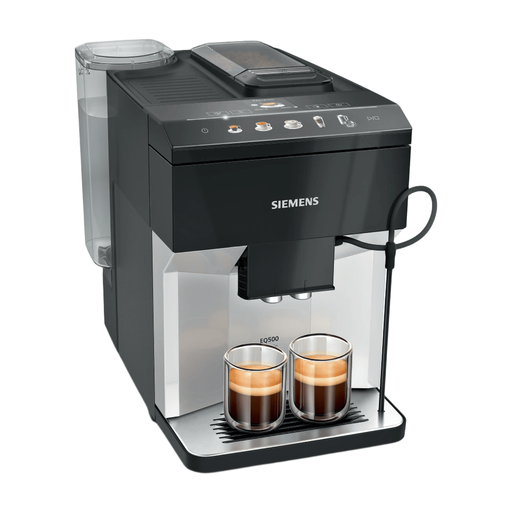
Siemens EQ500 TP511R01 fully automatic espresso machine, light silver

Siemens EQ500 TP511R01

Suited to anyone who wants to make cappuccino during the workshop with minimal manual preparation.

The product description mentions a cappuccinatore and oneTouch preparation. Rinse the milk system after use and clean the cappuccinatore components.

View at Joybuy
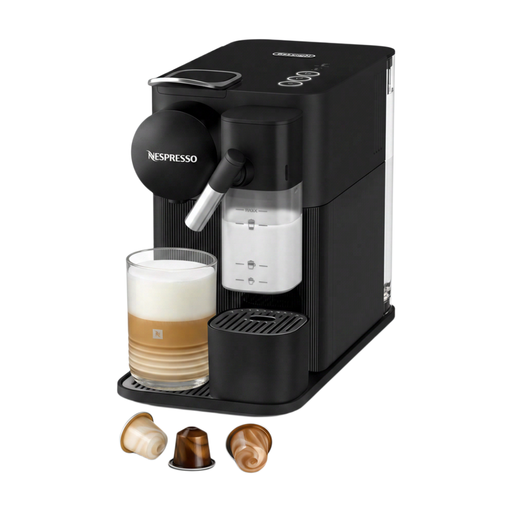
De’Longhi EN510.B Lattissima One Nespresso Original capsule machine

De’Longhi EN510.B Lattissima One

Suited to anyone who wants to make the occasional cappuccino one cup at a time, with automatic milk preparation.

The product description mentions a one-touch cappuccino recipe and a removable milk jug. This model uses Nespresso Original capsules.

View at Joybuy
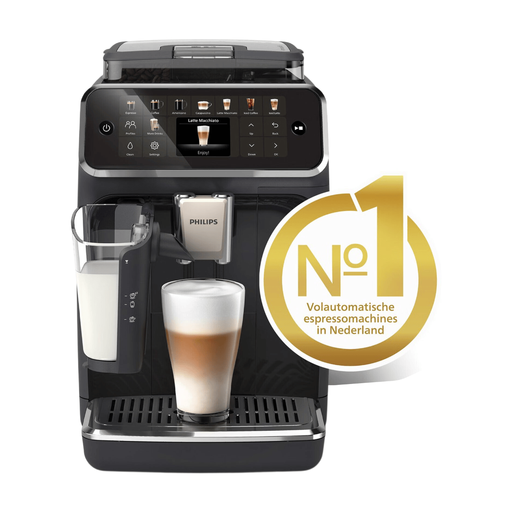
Philips EP5541/50 LatteGo 5500 Series fully automatic espresso machine

Philips EP5541/50 LatteGo 5500 Series

Suited to anyone who wants to make cappuccino without frothing the milk by hand.

The product name lists LatteGo, 20 drinks, a ceramic grinder, 12 grind settings, AquaClean and a 1.8-litre tank. The product description notes that additional cleaning is required.

View at Joybuy
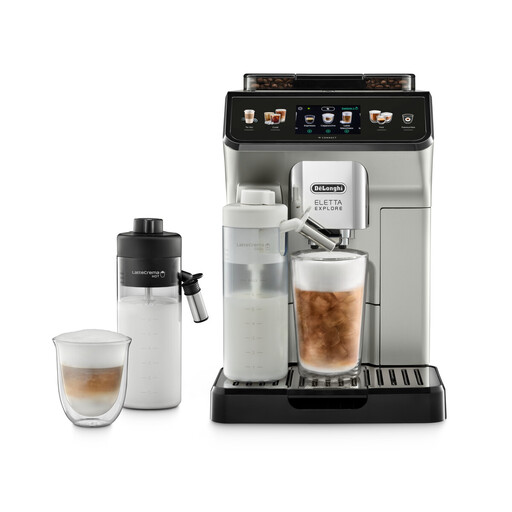
De’Longhi Eletta Explore ECAM450.65 bean-to-cup espresso machine

De’Longhi Eletta Explore ECAM450.65

Suited to anyone who wants to make cappuccino using automatic milk preparation rather than frothing milk by hand.

The product name lists a LatteCrema system and 13 drinks.

View at Joybuy

Philips 1200 Series EP1220/00 fully automatic espresso machine with Pannarello steam wand

Philips 1200 Series EP1220/00

Suited to a workshop where participants want to froth their own milk.

The product name lists a Pannarello steam wand. Frothing milk is done by hand and adds extra steps when making a drink.

View at Joybuy

Frequently asked questions

How do you choose between automatic frothing and a steam wand?

Choose automatic milk preparation if cappuccino is secondary to the cooking and you want to keep the number of steps to a minimum. Choose a model with a steam wand if participants will froth milk themselves as part of the lesson. If so, allow time for using and cleaning the machine.

What should you consider when setting up and cleaning the machine?

Measure the space available and make sure you can access the water and milk components. Follow the instructions for the exact model: Siemens requires the EQ500 milk system to be cleaned after each time it prepares milk. Check the instructions separately for other models.

What costs and warranty rights should you consider?

Compare the purchase price with your expected spend on beans or compatible capsules, as well as maintenance. If you buy as a consumer in the Netherlands, you’re entitled to a statutory warranty in addition to any manufacturer’s warranty. According to ACM ConsuWijzer, if a product doesn’t meet reasonable expectations during normal use, the seller must resolve the issue in line with the applicable terms. If you’re buying for a business, don’t assume that consumer rights apply.

What food safety rules apply if you serve cappuccino at a paid cookery workshop?

If you prepare, handle or sell food as a business, the Netherlands Food and Consumer Product Safety Authority (NVWA) requires you to work with an HACCP food safety plan or an applicable approved hygiene code. There are also requirements for providing allergen information for unpackaged drinks, including rules about how you provide it. Whether these requirements apply to your workshop depends on how it is run.
