
Ready quickly after class
You want to make coffee with as few steps as possible and clean the milk system straight away. Look at what you actually need to do after each cappuccino, not just whether there’s an automatic preparation button.


For a soya cappuccino after an evening class, a bean-to-cup machine is a good choice if you want to keep the steps to a minimum. A manual espresso machine is better if you want to adjust the espresso and milk texture yourself, while a capsule machine makes coffee simply but needs a suitable milk function. Whichever you choose, check how to clean it after each milk drink, and don’t assume that a general milk function guarantees good froth with your soya drink.
You want to make coffee with as few steps as possible and clean the milk system straight away. Look at what you actually need to do after each cappuccino, not just whether there’s an automatic preparation button.
You’re choosing mainly based on how well the milk function works with your soya drink, while keeping in mind that results can vary between drinks.
You want control over the espresso and milk texture, and see using a portafilter and steam wand as part of the process.
Choose this if: you want to make a cappuccino from coffee beans in just a few steps, and the model you choose has a suitable milk function.
The trade-off: automatic preparation doesn’t mean you can skip cleaning the milk components after use. Philips recommends rinsing LatteGo after every milk drink.
Choose this if: you want to control the espresso and milk texture yourself, and don’t mind a few extra steps.
The trade-off: grinding, filling, brewing, steaming and tidying up make the whole routine longer than the warm-up time alone might suggest.
Choose this if: ease of use is important and you opt for a model with an integrated milk function or a separate milk frother.
The trade-off: you’ll need capsules that work with your chosen system, so compare the ongoing coffee costs too.
| What to consider | What should you check? | Who is this important for? |
|---|---|---|
| Preparation and cleaning | Compare the cappuccino controls, removable milk components and cleaning instructions for the exact model. | After an evening class, I want to make coffee without turning the clean-up into a lengthy routine. Around 36% of consumers prioritise speed when it comes to both preparation and cleaning. |
| Frothing soya drink | Read the guidance for plant-based drinks for the specific model, and try the soya drink you use at home if possible. | I want to know how my own soya drink turns out, even if I have to try different settings or drinks. Around 29% of consumers give usable soya froth top priority. |
| Coffee type and cost | Check whether the model uses capsules, coffee beans or ground coffee, and compare ongoing purchases based on how many cups you drink. | If I make coffee regularly, I want to compare the cost of capsules with that of beans. Around 21% of consumers prioritise ongoing coffee costs. |
| Making your own adjustments | Check whether the model lets you make the espresso and steam the milk yourself, and what accessories you’ll need. | I want to adjust the espresso and milk texture myself, and I’m happy to use a portafilter or steam wand to do so. Around 14% of consumers prioritise having this level of control. |
A rinse cycle may be part of the routine, but you may also need to rinse the milk components after use and give them a more thorough clean from time to time.
Before buying, read the cleaning steps for the exact milk system and factor in anything you need to do yourself after a rinse cycle.
Plant-based drinks vary in composition. De’Longhi says results can vary depending on the brand and type of drink, so a general mention of plant-based milk doesn’t prove that your soya drink will have the texture you want.
Check the instructions for the model you’re considering and, where possible, try the soya drink you normally use.
Capsule machines and bean-to-cup machines require different ongoing purchases. The Consumentenbond recommends looking at the purchase price and coffee costs together.
Compare the options based on the same expected number of cups, and check which capsule system or coffee type the exact model uses.
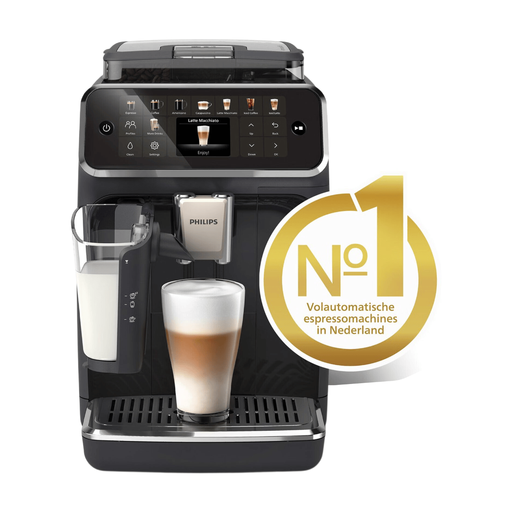
Worth considering if you’re looking at a bean-to-cup machine with LatteGo, such as the EP2333/40.
Worth considering if you’re looking at Magnifica Evo models with LatteCrema Hot. Check the full model code, as specifications vary between versions.
Worth considering if you want a portafilter and automatic or manual steaming with the Bambino Plus.
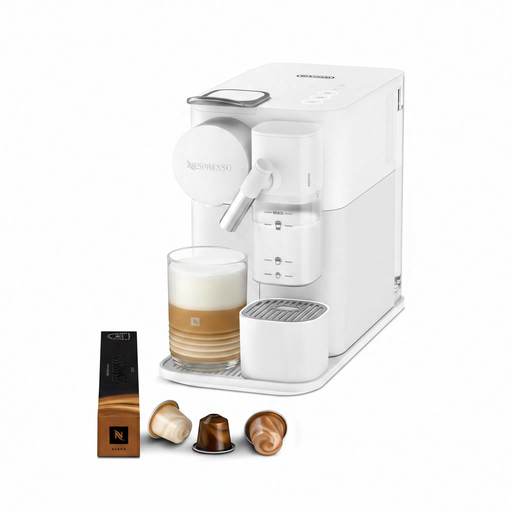
Worth considering if you’re looking for an Original capsule machine with an integrated milk function or a separate milk frother.
Worth considering if you’re looking at the EQ300 TF301E09, a bean-to-cup machine with a direct cappuccino option.
The options below are capsule machines and bean-to-cup machines with a cappuccino or milk function. Check whether the milk routine and coffee type suit the way you plan to use each model.
 No image available
The integrated milk jug and one-touch cappuccino function suit a quick preparation routine.
Uses Nespresso Original capsules, which are an ongoing purchase.
 No image available
Fully automatic preparation with LatteGo, plus cappuccino and milk drink options, suits anyone looking to keep the steps to a minimum.
The product name lists 20 drinks, a ceramic grinder, 12 settings, AquaClean and a 1,8 l tank.
 No image available
Automatic cappuccino preparation suits anyone who wants to make a milk drink with just a few button presses.
The product name lists a LatteCrema Hot milk frother and Bean Switch System. A milk function doesn’t guarantee a particular result with your soya drink.
 No image available
Automatic cappuccino preparation is designed for anyone who wants to make a milk drink in just a few steps.
The description lists LatteCrema Hot and a removable milk container. De’Longhi mentions plant-based alternatives for this milk function, but results can vary between drinks.
 No image available
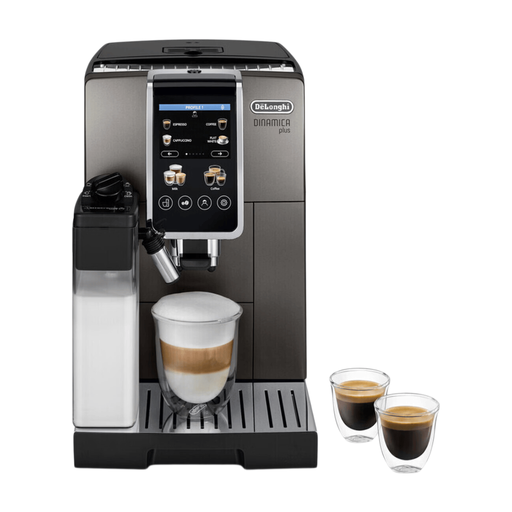
Automatic cappuccino preparation with a milk container suits anyone looking to make a milk drink with just a few steps.
The product name lists the LatteCrema system and 13 drinks. The description mentions adjustable grind and water volume.
No, frothing results vary between soya drinks. Philips mentions plant-based alternatives for the EP2333/40, and De’Longhi mentions soya for LatteCrema. De’Longhi also warns that results can vary depending on the brand and composition. Check the guidance for the model you’re considering.
Follow the instructions for your model’s milk system after every use. Philips recommends rinsing LatteGo after each milk drink. De’Longhi’s LatteCrema instructions also describe a rinse cycle and separate, regular deep cleaning.
Yes, caffeine can affect some people’s sleep, and sensitivity varies from person to person. The Voedingscentrum gives around 40 mg of caffeine for a 30 ml espresso. This is a nutritional estimate, not a fixed amount for every machine or coffee bean.
No, according to the Dutch government, there is no fixed statutory warranty period in the Netherlands. You’re entitled to a product that meets reasonable expectations, and its expected lifespan is one of the factors taken into account. If something goes wrong, contact the seller about your statutory rights.
No, a product listing alone doesn’t confirm this for a specific item. The Dutch government states that electronic devices placed on the EU market must carry a CE marking. Check the product information and marking on the model you’re buying.