Who is this buying guide for?

Latte lover with a narrow worktop

You want room for both the machine and the milk-making equipment. Consumentenbond describes several types of espresso machine, while De’Longhi and Nespresso’s product specifications show why it’s worth measuring any separate accessories too.

Everyday latte maker looking for convenience

You regularly make milk-based drinks and want to keep manual steps to a minimum, as long as the machine and its cleaning routine fit into your kitchen. Philips describes different ways to prepare milk within a machine.

Hands-on milk frother

You want to prepare your own espresso and milk foam, and don’t mind the steps and cleaning involved with a portafilter machine and steam wand. De’Longhi and Sage’s product information describes models with manual milk preparation.

What should you look for when buying?

What to consider What to look for when buying Who is this important for?
Room for the complete set-up Measure the width, depth and height. Leave room for a milk jug or separate frother, and make sure you can access the water tank. If I have limited worktop space, I need room for both the machine and the milk-making equipment. Around 29% of consumers say the space needed for the complete set-up is their main consideration.
How the milk is frothed Check whether the exact model has a steam wand or automatic milk preparation, or whether you’ll need a separate appliance. If you want to froth the milk yourself or prefer fewer steps, the milk function is a key consideration. Around 29% of consumers prioritise how the milk is prepared.
Steps involved in making your daily latte Check what’s involved in making the espresso and preparing the milk; add vanilla syrup separately. If I want to make my latte with as few daily steps as possible, convenience matters. Around 24% of consumers say the number of preparation steps is their main consideration.
Running costs and maintenance Compare capsules and beans based on how you’ll use the machine, and check how to clean the milk components. If you’re keeping an eye on ongoing coffee costs and cleaning, it’s worth knowing what your chosen brewing method and milk function involve. Around 18% of consumers prioritise running costs and maintenance.

Common pitfalls

  • Measuring only the machine’s width

    A narrow machine may still need extra space for a milk jug, steam wand or separate frother. The Essenza Mini and Aeroccino 4, for example, are two separate appliances.

    Measure the complete set-up and check that you can reach the water tank and put accessories down.

    A separate milk frother may mean an additional purchase and require extra storage space.

  • Assuming every espresso machine makes a vanilla latte automatically

    Making espresso, preparing milk and adding vanilla flavour are separate steps. An espresso function alone won’t prepare the milk.

    Check the milk function and what comes with the exact model. Add vanilla syrup separately if you want a vanilla flavour.

    Depending on the set-up you choose, a milk frother and vanilla syrup may need to be bought separately.

  • Comparing a pod machine on purchase price alone

    With a pod machine, you also need to factor in the ongoing cost of capsules. Consumentenbond recommends considering the purchase price and coffee costs together.

    Compare costs based on the number of coffees you expect to make; don’t assume there’s one universal break-even point.

    As well as capsules, a latte may involve a separate milk frother and cleaning milk components.

Brands to compare

De’Longhi

The Dedica Style EC685.BK EX:4 reviewed here is a slim manual espresso machine with a milk function, suited to anyone who prioritises a narrow machine.

  • De’Longhi lists a width of 15 cm and an adjustable Cappuccino System for this model.
  • You prepare the milk yourself; the model specifications don’t provide an independent comparison of foam quality. Make sure there’s enough working space around the machine too.

Sage

The Bambino BES450 reviewed here is a portafilter machine for anyone who wants to prepare their own espresso and milk.

  • Sage lists a 54 mm portafilter and a manual steam wand for the BES450.
  • The word ‘compact’ is no substitute for checking the full dimensions and the working space required.

Nespresso

Pairing the Essenza Mini with a separate Aeroccino 4 gives you pod espresso with milk prepared separately.

  • Nespresso lists the Essenza Mini as 8.4 cm wide. The Aeroccino 4 can prepare hot milk and hot foam, among other options.
  • The Mini doesn’t froth milk itself, and the frother takes up extra space. Check that you have room for both appliances together.

Philips

The Baristina Latte BAR400/60 and fully automatic EP2334/10 reviewed here offer different ways to prepare espresso and milk in one machine.

  • Philips describes the BAR400/60 as frothing milk with a steam wand, while the EP2334/10 froths milk automatically via LatteGo.
  • These descriptions relate to specific models; they don’t show that both will fit on every small worktop. Check the dimensions and allow room for cleaning.

Espresso machines at Joybuy

This selection includes espresso machines for espresso and milk-based drinks, with manual or integrated milk preparation. If you have a small worktop, check the dimensions of the complete set-up.
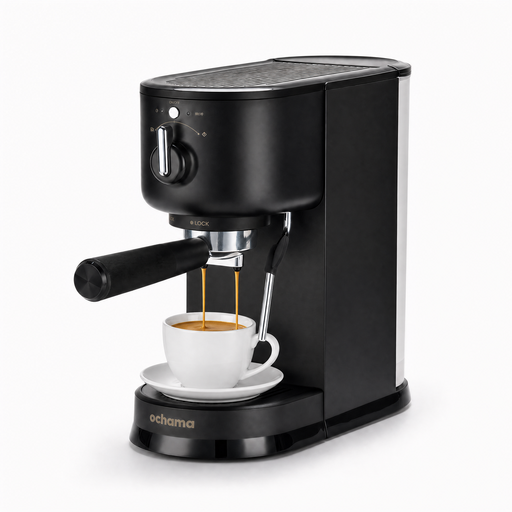
ochama semi-automatic espresso machine with steam frother

ochama semi-automatic espresso machine, 15Bar, 1.25L

An option if you want to combine espresso with milk prepared using a steam frother.

The product name lists 15Bar, a 1.25L water tank and a plastic body.

Joybuy

IAGREEA espresso machine with steam wand

IAGREEA espresso machine, 20Bar, 1.1L

Suited to anyone who wants to make espresso and froth milk manually with a steam wand.

The product name lists a pressure gauge, a cup warmer and a removable 1.1L water tank. The machine is described as suitable for a single or double espresso.

Joybuy
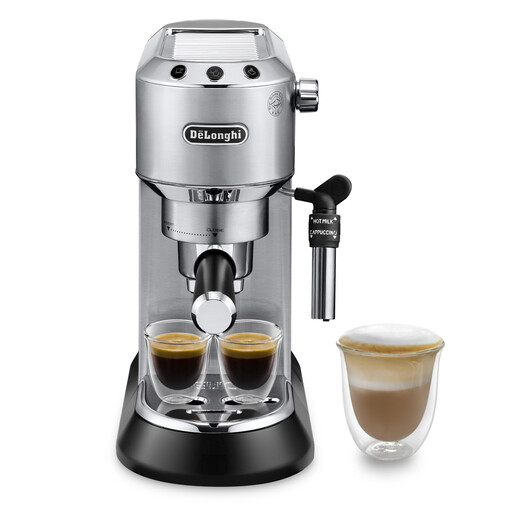
De’Longhi Dedica EC685 espresso machine with manual milk frother

De’Longhi Dedica EC685

An option if you want to froth milk yourself using a manual milk frother.

The product name lists 15 Bar and a slim design. Use the steam wand to froth the milk, and allow room for milk preparation too.

Joybuy

Philips 5500 Series EP5547/90 LatteGo coffee machine

Philips 5500 Series EP5547/90 LatteGo

An option if you want fewer manual steps when making milk-based drinks.

The product information lists automatic milk frothing with LatteGo. Check the dimensions and allow room to clean the milk components.

Joybuy
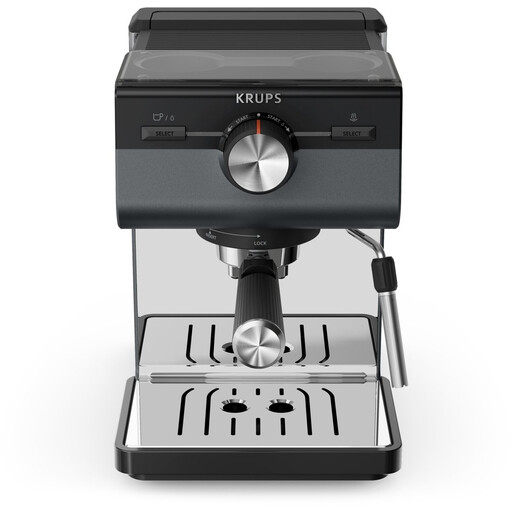
Krups Authentic+ C40 XP384G portafilter machine with milk frother

Krups Authentic+ C40 XP384G

A portafilter machine for anyone who wants to make espresso and milk-based drinks and froth the milk themselves.

The product name mentions a built-in milk frother and describes the model as compact; milk is frothed using a steam wand. Measure the available working space before use.

Joybuy

Frequently asked questions

Does the machine need to add vanilla flavour itself?

No, you can add vanilla syrup separately to espresso and prepared milk. Check the ingredients of your chosen syrup; you don’t need a built-in vanilla function for this method.

Is the narrowest espresso machine automatically the best fit?

No, consider the space needed for the complete milk-making set-up. Nespresso lists the Essenza Mini as 8.4 cm wide, but it doesn’t froth milk itself; the Aeroccino 4 is a separate appliance with a listed diameter of 10.4 cm.

How do I maintain a milk function?

Clean any parts that come into contact with milk regularly and follow the instructions for your exact model. Consumentenbond recommends cleaning milk-contact parts daily.

Who should I contact if the machine breaks down too soon during normal use?

According to ACM ConsuWijzer, the retailer is responsible for the statutory guarantee. This is separate from any manufacturer’s guarantee; a fixed manufacturer’s guarantee period does not, by itself, determine how long your statutory rights last.

What safety rule applies to an electric espresso machine in the Netherlands?

Electrical equipment covered by the EU Low Voltage Directive must meet conformity requirements, including CE marking when placed on the market. EUR-Lex describes this as a requirement for the relevant economic operators, not as a separate permit for home use. Check the product markings and follow the instructions for use.
