What should you look for when buying?
Slim manual espresso machine with a steam wand
Best for: limited worktop width and anyone who wants to make espresso and froth soya drink themselves.
Bear in mind: you’ll need a milk jug, possibly other coffee accessories, and some practice with the steam wand. Also check there’s room around the wand and water tank.
Capsule machine with an automatic steam function
Best for: anyone who values an integrated milk function and fewer manual steps.
Bear in mind: the machine’s depth and height, as well as the ongoing cost of capsules. The stated product specifications don’t guarantee the same results with your soya drink.
Bean-to-cup machine with a milk system
Best for: anyone who makes cappuccinos often and prioritises automatic preparation, provided the machine fits on the worktop.
Bear in mind: the full dimensions and the space needed to remove parts. Manufacturers’ claims about plant-based drinks aren’t independent tests using your soya drink.
Espresso machine with a separate milk frother
Best for: anyone who prefers to prepare milk separately and has space to keep or store both appliances together.
Bear in mind: the extra space and an additional step. Check that your chosen frother is suitable for the soya drink you use.
When choosing a machine for a small worktop, focus on what matters most to you: space, soya foam, convenience or the cost of your coffee format.
| Consideration |
What to look for when buying |
Who is this most important to? |
| Is there room for the whole preparation area? |
Measure the width, depth and height, as well as the space needed to operate the machine. De’Longhi lists the Dedica EC685.M EX:4 as 15 cm wide; Nespresso gives the Creatista Plus dimensions as 17 × 30,8 × 39,3 cm. |
My worktop is small, so I also want room to move a milk jug and refill the water. Around 36% of consumers prioritise the space available. |
| Will my soya drink froth? |
Check the specific milk system and the instruction manual. The Consumers’ Association mentions barista versions of plant-based drinks, while Philips lists plant-based milk alternatives for the EP2336/40. |
I want to know whether my own soya drink will make usable foam, not just whether the machine has a milk function. Around 29% of consumers give soya foam top priority. |
| How much preparation and cleaning do I want to do myself? |
Compare a manual steam wand with automatic milk preparation, and check the cleaning instructions for the exact model. Philips describes LatteGo as a two-part system that can be cleaned under the tap or in the dishwasher. |
For everyday use, I want fewer steps for preparation and cleaning, even if I have less control over frothing the milk myself. This is the main priority for around 21% of consumers. |
| What will my coffee choice cost over time? |
Compare the machine and the coffee it uses for the same number of cappuccinos. The Consumers’ Association says coffee beans cost less per cup than coffee pods. |
I compare not just the machine, but also the cost of coffee for the same number of cappuccinos. Around 14% of consumers prioritise the total cost. |
Joybuy products for soya cappuccinos
This selection features espresso machines with manual milk frothing. Before buying, check the full dimensions, whether the machine is suitable for your soya drink, and the relevant safety information for the exact model.
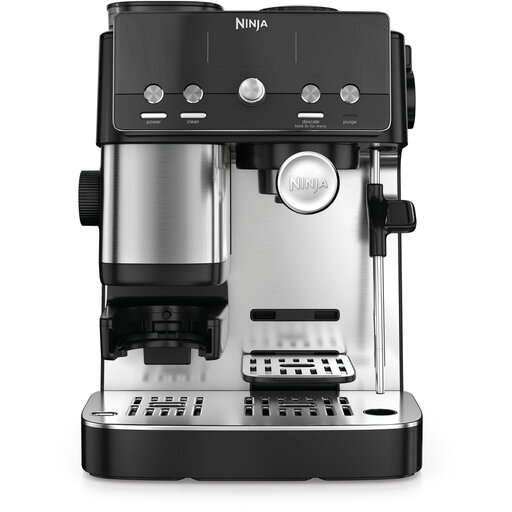 Image unavailable
Ninja Luxe Café Mini 2-in-1 espresso machine and filter coffee machine ES301EU
Best for anyone who wants to make espresso and filter coffee and froth milk manually.
The product title lists an integrated grinder and a manual milk frother.
View at Joybuy
 Image unavailable
IAGREEA 20-bar espresso machine with steam wand
Best for anyone who wants to make espresso and froth soya drink themselves with a steam wand.
The product title lists a pressure gauge, a cup warmer and a removable 1,1 L water tank.
View at Joybuy
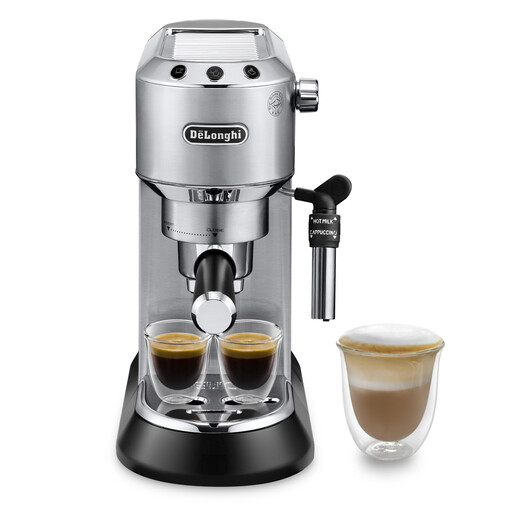 Image unavailable
De’Longhi Dedica EC685 metal espresso machine
Best for anyone looking for a Dedica espresso machine with manual milk frothing.
The product title lists a metal finish and a manual milk frother. Check the exact model and dimensions before ordering.
View at Joybuy
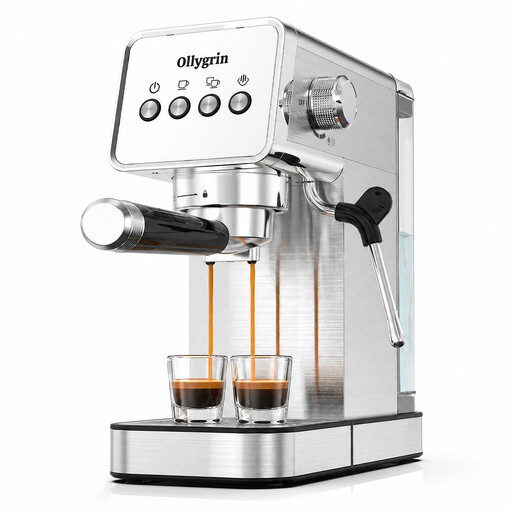 Image unavailable
Ollygrin EM1502 20-bar espresso machine with steam wand
Best for anyone who wants to make espresso and froth milk manually with a steam wand.
The product title lists 20 bar and a removable water tank and drip tray.
View at Joybuy
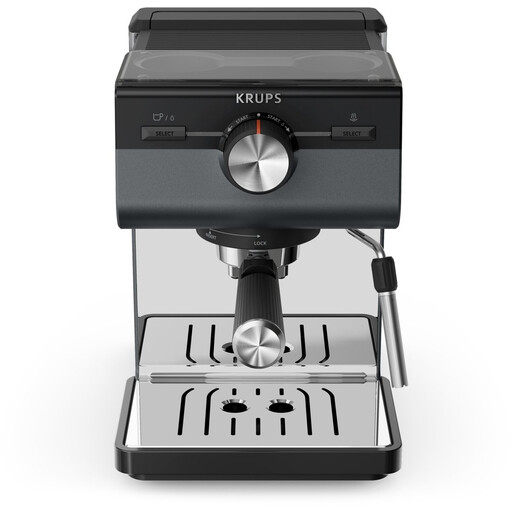 Image unavailable
Krups Authentic+ C40 XP384G manual espresso machine
Best for anyone looking for a compact manual espresso machine who wants to prepare milk themselves.
The product title lists a milk frother; the product information describes manual frothing with a built-in steam wand.
View at Joybuy
Frequently asked questions
Does an espresso machine need to be made specifically for soya drink?
Not every milk function gives the same results with every soya drink. The Consumers’ Association mentions barista versions of plant-based drinks as an option for frothing, while Philips lists plant-based milk alternatives for the EP2336/40. Check your model’s instruction manual and see how it performs with the drink you use.
What should I measure before putting a machine on a small worktop?
Measure the width, depth and height, as well as the space needed to operate the machine. Follow the placement instructions for the exact model too. Sage recommends placing the Bambino on a stable, dry, heat-resistant surface, away from the edge of the worktop.
How should I store opened soya drink and clean the milk system?
Put opened soya drink back in the fridge promptly after use, and clean any parts that come into contact with milk according to the machine’s instructions. For the specific organic plain soya drink it describes, the Netherlands Nutrition Centre recommends storage at 4 °C and consumption within three days of opening. Follow the label for other products.
Do my rights to a good-quality product end when the manufacturer’s guarantee expires?
No. According to the Dutch Government, there’s no fixed time limit for statutory guarantee cover in the Netherlands; what you can expect from a product depends, among other things, on the product and how it’s used. If a product is faulty, contact the retailer, even if the manufacturer’s guarantee has expired.
What electrical safety rules apply to an appliance sold in the Netherlands?
Mains-powered electrical appliances covered by the regulations must meet the relevant safety requirements and CE marking obligations. The Netherlands Food and Consumer Product Safety Authority explains that the rated AC voltage is one factor determining which rules apply. A product listing alone doesn’t confirm that the item being sold meets every requirement.


