First, measure the space you have for making a latte from start to finish. Then choose between frothing milk manually, using a separate milk frother or opting for an integrated milk system. A slim manual espresso machine gives you hands-on control, while a capsule machine needs a separate milk solution. A fully automatic machine takes care of more steps, but you’ll still need enough worktop space for the machine and all its components.
Who is this buying guide for?
Latte lover with limited worktop space
Wants to know whether the machine, milk preparation and everyday steps will all fit; the machine’s width alone doesn’t give you the full picture. De’Longhi and Nespresso list dimensions for the models mentioned.
Looking for an easy way to make milky coffee every day
Wants to make espresso and milk with as few steps as possible, while also taking cleaning the milk system into account. Philips describes the EP2330/10 as offering automatic milk preparation with LatteGo.
Home barista who froths milk by hand
Wants to have a say in how their espresso and milk are prepared, and is happy to factor in practice and cleaning. De’Longhi describes the Dedica Style EC685.W EX:4 as having an adjustable cappuccino system.
What should you look for when buying?
Slim manual espresso machine with steam wand
Ideal for: anyone who wants to make espresso and steam milk themselves, and has a permanent spot for the machine. De’Longhi lists the Dedica Style EC685.W EX:4 as 149 mm wide.
Bear in mind: you’ll need to froth the milk yourself and clean the steam wand after use.
Capsule machine with a separate milk frother
Ideal for: anyone mainly looking for a compact machine for espresso or lungo, with space elsewhere for preparing milk. Nespresso lists the Essenza Mini as measuring 8,4 × 20,4 × 33 cm (width × depth × height).
Bear in mind: a separate frother takes up space too; Consumentenbond says capsules cost more per cup than ground coffee.
Fully automatic machine with automatic milk system
Ideal for: anyone who wants fewer steps when making milky coffee. Philips describes the EP2330/10 as offering automatic milk preparation with LatteGo.
Bear in mind: measure the machine and allow space for the milk system and everyday use. Automatic frothing doesn’t mean you can skip cleaning.
The whole set-up matters more than the machine’s width alone: remember to allow space for preparing milk, filling and cleaning.
| Concern |
What to check before buying |
Who is this important for? |
| Total space required |
Measure the machine, milk-preparation equipment and operating space together. De’Longhi lists the Dedica Style EC685.W EX:4 as 149 mm wide; Nespresso lists the Essenza Mini as measuring 8,4 × 20,4 × 33 cm (width × depth × height). |
I want to be able to fill and clean the machine without milk-preparation equipment getting in the way of my available worktop space. Around 29% of consumers give the total space needed for the set-up top priority. |
| Ease of making a latte |
Check whether the exact model prepares milk automatically, has a steam wand or only makes coffee. Philips describes LatteGo as the automatic milk system for the EP2330/10. |
If I want fewer steps when things get busy, I focus on how the milk is prepared. Around 29% of consumers put ease of preparation first. |
| Milk preparation and cleaning |
Find out how to clean the milk components after use. Consumentenbond warns that milk residue can attract bacteria and clog parts. |
I want to weigh up how much control I’d like over frothing against how much cleaning it involves. Around 21% of consumers say milk preparation and cleaning are their main concern. |
| Ongoing costs |
Compare the coffee you use and any separate milk accessories. Consumentenbond says capsules cost more per cup than ground coffee. |
If I make coffee often, I also want to know what consumables my chosen method requires. Around 21% of consumers give ongoing costs top priority. |
Common buying mistakes
-
Measuring only the width of the coffee machine
A separate milk frother needs its own space. If you froth milk by hand, you’ll also need room for the milk jug and to operate the steam wand.
Measure the width, depth and height of the space, then think through the whole process, from filling to cleaning.
-
Judging a capsule machine by its purchase price alone
Along with the machine, you’ll need to factor in capsules and, if you want to make a latte, the space and equipment for preparing milk separately. Consumentenbond says capsules cost more per cup than ground coffee.
Compare the coffee costs for how often you’ll use the machine, separately from its purchase price.
-
Assuming automatic milk preparation means no maintenance
An automatic milk system still needs cleaning. Consumentenbond points out that milk residue can attract bacteria and clog parts.
Before buying, check which parts need cleaning after use and how easy they are to reach.
Brands to consider
De’Longhi
The Dedica Style EC685.W EX:4 we looked at is a slim manual espresso machine for anyone who wants to prepare espresso and milk themselves.
- De’Longhi lists this model as 149 mm wide and says it has an adjustable cappuccino system.
- You’ll still need to froth the milk yourself, so allow space for a milk jug and remember to clean up after use.
Philips
The 2300 Series EP2330/10 we looked at is designed for milky coffee, with the automatic LatteGo system.
- Philips describes LatteGo as offering automatic milk preparation.
- Philips claims LatteGo can be cleaned in 10 seconds; this is the manufacturer’s claim. Measure the space needed for the whole set-up too, and remember that other maintenance is still required.
Nespresso
The Essenza Mini we looked at is a compact Original capsule machine for espresso or lungo; milk for a latte is prepared separately.
- Nespresso lists the Essenza Mini as measuring 8,4 × 20,4 × 33 cm (width × depth × height) and sells separate Aeroccino milk frothers.
- A separate frother takes up extra space. Consumentenbond says capsules cost more per cup than ground coffee.
Joybuy product picks
These product picks are for making espresso with milk, from manual frothing to models with an integrated milk system.
 No image available
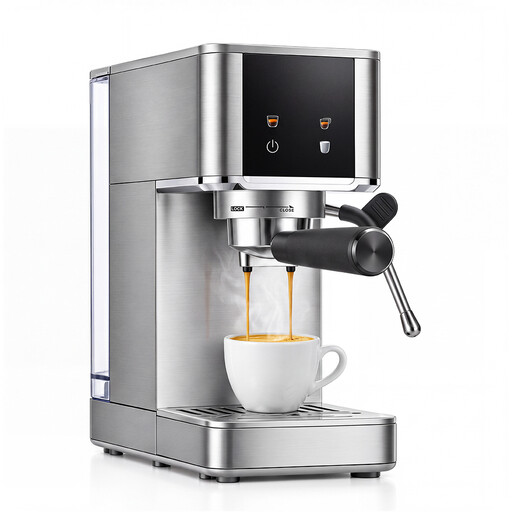
ochama 2-in-1 espresso and capsule machine
An option for anyone who wants to combine espresso and milk preparation in one appliance; the product title mentions an integrated milk frother.
The product title lists 15 Bar pressure, a removable 1,4-litre water tank, touch controls and the option to use capsules or ground coffee.
View at Joybuy
 No image available
IAGREEA 20Bar espresso machine with steam wand
Ideal for anyone who wants to froth milk themselves; remember that using and cleaning a steam wand takes a little effort.
The product title lists a pressure gauge, steam wand, cup warmer and a removable 1,1-litre water tank.
View at Joybuy
 No image available
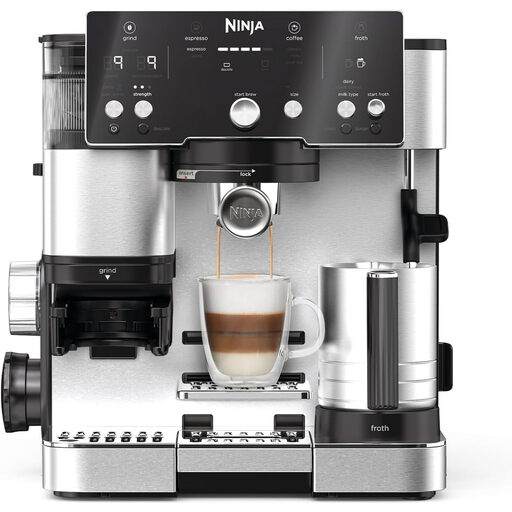
Ninja ES501EU Luxe Café espresso machine
An option for anyone who wants to prepare espresso and milk with one appliance; the product information mentions an integrated automatic frothing system with a milk jug.
The listed dimensions are 33,5 × 34,2 × 37 cm; bear this footprint in mind when measuring your space.
View at Joybuy
 No image available
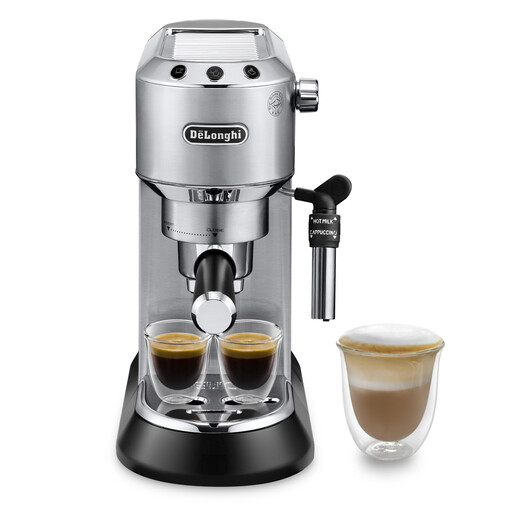
De’Longhi Dedica EC685 espresso machine
Ideal for anyone who wants to froth milk themselves and is happy to use a steam wand; clean the wand after use.
The product title mentions a slim design, manual milk frother and 15 Bar pressure.
View at Joybuy
 No image available
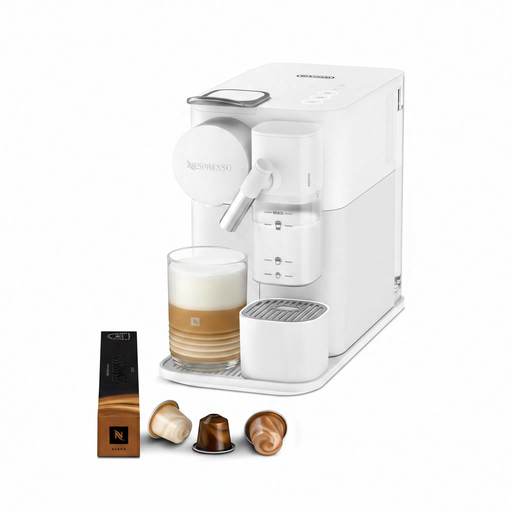
De’Longhi EN510.W Lattissima One
An option for anyone who wants to make a latte or cappuccino with fewer manual steps; remember to clean the milk components too.
The product title describes a Nespresso Original capsule machine with a 1,0-litre capacity and an integrated milk system.
View at Joybuy
Frequently asked questions
Can I make a latte with an Essenza Mini without an extra appliance?
The Essenza Mini makes espresso or lungo; you’ll need a separate solution for frothed milk. Nespresso, for example, recommends an Aeroccino for preparing milk.
What should I clean after frothing milk?
If your machine has a steam wand, remove milk residue straight after use: Consumentenbond recommends briefly flushing it with steam and wiping the wand with a clean cloth. For other milk systems, follow the instructions for the exact model.
What happens if the machine turns out to be faulty?
In the Netherlands, there is no fixed statutory guarantee period. However, if a product is faulty, you may be entitled to a free repair, replacement or refund. The Dutch government identifies the seller as your point of contact; normal wear and tear or damage caused by you is not automatically covered.
Which Dutch safety rules apply to an electric espresso machine?
Products covered by the Commodities Act Decree on Electrical Equipment must meet safety requirements and carry CE marking. The Netherlands Food and Consumer Product Safety Authority lists a nominal AC voltage of 50–1000 V for the low-voltage rules; check the specifications and markings for the exact model.


