
The small-worktop barista who likes control over milk
Wants to make espresso in a narrow space and decide exactly how much steamed milk to add. Preparing the milk manually is no problem for this shopper.


First, decide how you want to prepare your espresso and milk separately, then measure the whole set-up, not just the machine. A slim portafilter machine gives you manual control over the milk, while a capsule machine needs a separate milk frother. A bean-to-cup machine can save space by eliminating a separate grinder, although some models take up more worktop space.
Wants to make espresso in a narrow space and decide exactly how much steamed milk to add. Preparing the milk manually is no problem for this shopper.
Wants to prepare the espresso themselves but would like help getting the right milk texture. Remember to allow space for the complete machine set-up and, if needed, a grinder.
Prioritises straightforward espresso preparation, while taking separate milk preparation and the running costs of their chosen coffee system into account.
A good fit if: you have limited worktop width and want to adjust the espresso and milk yourself.
Keep in mind: you’ll need space for accessories and practice to froth milk by hand.
A good fit if: you want to prepare the coffee yourself but do less of the milk frothing by hand.
Keep in mind: preparing the coffee and choosing a suitable grinder still need consideration; check the machine’s overall dimensions too.
A good fit if: making espresso easily is important and you have room for a second appliance.
Keep in mind: capsules are system-specific and milk is prepared separately. The Consumentenbond says capsules cost more per cup than loose coffee.
A good fit if: grinding beans without a separate grinder matters more than having the smallest possible machine.
Keep in mind: frothing the milk is still a manual task, and the machine may need more worktop depth.
| What to consider | What to check before buying | Who is this important for? |
|---|---|---|
| Total worktop space | Measure the width, depth and height, as well as the space needed for filling, preparing milk and cleaning. Include accessories and a possible second machine. | If my worktop is narrow, I also want to leave room for preparing the milk; around 36% of consumers put total worktop space at the top of their list. |
| Control over a small portion of milk | Check whether milk can be steamed or heated separately, how you can measure the portion and how the milk component is cleaned. | If I want to adjust the amount and texture of the milk myself, I look for a preparation method that suits me; around 29% of consumers prioritise control over milk. |
| Speed and number of steps | Consider the whole process for preparing espresso and milk, including cleaning, rather than looking only at the brewing method. | If I want to keep the number of steps to a minimum on an ordinary day, I consider the whole routine; around 21% of consumers prioritise speed. |
| Ongoing coffee and maintenance costs | Compare costs based on how many cups you make each day, and include coffee, milk equipment and maintenance. The Consumentenbond reports that capsules cost more per cup than loose coffee. | If I’m mainly concerned about ongoing costs, I weigh them against convenience and any extra equipment; around 14% of consumers put running costs first. |
Your chosen brewing method affects how much extra space you need for equipment and tasks such as preparing milk, filling the machine and cleaning.
Measure the complete set-up and make sure you can easily reach the machine and accessories while using them.
Depending on the brewing method, you may also need room for a separate grinder, milk jug or milk frother.
The Essenza Mini included in the review makes espresso, but milk has to be prepared separately.
Check which capsules are compatible with the system, where you’ll put the milk equipment and how often you expect to use the machine.
Using a capsule machine means having a separate way to prepare milk and buying capsules regularly.
According to Philips, the Philips EP2220/10 has an integrated grinder and a classic milk frother; frothing the milk is still a separate task.
Consider making espresso and preparing milk as two separate functions.
In the Netherlands, there is no fixed statutory guarantee period. According to the Dutch government, the seller’s responsibility partly depends on what you could reasonably expect from the product.
Compare any manufacturer’s guarantee or additional cover with your statutory rights; a commercial guarantee does not replace those rights.
The Dedica Style EC685.M EX:4 is worth considering if a slim machine and manual milk preparation are important to you.
The Bambino Plus SES500BSS4EEU1 combines portafilter brewing with an automatic steam function, offering help with milk texture.
The Essenza Mini from the Original system is an option if you use capsules and prepare milk separately.
The fully automatic EP2220/10 is worth considering if an integrated bean grinder matters more than having the smallest possible machine.
This selection includes portafilter machines with manual steam wands, a capsule machine with a separate milk frother, and a fully automatic machine with a manual milk frother.
 Image unavailable
A good fit if you want to prepare espresso and milk separately and froth the milk by hand.
The product description mentions an adjustable single-shot setting of 25–60 ml, adjustable steam intensity and a removable 1.1L water tank.
 Image unavailable
A good fit if you want to prepare espresso and milk in separate steps and control the milk texture yourself.
The product description lists a manual steam wand and a removable 1.5 l water tank.
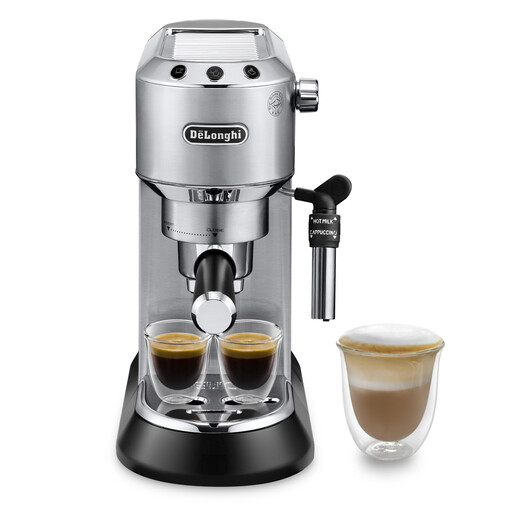 Image unavailable
A good fit if you’re looking for a slim portafilter machine and want to adjust the espresso and milk by hand.
The stated width is 14,90 cm. According to the product description, the machine uses ground coffee; a separately sold filter is needed for E.S.E. pods.
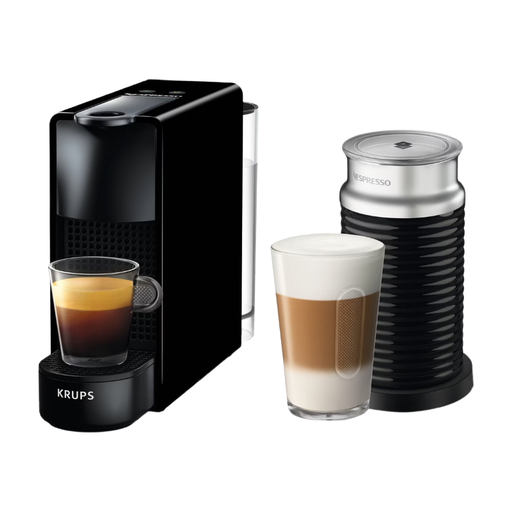 Image unavailable
A good fit if you want to make espresso easily and prepare milk with a separate appliance.
The product description lists two adjustable cup sizes and an included Aeroccino3 milk frother. The machine is designed for Nespresso Original capsules or capsules compatible with that system; allow extra storage space for the milk frother.
 Image unavailable
A good fit if you want to grind beans without a separate grinder and froth milk separately.
The product description lists an integrated ceramic grinder and a Pannarello steam wand. The stated dimensions are 24,60 cm wide and 43,30 cm long; milk is frothed manually.
No. What matters more is being able to combine a small espresso with an amount of milk that suits you. A standard milk recipe may not give you the proportions you want for a piccolo.
As well as the machine itself, measure the space needed for filling, preparing milk and cleaning. Sage recommends placing the Bambino Plus on a stable, level, dry and heat-resistant surface, away from the edge of the worktop; follow the instructions for other models.
Clean the milk system according to the machine’s instructions. Return any chilled milk you’ve used to the fridge promptly; the Voedingscentrum recommends storing milk at 4 °C.
According to the Consumentenbond, capsules cost more per cup than loose coffee. The overall costs depend on how much you use, the coffee you choose and the equipment you need, so compare them based on your own consumption.
CE marking is required for electrical products placed on the market in the Netherlands, according to the Netherlands Food and Consumer Product Safety Authority and the Netherlands Enterprise Agency. The mark is the manufacturer’s declaration of conformity, not an independent safety guarantee; check the marking and documentation for the specific model.