
Colleagues who switch between decaf and regular coffee
They want to choose the right coffee for each cup. The input method and any mixing after switching beans are key considerations.


First, decide how colleagues will distinguish decaf from regular coffee. With a suitable decaf capsule, you can choose for each cup; some bean-to-cup machines let you use pre-ground coffee for an occasional decaf; and two bean hoppers are handy if you switch regularly, though they don’t rule out minimal mixing. Then choose a milk system with cleaning steps colleagues can share. A latte function alone doesn’t confirm that a machine can also make a latte using pre-ground decaf.
They want to choose the right coffee for each cup. The input method and any mixing after switching beans are key considerations.
They want milk components, consumables and cleaning tasks to suit everyday office use.
They’ll benefit from a milk system that’s practical when making several cups in a row.
| What to consider | What should you check? | Who is this important for? |
|---|---|---|
| Choosing decaf for each cup | Check the capsule system, the input for pre-ground coffee or how the two bean hoppers work. If strict separation is important, ask about mixing after switching. | If regular coffee and decaf are both available, I want to be sure which one I’m using for each cup. Around 36% of consumers say choosing decaf is their top priority. |
| Sharing the cleaning | Check the manual to see which milk components need cleaning after use, and agree on who will do it. | When colleagues share a machine, I want milk cleaning to be clear and manageable. Around 29% of consumers put shared cleaning responsibilities first. |
| Making a decaf latte | Check whether the decaf method works with your preferred milk drink recipe on the exact model. If you’re using a separate milk frother, check how much it can make at a time. | If I want to drink decaf as a latte, both the coffee and milk preparation need to work for me. This is the top priority for around 21% of consumers. |
| Capacity and maintenance | Estimate how many coffees and milk drinks you’ll make each day, then check the recommended capacity and service terms for the exact model. | For a busy shared coffee area, I want the capacity and maintenance arrangements to suit everyday use. Around 14% of consumers put capacity and service first. |
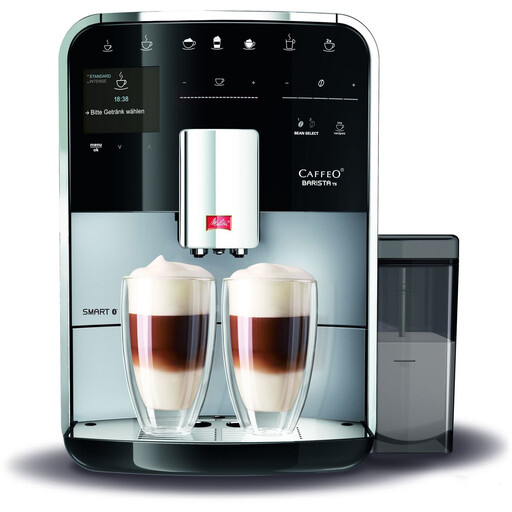
Melitta warns that the bean varieties in the Barista TS Smart may mix slightly when you switch between them.
If successive cups must be strictly separate, consider a system where you choose a capsule for each cup, or ask the manufacturer how the exact model works.
A milk function and an input for pre-ground coffee don’t prove that the two will work together in your chosen recipe.
Check the combination in the manual for the full model number.
Making milk drinks means extra cleaning, whether the coffee comes from beans or capsules.
Agree on who will clean the milk components and compare the coffee, capsules and cleaning products you’ll need for the expected number of cups.
Remember to budget for regular purchases of suitable coffee or capsules and model-specific cleaning products.
The Barista TS Smart is an option if colleagues regularly switch between two types of beans.
Bean-to-cup machines with a milk function may suit a shared supply of beans and the occasional decaf made with pre-ground coffee.
An Original machine lets you choose a suitable decaf capsule for each cup.
The EP5544/50 is a bean-to-cup machine with LatteGo and adjustable coffee and milk quantities.
JURA offers professional W and X series machines for settings including shared workplaces.
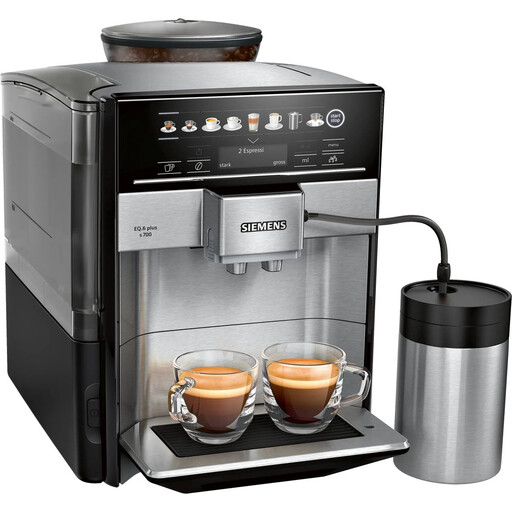
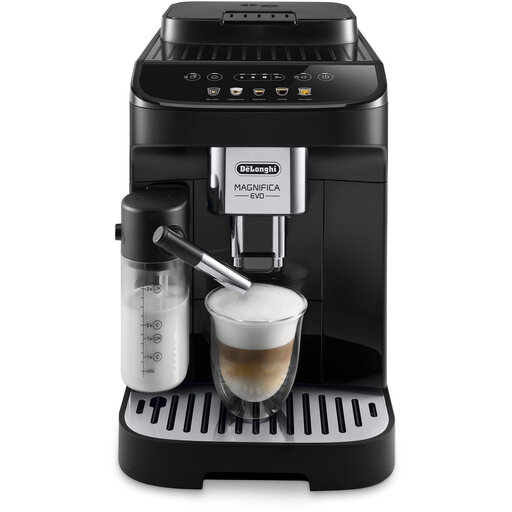
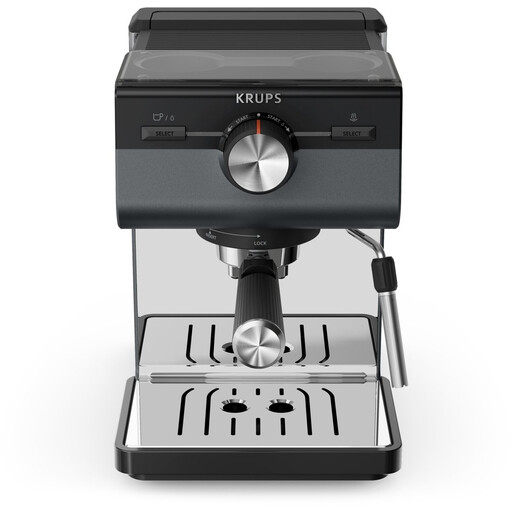
This selection includes bean-to-cup machines and a manual espresso machine for a shared coffee area. Check how to prepare decaf with each model and what cleaning the milk system requires.
 No image available
An option to consider for a shared coffee area where colleagues make milk drinks. Check the manual to see how to add decaf and what cleaning is needed after preparing milk.
 No image available
A good fit if you’re considering a bean-to-cup machine with milk preparation. De'Longhi describes pre-ground coffee as an option for an occasional decaf, one cup at a time; check whether this exact model can use it with your preferred milk drink recipe.
 No image available
An option if you want to make milk drinks with a bean-to-cup machine. Check how to clean the milk components on this exact version and whether it supports your preferred decaf recipe.
 No image available
An option if you want to measure out decaf for each serving. The product information lists pre-ground coffee and a steam wand for milk; clean the wand straight after use, following the product instructions.
 No image available
A good fit for colleagues who want to switch regularly between two types of beans. Melitta says the bean varieties may mix slightly when you switch between them, so the two hoppers don’t guarantee strict separation.
No. The Netherlands Nutrition Centre gives around 3 mg of caffeine per 125 ml cup of decaffeinated coffee. This is a general nutritional value, not a measurement of your espresso or latte.
Use the decaf input supported by the exact model and make the choice clear to colleagues. De'Longhi describes pre-ground coffee as an option for one cup at a time, after which you can switch back to beans; Melitta warns that the Barista TS Smart may mix beans slightly when you switch hoppers.
Follow the manual for your chosen model and agree on who will do the cleaning. De'Longhi also describes a full cleaning cycle for the milk carafe on the ECAM290.61.B; don’t skip the model-specific instructions just because there’s an automatic cleaning function.
Sharing a machine alone doesn’t make this a requirement. The Netherlands Food and Consumer Product Safety Authority states that businesses handling food, such as those that produce, process or sell food, must follow a HACCP plan or hygiene code. Check which requirements apply if the office prepares or serves drinks as part of such a business activity, and store milk according to the label and applicable rules.
Compare the coffee or capsules, milk, cleaning products and any service arrangements you’ll need, based on the expected number of cups per day. For a business purchase, also check the terms that apply to the agreement; consumer guidance on statutory guarantees doesn’t determine those business terms.