Who is this choice for?

Anyone who wants to make mocha quickly

You want to prepare espresso and milk with as few steps as possible, then leave the shared worktop clear. So start by choosing a milk-preparation method that suits you: not every espresso machine has a milk function.

Anyone sharing a kitchen

You use the machine before or after other people. Think about which milk components you’ll need to clean after use and how you’ll agree to leave the worktop for the next person.

Anyone short on worktop space

You have limited space and want to know whether there’s room for a separate milk frother too. Allow for the machine as well as any additional equipment.

What should you look for when buying?

Capsule machine with separate milk preparation

A good fit if: you want a compact machine for espresso and can heat or froth milk separately. Nespresso lists espresso and lungo as options for the Essenza Mini.

Bear in mind: preparing the milk adds an extra step, as does cleaning afterwards; capsules also mean ongoing coffee costs.

Portafilter machine with a steam wand

A good fit if: you want to froth milk yourself and have time to learn how to use the portafilter and steam wand. De’Longhi lists the Dedica Style EC685.BK as approximately 15 cm wide.

Bear in mind: each user needs to clean the steam wand after use; also check that your mug fits under the spout.

Bean-to-cup machine with a removable milk system

A good fit if: several people want to make milk-based drinks with less manual preparation. Philips lists a two-part LatteGo system without tubes for the EP2336/40.

Bear in mind: the milk components and the rest of the machine still need maintenance. Philips’ cleaning claim applies to the milk system, not to cleaning the whole machine.

What to consider What should you check? Who should give this more weight?
Milk and chocolate Check whether the model has a steam wand or automatic milk system; with a capsule machine, factor in separate milk preparation. Add the chocolate separately, following a suitable recipe. If I want to combine espresso, milk and chocolate quickly, I first check what steps the chosen set-up involves. Milk preparation is the top priority for around 31% of consumers.
Cleaning after use Check which milk components can be removed and what daily cleaning the manual recommends, as well as emptying the portafilter or capsule container. If other people use the machine after me, I want a cleaning routine I can follow and explain straight away. Around 31% of consumers put cleaning first.
Worktop space Measure the available width and depth, and allow for space above the machine, a separate milk frother if needed, and the maximum cup height. If other people already use the worktop, I want to know how much space the whole coffee set-up takes up. Space is the top priority for around 23% of consumers.
Running costs Compare the machine, any milk equipment, your chosen coffee and the recommended maintenance, based on how many cups you drink. If I use the machine often, I want to consider more than just the purchase price: coffee and maintenance matter too. Around 15% of consumers put total running costs first.

Common buying mistakes

  • Assuming espresso automatically means mocha

    According to Nespresso, the Essenza Mini makes espresso and lungo. Nespresso doesn’t list a separate hot chocolate capsule, so making mocha involves adding chocolate separately.

    Check how you’ll prepare the espresso, chocolate and milk separately, and which components you’ll need to clean afterwards.

  • Comparing only the machine’s purchase price

    Consumentenbond describes the differences between capsule machines and other types of coffee maker. If you use your machine repeatedly, your chosen coffee and any additional milk equipment also affect the cost.

    Compare the complete set-up based on how you’ll use it, not just the machine.

  • Assuming a quick-cleaning claim covers the whole machine

    Philips’ cleaning claim for LatteGo applies to the milk system. Other parts of the machine also need attention.

    For the exact model, check the daily cleaning instructions for the milk components, drip tray and coffee residue.

Brands to consider

De’Longhi

The Dedica Style EC685.BK is an example of a slim portafilter machine with manual milk preparation.

  • De’Longhi lists this model as approximately 15 cm wide, with an adjustable cappuccino system.
  • Frothing the milk and cleaning the steam wand are still manual tasks; these features apply to this model.

Philips

The fully automatic 2300 Series EP2336/40 is worth considering if several people want a removable milk system.

  • Philips lists a two-part LatteGo system without tubes for this model.
  • The cleaning claim applies to the milk system; the rest of the machine also needs maintenance.

Nespresso

The Original Essenza Mini is a compact capsule-based option for espresso if you can prepare the milk separately.

  • Nespresso lists espresso and lungo as options for the Essenza Mini.
  • Making mocha with milk requires a separate preparation method; capsules mean ongoing coffee costs.

Joybuy products

This selection includes manual espresso machines with a steam frother and a compact coffee machine for capsules or ground coffee. Check how milk is prepared with each model; not all the product names mention a milk function.
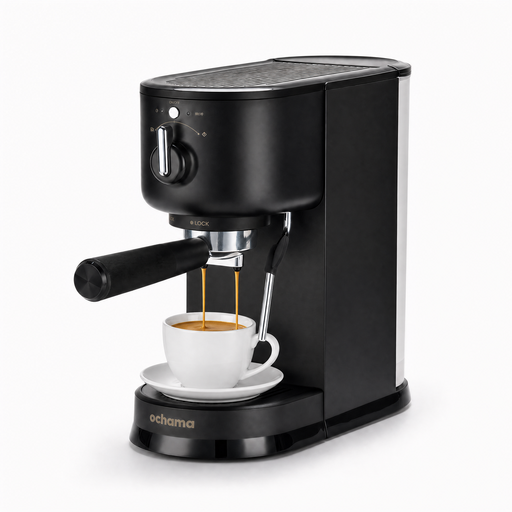
ochama semi-automatic espresso machine with steam frother

ochama semi-automatic espresso machine with steam frother

An option if you want to make espresso and froth the milk yourself.

The product name lists 15Bar, a 1.25 L water tank and an all-plastic housing.

Joybuy
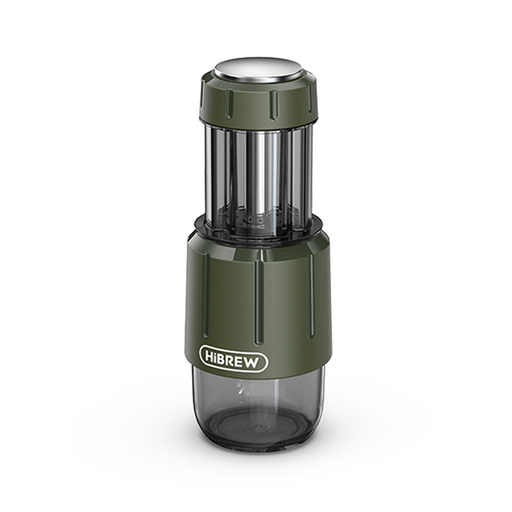
HiBREW H4D coffee machine for capsules or ground coffee

HiBREW H4D coffee machine

An option if you’re looking for a compact machine that, according to the product name, uses capsules and ground coffee.

The product name lists a pressure range of 8 to 15 bar and a compact, portable design. It doesn’t mention a milk function.

Joybuy

IAGREEA 20Bar espresso machine with pressure gauge and steam wand

IAGREEA 20Bar espresso machine with pressure gauge

An option if you want to make espresso and froth milk by hand.

The product name lists a steam wand, cup-warming plate, single- and double-cup preparation, and a removable 1.1 L water tank.

Joybuy

IAGREEA 20 bar espresso machine with steam wand and 50 Oz water tank

IAGREEA 20 bar espresso machine with 50 Oz water tank

An option if you want to make espresso and froth milk with a steam wand.

The product name lists a 50 Oz water tank and a stainless steel housing with a cup warmer.

Joybuy
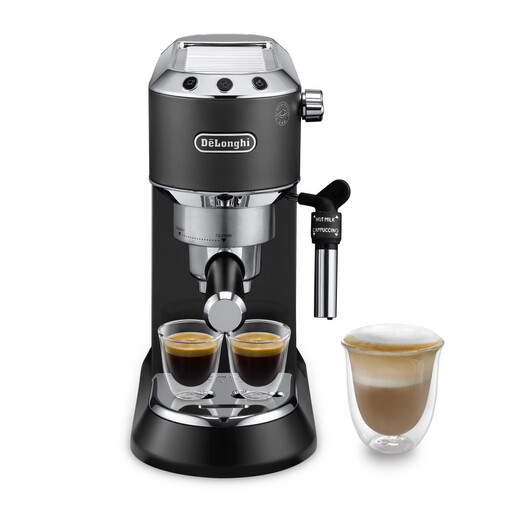
De’Longhi Dedica Style EC685.BK manual espresso machine, black

De’Longhi Dedica Style EC685.BK, black

An option if you want to froth milk yourself with a portafilter machine. De’Longhi lists this model as approximately 15 cm wide.

The product name identifies it as a manual espresso machine; the manufacturer describes this model as having a steam wand for preparing milk.

Joybuy

Frequently asked questions

Do I need a machine with a built-in hot chocolate function to make mocha?

No, you can combine espresso and chocolate separately, then add milk. For example, Nespresso describes a recipe that involves pouring espresso over chocolate; it uses a Vertuo capsule and doesn’t say that other machines can process chocolate.

What should you agree about milk in a shared kitchen?

Clean the milk components you’ve used according to the manual, and put the milk back in the fridge as soon as possible. Voedingscentrum recommends storing milk at 4 °C and not leaving it out of the fridge for more than two hours.

How often should you descale a De’Longhi Dedica?

Follow the indicator and manual for the exact model; according to De’Longhi, the recommended descaling frequency also depends on water hardness. The manufacturer’s advice on descaling or filters isn’t a general legal requirement.

Is a manufacturer’s warranty the same as the statutory guarantee in the Netherlands?

No. According to the Dutch government, you’re entitled to a product that works as it should, but the Netherlands has no fixed statutory guarantee period. A manufacturer’s warranty is additional; if a product is faulty, the retailer is your point of contact.

Which product safety rules are relevant when buying in the Netherlands?

Electrical appliances must meet the applicable European and Dutch safety requirements. According to government information from Ondernemersplein, after assessing the applicable requirements, the manufacturer must apply the CE marking and draw up an EU Declaration of Conformity. This describes the product process, but does not in itself confirm that a specific offer meets the requirements.
